

Paper
Mr. Daniel Brumberg
{
  "authors": [
    "Daniel Brumberg"
  ],
  "type": "legacyinthemedia",
  "centerAffiliationAll": "dc",
  "centers": [
    "Carnegie Endowment for International Peace"
  ],
  "collections": [],
  "englishNewsletterAll": "democracy",
  "nonEnglishNewsletterAll": "",
  "primaryCenter": "Carnegie Endowment for International Peace",
  "programAffiliation": "DCG",
  "programs": [
    "Democracy, Conflict, and Governance"
  ],
  "projects": [],
  "regions": [
    "Iraq"
  ],
  "topics": [
    "Political Reform",
    "Democracy"
  ]
}
REQUIRED IMAGE
Source: Carnegie
Originally published November 16, 2003 in the Washington Post.
The advance e-mail notice to reporters from the White House said that President Bush's Nov. 6 speech proclaiming a "forward strategy of freedom in the Middle East" would "rank among the most important foreign policy speeches the president will deliver in his first term." The e-mail called the speech "a fundamental break with a half-century of American foreign policy."
Given that buildup, it's fair to ask: Has anything changed? Articulating a philosophy is one thing; making policy is another.
Bush's rousing speech, with its neo-Wilsonian flourishes, struck many of the notes Americans find inspirational. Complaining that for 60 years Western nations have made excuses for the lack of freedom in the Middle East, Bush vowed a new policy because "stability cannot be purchased at the expense of liberty." Casting his lot with the neoconservatives in his administration, he asserted that the peoples of the Middle East can and will have their rendezvous with history.
Yet to succeed, Bush's vision must be backed by more than a near religious belief in the universality of democracy and in what he termed America's "calling" to bring it about. After all, it was just such faith that led the White House to minimize the obstacles to democracy in Iraq. Having set our sights beyond Iraq's borders, the Bush administration must translate a philosophy into a long-term regional strategy suited to the complexities of Arab politics. He must find a way to promote democratic institutions there, not just assert his faith in them from here.
In doing so, however, Bush may be hindered by the Cold War framework he used to describe the task of bringing democracy to the Middle East. While Bush acknowledged differences among countries of the Arab world, he still compared U.S. efforts to promote democracy there to America's efforts to promote freedom in Eastern Europe and likened his speech to President Reagan's June 1982 declaration that Soviet communism had failed.
Yet it is a mistake to assume that Soviet-style totalitarianism is common to the Middle East, or that, as Bush put it in his speech, the peoples of the region live in "despotism," bereft of all "freedom" and "liberty." The word "despotism" is misleading. Most autocrats in the Arab world sustain themselves through an absence of total state control and the presence of state-managed political competition. And those regimes have proven more durable than outsiders expected. From Morocco to Jordan, "liberal autocracies" give the press, professional associations and legislatures measures of freedom -- so long as they do not assail the right of the king or president to wield ultimate power. In these multi-dimensional systems, what appears to be an element of democracy is mostly a safety valve. Arab democrats constantly probe but rarely violate the ambiguous boundaries of dissent. They know that the secret of liberal autocracies is this: While they provide a relative freedom of speech, they do not guarantee freedom after speech.
Many opposition leaders have tolerated such limitations because they fear, as much as the autocrats themselves, that a move to full democracy might invite instability. This fear is often warranted. While liberalized autocracies are not good at economic development and do not truly respect democratic institutions, they do allow for the relatively peaceful coexistence of mainstream secular, ethnic and Islamist groups under the state's watchful eye.
But such coexistence is illusory and unstable. Because the Islamists control the mosques, they possess a huge organizational advantage over secularists and are best able to take advantage of limited political openings, which often end in conflict between regimes and opposition groups. The result is a cycle of liberalization and crackdown that makes it hard for the most genuine of reformist rulers to risk real democratization.
How can the administration help Arab reformers escape the trap of liberalized autocracy? Two camps are vying to answer this question. Neoconservatives favor a policy of shaking up the region in the hope that a shock to the system will empower democratic forces. Neo-realists favor a decidedly less optimistic policy of incremental change, a strategy in keeping with years of American efforts to promote democracy in the Arab world.
Although Bush's heart is certainly with the first camp, a close reading of his Nov. 6 speech reveals that his head may be partly with the second. On the one hand, he insisted that "liberty is the direction of history" and that Islam is not a barrier to the universal longing for democracy. On the other hand, he added the familiar loophole in American Middle East policy, namely that "working democracies always need time to develop. . . . We've taken a 200-year journey toward inclusion and justice, and this makes us patient . . . as other nations are at different stages of this journey."
This second formulation soothes our allies in Egypt, Morocco, Kuwait and Yemen. The leaders of these countries constantly remind us that they are in a marhalla intiqaliyya, a "transitional phase" that must proceed at a rate consonant with local cultural and religious traditions. When Bush echoes this premise, he repeats one of the central rationales for a decade of incrementalist American democracy aid programs, all of which have emphasized small reforms over regime transformation, much less regime overthrow.
Such caution is born of an unwillingness to antagonize the very Arab leaders whose support in the "war against terrorism" the administration seeks. It also reflects anxiety about the growing influence of illiberal Islamists who are waiting to hijack liberal reforms. The result is predictable: Take a close look at the State Department's "Middle East Partnership Initiative" (MEPI) and you will find a long-standing emphasis on the usual liberalization formula: economic reform, promotion of women's rights and the building of civil society. These piecemeal reform programs are designed not to tinker with the fundamental ruling institutions.
If Bush is serious, his administration will have to break with these policies and address the heart of the problem: the institutions and ideologies of Arab states. This can't be done by simply denouncing them or ousting them or waiting for them to collapse of their own weight. Instead, it means pushing rulers to embrace the kind of constitutional reforms recently enacted in Indonesia -- the world's largest Muslim country -- that have created legislatures with the authority and power to speak for elected majorities. No such legislatures actually exist in the Arab world, where almost every constitution manages by hook or crook to give ultimate power to non-elected executives, be they presidents or kings.
The most telling aspect of Bush's speech, and of the policies being pursued by State's MEPI, is the absence of any discussion of fundamental constitutional reforms. The administration would like to have its cake and eat it, too, by bringing about sudden regime change in Iraq and deploying the rhetoric of sweeping change for the region, while adhering to a gradualist policy elsewhere that reassures our Arab friends that we will not push them too hard. The administration explains this approach by offering the hope that success in Iraq will inspire Arab leaders to alter their ways. But even if we are lucky enough to prevail in Iraq, unless we encourage Arab rulers to transform their own ruling institutions our policies are likely to foster only resentment, not democratization.
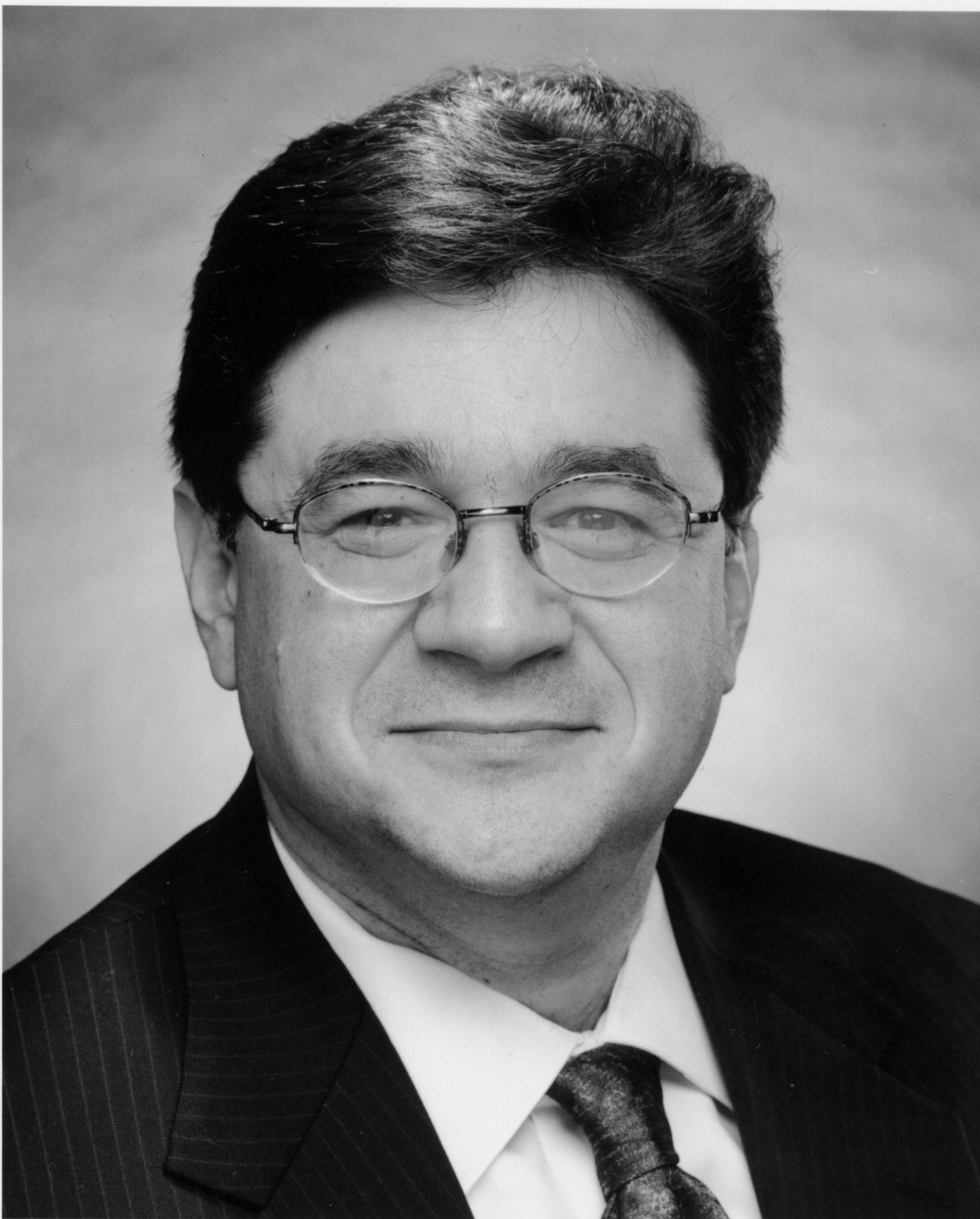
Former Senior Associate
Recent Work
Mr. Daniel Brumberg


Thomas Carothers, Marina Ottaway, Ms. Amy Hawthorne, …
Carnegie India does not take institutional positions on public policy issues; the views represented herein are those of the author(s) and do not necessarily reflect the views of Carnegie, its staff, or its trustees.
Experts weigh in on whether the United States is too hostile toward China.

Stephen Wertheim, Evan S. Medeiros, Vijay Gokhale

As India’s economy recovers from the coronavirus pandemic, Indian businesses need efficient financial structures to regain their ground. Key reforms to India’s Insolvency and Bankruptcy Code could fill these gaps.

Anirudh Burman

Access to cross-border data is an integral piece of the law enforcement puzzle. India is well placed to lead the discussions on international data agreements subject to undertaking necessary surveillance reforms.

Smriti Parsheera, Prateek Jha
After the coronavirus pandemic wanes, how will China’s reorientation of the Belt and Road Initiative to address global health concerns influence its relationships with South Asian countries?

Deep Pal, Rahul Bhatia
Early in the outbreak, government researchers forecast several high-risk scenarios that were downplayed or ignored in public messaging.
Gautam I. Menon