

Article
James F. Collins
{
  "authors": [
    "James F. Collins"
  ],
  "type": "legacyinthemedia",
  "centerAffiliationAll": "",
  "centers": [
    "Carnegie Endowment for International Peace"
  ],
  "collections": [],
  "englishNewsletterAll": "",
  "nonEnglishNewsletterAll": "",
  "primaryCenter": "Carnegie Endowment for International Peace",
  "programAffiliation": "",
  "programs": [],
  "projects": [],
  "regions": [
    "Caucasus",
    "Russia"
  ],
  "topics": [
    "Political Reform",
    "Foreign Policy",
    "Nuclear Policy"
  ]
}
REQUIRED IMAGE
There were smiles and sunshine and seacoast, but what exactly did the Bush-Putin summit succeed at, and fail at? RFE/RL correspondent Heather Maher asks James Collins -- the U.S. ambassador to Russia from 1997-2001, and now the director of the Russian and Eurasian program at the Carnegie Endowment for International Peace in Washington -- to tally the wins and losses.
Source: RFE/RL
There were smiles and sunshine and seacoast, but what exactly did the Bush-Putin summit succeed at, and fail at? RFE/RL correspondent Heather Maher asks James Collins -- the U.S. ambassador to Russia from 1997-2001, and now the director of the Russian and Eurasian program at the Carnegie Endowment for International Peace in Washington -- to tally the wins and losses.
RFE/RL: Many of the post-summit press reports said that Presidents George W. Bush and Vladimir Putin basically had a great time, and enjoyed good talks, but no major agreements were announced. Is that your impression?
James Collins: Well, I don't think that's quite correct. First of all, they completed negotiations and completed, or signed, depending on how you put it, a "Section 1-2-3 Agreement" on Friday [June 29]. Now, this is a big deal.
RFE/RL: How important is it?
Collins: The 1-2-3 Agreement is a framework agreement under which any U.S. cooperation on civilian nuclear matters takes place with another country. And to have this agreement means that we now have open the opportunity for our whole civilian nuclear communities in both countries to work together. And that has not been the case up till now.
There have been all kinds of restrictions and caveats and problems on information sharing, how information is handled, what can be disclosed, etc., etc., etc. And so what this means, it looks like we are really taking a major step ahead in the area of civilian nuclear cooperation.
RFE/RL: Can you put the significance of that "major step" into some kind of historical context?
Collins: My view of this is that it is the nuclear equivalent of what we did in space at the beginning of the '90s, when we broke down the barriers and got our two space communities into the same tent, and were able to produce the space station and a whole host of other things in civilian space cooperation.
It was very, very significant. And here's the context: there is going to come a large expansion of nuclear power generation, globally. If we don't have a new international framework for that, we're all going to have problems with proliferation, how do we manage the spent nuclear fuel, etc.
This is going to make it possible to get serious people to sit down and talk about how to deal with this. And that's going to be essential if you're going to have an international framework for the next generation of nuclear power.
RFE/RL: What about the biggest issue at the summit -- Russian opposition to U.S. plans to establish radar defense bases in Poland and the Czech Republic? What's your impression about what happened on that front?
Collins: I don't think they came to any agreement about eliminating the Polish and Czech programs. But on other things it was quite interesting to me that, first of all, Putin put forth some new ideas about additional facilities that could be made available for missile defense.
He also raised the idea of activating -- finally -- this "information fusion center" in Moscow. He also proposed the idea that we ought to be discussing missile defense jointly and that we ought to expand that discussion to include the Europeans and the NATO-Russia Council.
But what all of this really suggests to me is that the Russians have made the point that "we want to talk about missile defense and how it's going to develop for Europe." And the president [Bush] here has basically said, "Interesting -- we think that's a good idea, etc." What it seems to me did come out of this is a sort of commitment to a much expanded dialogue, to include the Europeans now.
RFE/RL: Bush said he and Putin had made "great strides" in laying the foundation for future Russian-U.S. relations in terms of nuclear security. What was he referring to?
Collins: There is a commitment not only to have working groups discuss missile defense but apparently follow on to the strategic arms treaties. So START I will run out in, I think, 2012, and there's a whole range of discussions that need to be undertaken if we're not simply to lose the entire framework within which the sort of arms control arrangements have been conducted.
And while it isn't so much about reducing numbers [of weapons] now -- although one might hope that would be a part of it -- it's about all of the confidence-building [measures] of inspections and all this kind of thing.
So, I think it is good news also that they have agreed that they will begin some serious discussion on these topics.
Copyright (c) 2007. RFE/RL, Inc. Reprinted with the permission of Radio Free Europe /Radio Liberty, 1201 Connecticut Ave., N.W. Washington DC 20036. To view this article on RFE/RL' site please click here.
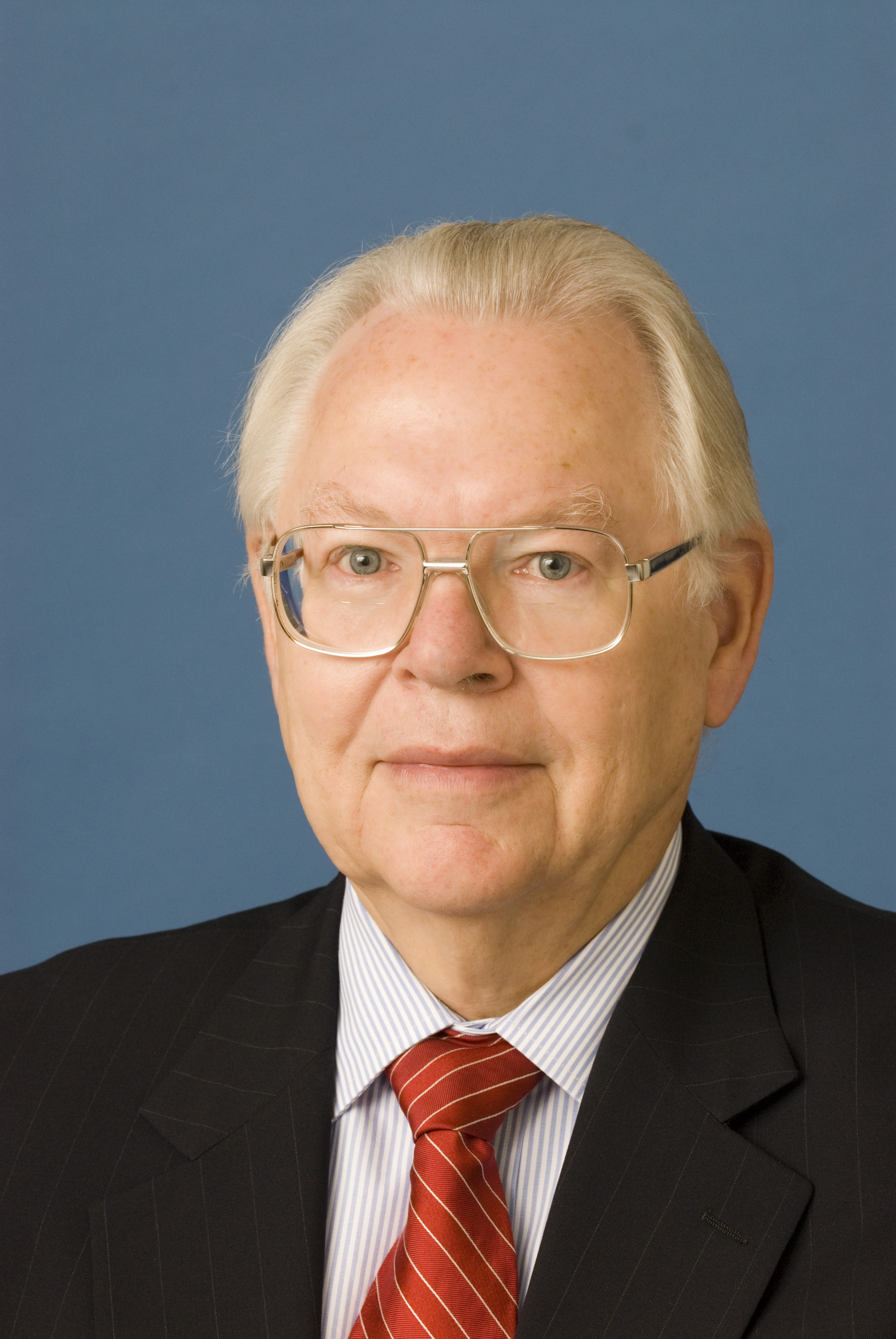
Nonresident Senior Fellow, Russia and Eurasia Program; Diplomat in Residence
Ambassador Collins was the U.S. ambassador to the Russian Federation from 1997 to 2001 and is an expert on the former Soviet Union, its successor states, and the Middle East.
Recent Work
James F. Collins
Dmitri Trenin, James F. Collins
Carnegie India does not take institutional positions on public policy issues; the views represented herein are those of the author(s) and do not necessarily reflect the views of Carnegie, its staff, or its trustees.

After the chill in ties between 2020 and 2024 that brought India–China relations to their lowest point in several decades, the two countries have engaged each other afresh. This paper argues that there are predominantly four imperatives guiding India’s approach to China, and they exist in an order of priority.

Saheb Singh Chadha

This piece argues that India’s central challenge is not managing a single flashpoint but resolving the underlying tension between expansion and institutional coherency of the BRICS grouping.

Vrinda Sahai

A partnership between India, a country of subcontinental size, and Africa, a continent of fifty-four countries, may seem asymmetric until one notes that both are home to nearly the same number of people—1.4 billion. This essay spells out the existing challenges to the partnership, its optimal potential, and the possible pathways to realize it over the next quarter-century.

Rajiv Bhatia

The India–EU Free Trade Agreement (FTA) is shaping up to be one of the most consequential trade negotiations, both economically and strategically. But, what’s in the agreement, what’s missing, and what will determine its success in the years ahead
Vrinda Sahai, Nicolas Köhler-Suzuki

Trump 2.0 has unsettled India’s external environment—but has not overturned its foreign policy strategy, which continues to rely on diversification, hedging, and calibrated partnerships across a fractured order.



Milan Vaishnav, ed., Sameer Lalwani, Tanvi Madan, …