• Research
  • About
  • Experts
Carnegie India logoCarnegie lettermark logo
AI
{
  "authors": [],
  "type": "pressRelease",
  "centerAffiliationAll": "dc",
  "centers": [
    "Carnegie Endowment for International Peace"
  ],
  "collections": [],
  "englishNewsletterAll": "",
  "nonEnglishNewsletterAll": "",
  "primaryCenter": "Carnegie Endowment for International Peace",
  "programAffiliation": "DCG",
  "programs": [
    "Democracy, Conflict, and Governance",
    "Middle East"
  ],
  "projects": [],
  "regions": [
    "North America",
    "United States",
    "Middle East",
    "Iran",
    "Israel",
    "North Africa",
    "Egypt",
    "Iraq",
    "Lebanon",
    "Palestine",
    "Bahrain",
    "Saudi Arabia"
  ],
  "topics": [
    "Political Reform",
    "Democracy",
    "Foreign Policy"
  ]
}
REQUIRED IMAGE

REQUIRED IMAGE

Press Release

Future U.S. Democracy Promotion Should Address Middle East Political Stagnation With Realistic Goals

U.S. democracy promotion efforts in the Middle East should focus on realistic political reform goals. The most pressing issue facing Arab countries is the development of political systems that can contend with evolving socio-economic realities and open participation to political opposition, argues Carnegie Middle East Program Director Marina Ottaway.

Link Copied
Published on Jun 4, 2008

WASHINGTON, June 4—U.S. democracy promotion efforts in the Middle East should focus on realistic political reform goals that correspond both to regional realities and the limited degree of actual U.S. influence. The most pressing issue facing Arab countries is the development of political systems that can contend with evolving socio-economic realities and open participation to political opposition, argues Carnegie Middle East Program Director Marina Ottaway.

An aggressive policy to promote a true redistribution of power is unlikely to succeed and could prove destabilizing at a time when the next U.S. president will already face crisis conditions in Iraq and Palestine, a defiant Iran, an unstable Lebanon, and high oil prices. In a new policy brief, Democracy Promotion in the Middle East: Restoring Credibility, Ottaway argues that the United States can, however, still play a useful role in encouraging reforms.

Future U.S. democracy promotion efforts should:

  • Draw a clear distinction between regime change and democracy promotion.
  • Set modest goals for a limited number of countries and pursue them quietly but transparently.
  • Consult with and listen to countries from the region before deciding which changes to encourage and support.
  • Affirm the United States’ intention to talk with all political and civil society actors—not as a sign of support or legitimacy, but as a reflection of the need for better understanding.

Ottaway concludes:

“Although the steps advocated here represent a retreat from the flamboyant rhetoric of the recent past, they are not a retreat from the promotion of political reform, which requires not words but consistent action. Democracy promotion in the Middle East has led to no positive results, while undermining U.S. credibility across the region. Neither incumbent regimes nor reform advocates believe any longer that the United States is seeking the democratic transformation of the region. Credibility will not be restored by new rhetoric but by consistent efforts to promote attainable goals.”

###


bullet
NOTES
  • Direct link to the PDF:  www.carnegieendowment.org/files/pb_60_ottaway_final.pdf
  • Direct link to the Arabic PDF: www.carnegieendowment.org/programs/arabic/marina%20policy%20brief.pdf
  • Marina S. Ottaway, director of the Carnegie Middle East Program, specializes in democracy and post-conflict reconstruction issues, including political transformation in the Middle East and reconstruction in Iraq, Afghanistan, the Balkans, and African countries. She is a senior associate in the Democracy and Rule of Law Program, which analyzes the state of democracy around the world and the efforts by the United States and other countries to promote democracy.
  • Press Contacts:
    Trent Perrotto, ph: 202/939-2372, tperrotto@ceip.org
    Jessica Jennings, ph: 202/939-2265, jjennings@ceip.org
  • The Carnegie Middle East Program combines in-depth local knowledge with incisive comparative analysis to examine economic, socio-political, and strategic interests in the Arab world. Through detailed country studies and the exploration of key cross-cutting themes, the Carnegie Middle East Program, in coordination with the Carnegie Middle East Center, provides analysis and recommendations in both English and Arabic that are deeply informed by knowledge and views from the region. The Carnegie Middle East Program has special expertise in political reform and Islamist participation in pluralistic politics throughout the region.
  • The Carnegie Middle East Center is a public policy think tank and research center based in Beirut, Lebanon. Bringing together senior researchers from the region, the Carnegie Middle East Center aims to better inform the process of political change in the Middle East and deepen understanding of the issues the region and its people face.
  • The Carnegie Democracy and Rule of Law Program rigorously examines processes of democratization around the world and the U.S., European, and multilateral efforts to promote political liberalization
  • The Arab Reform Bulletin addresses political reform in the Middle East. Sent monthly, it offers analysis from U.S.-based and Middle Eastern political experts in English and Arabic, as well as news synopses and resource guides.
Political ReformDemocracyForeign PolicyNorth AmericaUnited StatesMiddle EastIranIsraelNorth AfricaEgyptIraqLebanonPalestineBahrainSaudi Arabia

Carnegie India does not take institutional positions on public policy issues; the views represented herein are those of the author(s) and do not necessarily reflect the views of Carnegie, its staff, or its trustees.

More Work from Carnegie India

  • Commentary
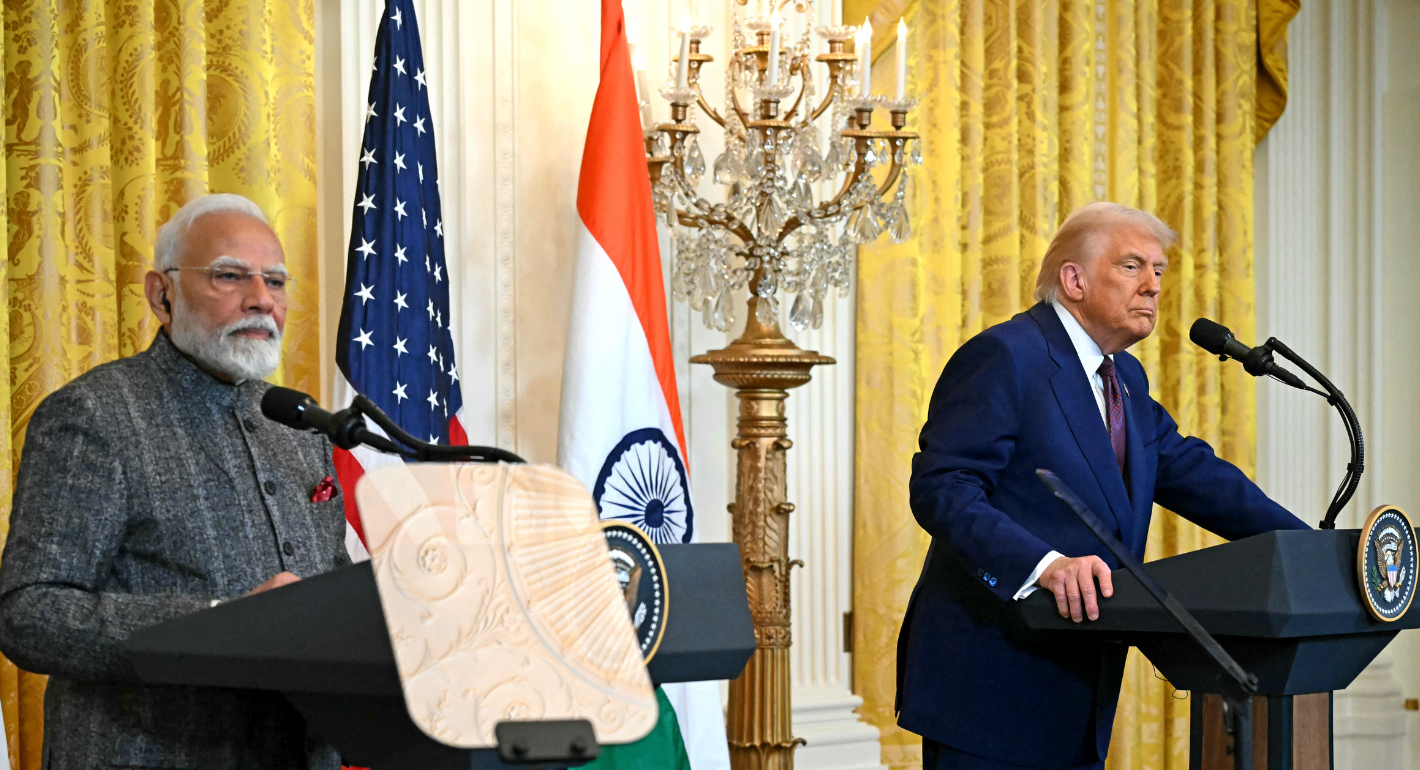
    India Signs the Pax Silica—A Counter to Pax Sinica?

    On the last day of the India AI Impact Summit, India signed Pax Silica, a U.S.-led declaration seemingly focused on semiconductors. While India’s accession to the same was not entirely unforeseen, becoming a signatory nation this quickly was not on the cards either.

      Konark Bhandari

  • Commentary
    The Impact of U.S. Sanctions and Tariffs on India’s Russian Oil Imports

    This piece examines India’s response to U.S. sanctions and tariffs, specifically assessing the immediate market consequences, such as alterations in import costs, and the broader strategic implications for India’s energy security and foreign policy orientation.

      Vrinda Sahai

  • Commentary
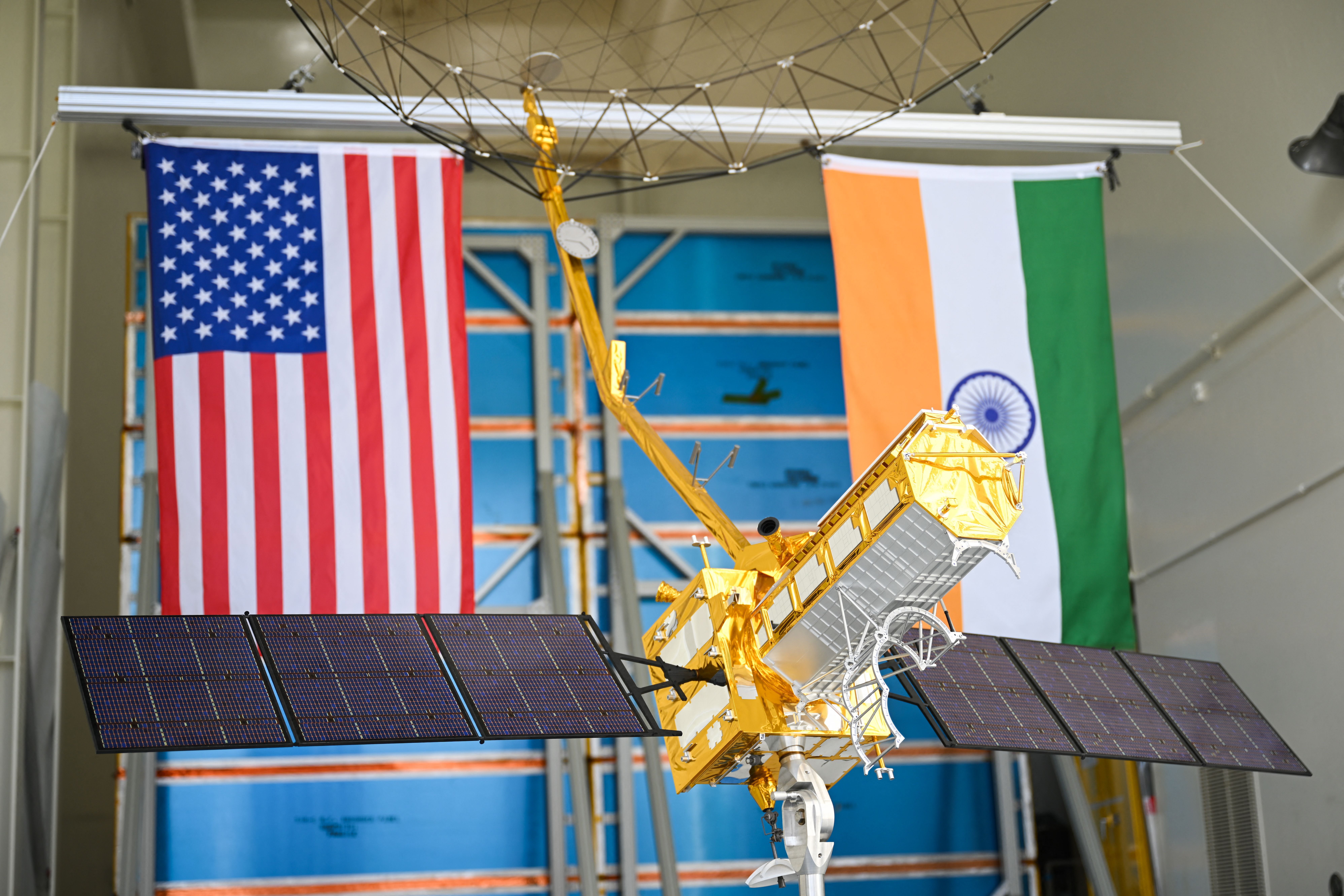
    NISAR Soars While India-U.S. Tariff Tensions Simmer

    On July 30, 2025, the United States announced 25 percent tariffs on Indian goods. While diplomatic tensions simmered on the trade front, a cosmic calm prevailed at the Sriharikota launch range. Officials from NASA and ISRO were preparing to launch an engineering marvel into space—the NASA-ISRO Synthetic Aperture Radar (NISAR), marking a significant milestone in the India-U.S. bilateral partnership.

      Tejas Bharadwaj

  • Commentary
    TRUST and Tariffs

    The India-U.S. relationship currently appears buffeted between three “Ts”—TRUST, Tariffs, and Trump.

      Arun K. Singh

  • Commentary
    Indian Airstrikes in Pakistan: May 7, 2025

    On May 7, 2025, between 1:05 and 1:30 a.m. (IST), airstrikes carried out by the Indian Air Force hit nine locations inside Pakistan and Pakistan occupied Kashmir (PoK). It was codenamed Operation Sindoor.

      Rudra Chaudhuri

Get more news and analysis from
Carnegie India
Carnegie India logo, white
Unit C-4, 5, 6, EdenparkShaheed Jeet Singh MargNew Delhi – 110016, IndiaPhone: 011-40078687
  • Research
  • About
  • Experts
  • Projects
  • Events
  • Contact
  • Careers
  • Privacy
  • For Media
Get more news and analysis from
Carnegie India
© 2026 Carnegie Endowment for International Peace. All rights reserved.