

Paper
Douglas H. Paal
{
  "authors": [
    "Douglas H. Paal"
  ],
  "type": "legacyinthemedia",
  "centerAffiliationAll": "dc",
  "centers": [
    "Carnegie Endowment for International Peace"
  ],
  "collections": [],
  "englishNewsletterAll": "ctw",
  "nonEnglishNewsletterAll": "",
  "primaryCenter": "Carnegie Endowment for International Peace",
  "programAffiliation": "SAP",
  "programs": [
    "South Asia"
  ],
  "projects": [],
  "regions": [
    "North America",
    "United States",
    "South Asia",
    "India",
    "Pakistan"
  ],
  "topics": [
    "Security",
    "Foreign Policy"
  ]
}
Source: Getty
The Obama administration will continue to treat relations with both New Delhi and Islamabad as a non-zero sum game. The new administration will not undo the U.S.-Indian nuclear agreement despite their reservations, while Vice-President Biden's expertise on Pakistan will provide new opportunities for progress.
Source: Daily News & Analysis

My sense is that Obama and his key appointees recognise the importance of India. While they may have reservations about the US-Indian nuclear agreement, they more importantly recognise that it must not be undone. It remains to be seen whether the Obama administration will see India as a strategic card to play against China, as some crudely did in the Bush administration, but the likelihood is low.
Changes from the Bush regime?
There will undoubtedly be some changes from Bush to Obama, but the US policy community broadly applauds treating relations with both New Delhi and Islamabad as a non-zero sum game. India and Pakistan face challenges internally which are entirely different, making their politics and prospects very different.
Nevertheless, there are issues left over from history that can drag them, and US interests, back into the cockpit of contention, and these will need continued management with a growing multilateral character.
Would a special envoy for the region with Kashmir on the agenda be a foreign policy mistake?
On the one hand, the US is remarkably bereft of experienced talent to work this set of issues. Bringing in someone with the intellectual gifts and force of personality, such as the rumoured Richard Holbrooke, makes sense from that perspective. On the other hand, the scope of a special envoy's task must be limited to what reasonably can be addressed. Afghanistan-Pakistan will fill even a workaholic's calendar, as we have seen with the constant stream of visitors to the area from Washington.
The Bush administration de-hyphenated India and Pakistan. A special envoy clubs them together.
I personally doubt that Secretary Clinton will want to put a special envoy to work on India and Pakistan directly, though I could be wrong in the end. We will have ambassadors in place to work their issues. Moreover, some issues, such as the origins of the terrible tragedy in Mumbai, should be supervised by political leaders, but worked day-to-day by police and intelligence professionals.
Will Obama take a tougher line on terrorism coming out of Pakistan?
Obama is unlikely to be tougher than Bush, but he stands a chance of being more effective. The experience of the past few years with Pakistan has blown away the mists of deception in both directions, creating a better basis for concrete cooperation between the anti-terror coalition and Pakistani forces.
Vice president Joe Biden has been particularly acute in identifying areas needing better supervision.
Will India get a reprieve from militancy if Obama focuses on Pakistan's lawless tribal belt?
I would hesitate to predict this. Clearly, the terrorists have an interest in diverting Pakistani forces into a confrontation with India. They are playing for the biggest stakes on the globe today, which is to turn Pakistan fundamentalist. Years of deficiency in working on the tribal belt need a painstaking remedy, through political conciliation, economic investment, and, some military action. Obama's team is on a steep learning curve with regard to the realities they face there.
How will Obama raise America's battered image around the world?
Obama is sure to raise the US image. By temperament and personal history, the man embodies much that the world traditionally admires about the US.He has a natural capacity to articulate America's better self, something which has been missing. One hopes these gifts will not be overwhelmed by difficulties that are too daunting or by overreaching to do too much.
India has concerns about the Democrat position on outsourcing.
The American Congress and people want time out from trade liberalisation and will be looking for signs that other countries in economic distress are choosing protectionist policies to justify our own measures. Trade will get rigorous attention from Obama. If India is concerned, it should take the initiative to offer the US a bilateral truce on trade protectionism. It then should lay forth an agenda of reforms to keep markets more open. India has benefited from the open markets it has exploited over the past 15 years.
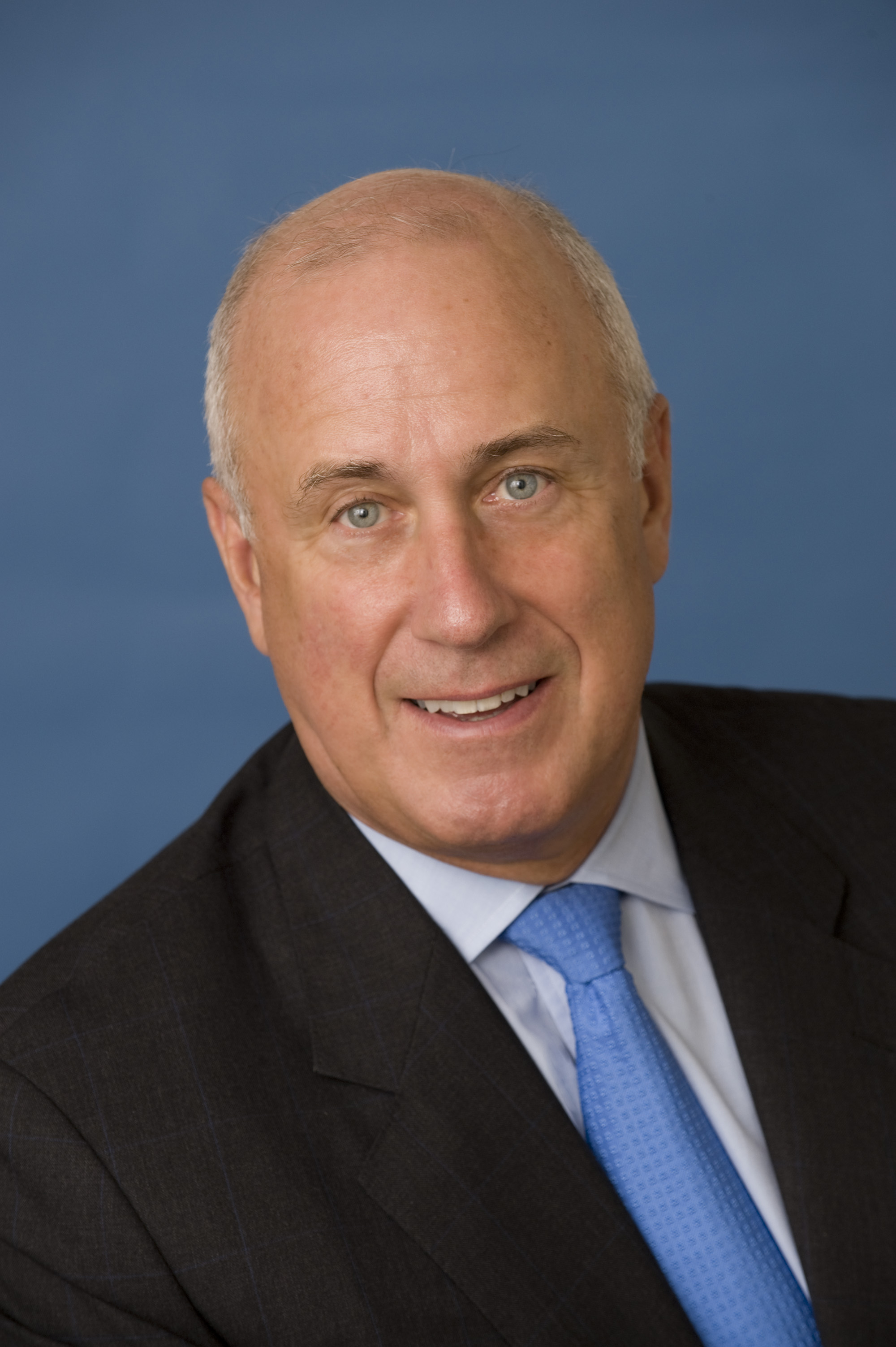
Distinguished Fellow, Asia Program
Paal previously served as vice chairman of JPMorgan Chase International and as unofficial U.S. representative to Taiwan as director of the American Institute in Taiwan.
Recent Work
Douglas H. Paal

Douglas H. Paal, Tong Zhao, Chen Qi, …
Carnegie India does not take institutional positions on public policy issues; the views represented herein are those of the author(s) and do not necessarily reflect the views of Carnegie, its staff, or its trustees.

In any defense establishment, change is an ongoing process. However, despite the best of intentions, existing bureaucracies, bound by habit and years of socialization, have their limits in implementing transformative change.

Anit Mukherjee

As AI grows more sophisticated, as the supply chains that power it become more contested, and as access to frontier models becomes geopolitically charged, India must begin to ask a different set of questions. Not what applications it can build on someone else’s infrastructure but what the world needs.

Konark Bhandari

The Indian Ocean Region hosts one of the densest concentrations of subsea cables in the world. Yet, despite accounting for a significant share of global internet traffic, India’s participation remains limited.

Charukeshi Bhatt

How is AI reshaping space security, creating governance challenges, and where does international diplomacy stand today?


Tejas Bharadwaj, Almudena Azcárate Ortega

After the chill in ties between 2020 and 2024 that brought India–China relations to their lowest point in several decades, the two countries have engaged each other afresh. This paper argues that there are predominantly four imperatives guiding India’s approach to China, and they exist in an order of priority.

Saheb Singh Chadha