

Article
Thomas Carothers
{
  "authors": [
    "Thomas Carothers"
  ],
  "type": "other",
  "centerAffiliationAll": "dc",
  "centers": [
    "Carnegie Endowment for International Peace",
    "Malcolm H. Kerr Carnegie Middle East Center"
  ],
  "collections": [
    "Democracy and Governance"
  ],
  "englishNewsletterAll": "democracy",
  "nonEnglishNewsletterAll": "",
  "primaryCenter": "Carnegie Endowment for International Peace",
  "programAffiliation": "DCG",
  "programs": [
    "Democracy, Conflict, and Governance"
  ],
  "projects": [],
  "regions": [
    "North America",
    "United States",
    "Egypt",
    "Gulf",
    "Levant",
    "Maghreb"
  ],
  "topics": [
    "Political Reform",
    "Democracy"
  ]
}
Source: Getty
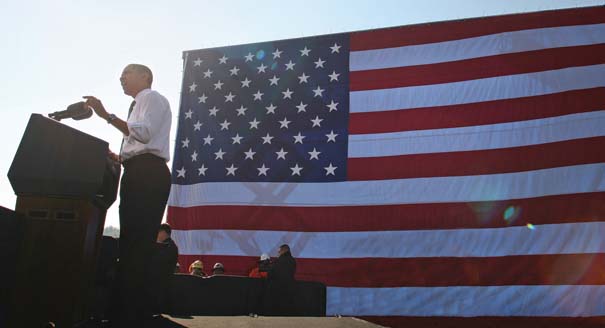
The Obama administration can find a positive new way forward on democracy promotion by changing how the United States supports democracy abroad rather than what emphasis to place on it relative to other interests.

By casting the war on terrorism as a global “freedom agenda,” yet cultivating close ties with autocratic regimes helpful on counterterrorism, he provoked justifiable charges of double standards. And by condoning U.S. abuses of the rule of law and human rights against persons caught in America’s antiterrorism net, he badly damaged America’s standing as a global symbol of democracy.
Some of President Obama’s initial actions offer a valuable start in a necessary process of dissociating the United States from this unfortunate legacy. Just by being elected, Obama sent a ringing signal to the world of the renewal
of American democracy and the power of the democratic idea.
His immediate order to close the Guantánamo Bay detention facility within a year and additional subsequent actions to reverse other legally problematic parts of the war on terrorism added momentum to the rejuvenation of America’s global democratic standing. His sober approach to Iraq—talking about it as a daunting policy challenge rather than as a shining example of U.S. democracy promotion—halts a long, painful delegitimization of the democracy promotion concept. His expressed openness to diplomatic engagement with hostile governments has put the regime-change line to rest.
Key Conclusions

Harvey V. Fineberg Chair for Democracy Studies; Senior Fellow, Democracy, Conflict, and Governance Program
Thomas Carothers, a senior fellow in the Carnegie Endowment for International Peace’s Democracy, Conflict, and Governance Program, is a leading expert on comparative democratization and international support for democracy.
Recent Work
Thomas Carothers
Thomas Carothers
Carnegie India does not take institutional positions on public policy issues; the views represented herein are those of the author(s) and do not necessarily reflect the views of Carnegie, its staff, or its trustees.

How is AI reshaping space security, creating governance challenges, and where does international diplomacy stand today?


Tejas Bharadwaj, Almudena Azcárate Ortega

The U.S.–India semiconductor cooperation story is well-stocked with top-level strategic intent. What remains unresolved, however, are some underlying challenges that will determine whether the cooperation actually functions. Three such friction points stand out.

Shruti Mittal
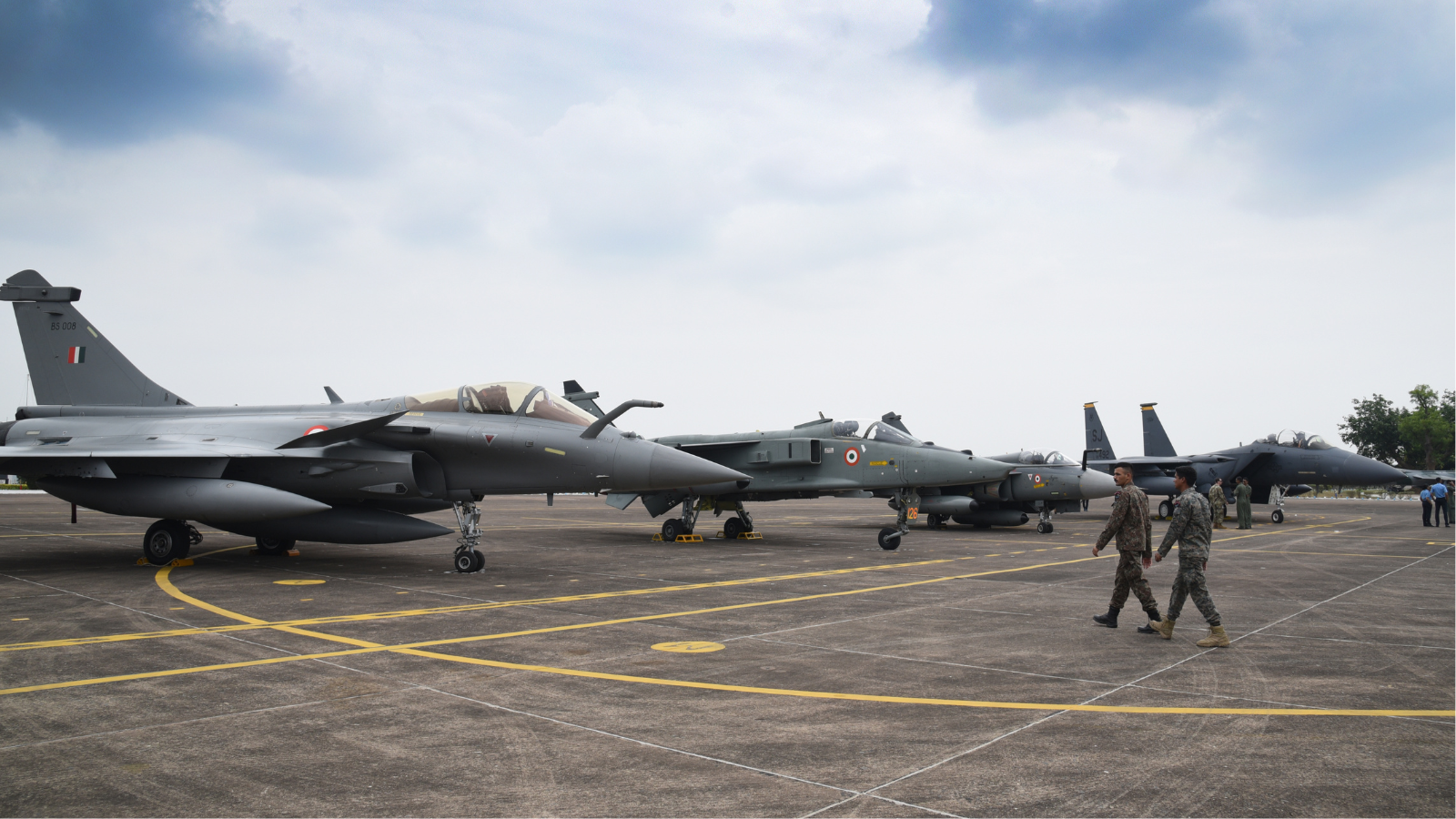
India and the United States are close to concluding a Reciprocal Defense Procurement Agreement (RDPA) that will allow firms from the two countries to sell to each other’s defense establishments more easily. While this may not remedy the specific grievances both sides may have regarding larger bilateral issues, an RDPA could restore some momentum, following the trade deal announcement.

Konark Bhandari

On the last day of the India AI Impact Summit, India signed Pax Silica, a U.S.-led declaration seemingly focused on semiconductors. While India’s accession to the same was not entirely unforeseen, becoming a signatory nation this quickly was not on the cards either.
Konark Bhandari

This piece examines India’s response to U.S. sanctions and tariffs, specifically assessing the immediate market consequences, such as alterations in import costs, and the broader strategic implications for India’s energy security and foreign policy orientation.

Vrinda Sahai