
• Research
  • About
  • Experts
Carnegie India logoCarnegie lettermark logo
{
  "authors": [
    "Ashley J. Tellis",
    "Michael Krepon"
  ],
  "type": "legacyinthemedia",
  "centerAffiliationAll": "dc",
  "centers": [
    "Carnegie Endowment for International Peace"
  ],
  "collections": [],
  "englishNewsletterAll": "ctw",
  "nonEnglishNewsletterAll": "",
  "primaryCenter": "Carnegie Endowment for International Peace",
  "programAffiliation": "SAP",
  "programs": [
    "South Asia"
  ],
  "projects": [],
  "regions": [
    "North America",
    "United States",
    "East Asia",
    "China",
    "Caucasus",
    "Russia"
  ],
  "topics": [
    "Security",
    "Military"
  ]
}

Source: Getty

In The Media

Another Wake-up Call

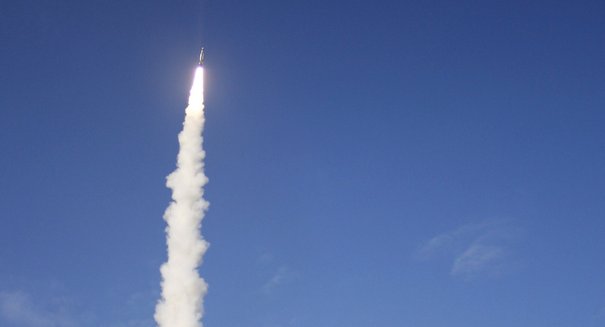
To counter the threat posed by debris from space weapons tests, space-faring nations should enact a Code of Conduct that bans further destructive tests of anti-satellite weapons.

Link Copied
By Ashley J. Tellis and Michael Krepon
Published on Mar 10, 2009

Source: Space News

Another Wake-up CallDebris poses a clear, present and growing danger to space operations. The latest wake-up call to take steps to address this danger was provided by the Feb. 10 collision between a dead Cosmos satellite and a revenue-producing Iridium satellite. This dreaded event may have produced the second worst debris field in the history of the space age. Debris travels at 10 times the speed of a rifle bullet at altitudes where hundreds of satellites used for intelligence gathering, personal communications and Earth observation operate. If a single piece of debris the size of a child's marble strikes one of these satellites, the international space station or the space shuttle it would strike with the equivalent force of a 1 ton safe dropped from a five-story building.

Some debris is inevitably released during every space launch. Extremely large spikes in space debris have been caused by space weapon tests designed to kill satellites on impact. In 1985, the administration of then U.S. President Ronald Reagan carried out a destructive anti-satellite weapon test, turning an aging U.S. weather satellite into 300 pieces of trackable debris. One lethal debris fragment from this test came within a mile of the newly launched international space station — 14 years later. It took 19 years for the debris caused by this test to burn out of the Earth's atmosphere. After this experience, the Pentagon lost enthusiasm for debris-producing anti-satellite weapon tests.

Continue reading this article here.

About the Authors

Ashley J. Tellis

Former Senior Fellow

Ashley J. Tellis was a senior fellow at the Carnegie Endowment for International Peace.

Michael Krepon

Michael Krepon co-founded the Stimson Center in 1989. He worked previously in the executive branch and on Capitol Hill.

Authors

Ashley J. Tellis
Former Senior Fellow
Michael Krepon

Michael Krepon co-founded the Stimson Center in 1989. He worked previously in the executive branch and on Capitol Hill.

SecurityMilitaryNorth AmericaUnited StatesEast AsiaChinaCaucasusRussia

Carnegie India does not take institutional positions on public policy issues; the views represented herein are those of the author(s) and do not necessarily reflect the views of Carnegie, its staff, or its trustees.

More Work from Carnegie India

  • Commentary
    India Signs the Pax Silica—A Counter to Pax Sinica?

    On the last day of the India AI Impact Summit, India signed Pax Silica, a U.S.-led declaration seemingly focused on semiconductors. While India’s accession to the same was not entirely unforeseen, becoming a signatory nation this quickly was not on the cards either.

      Konark Bhandari

  • Commentary
    The Impact of U.S. Sanctions and Tariffs on India’s Russian Oil Imports

    This piece examines India’s response to U.S. sanctions and tariffs, specifically assessing the immediate market consequences, such as alterations in import costs, and the broader strategic implications for India’s energy security and foreign policy orientation.

      Vrinda Sahai

  • Article
    Military Lessons from Operation Sindoor

    The India-Pakistan conflict that played out between May 6 and May 10, 2025, offers several military lessons. This article presents key takeaways from Operation Sindoor and breaks down how India’s preparations shaped the outcome and what more is needed to strengthen future readiness.

      Dinakar Peri

  • Book
    India and the Sovereignty Principle: The Disaggregation Imperative

    This book offers a comprehensive analysis of India's evolving relationship with sovereignty in a complex global order. Moving beyond conventional narratives, it examines how the sovereignty principle shapes India's behavior across four critical domains—from traditional military power to contemporary data governance.

      Rudra Chaudhuri, Nabarun Roy

  • Paper
    India-China Economic Ties: Determinants and Possibilities

    This paper examines the evolution of India-China economic ties from 2005 to 2025. It explores the impact of global events, bilateral political ties, and domestic policies on distinct spheres of the economic relationship.

      Santosh Pai

Get more news and analysis from
Carnegie India
Carnegie India logo, white
Unit C-4, 5, 6, EdenparkShaheed Jeet Singh MargNew Delhi – 110016, IndiaPhone: 011-40078687
  • Research
  • About
  • Experts
  • Projects
  • Events
  • Contact
  • Careers
  • Privacy
  • For Media
Get more news and analysis from
Carnegie India
© 2026 Carnegie Endowment for International Peace. All rights reserved.







