• Research
  • About
  • Experts
Carnegie India logoCarnegie lettermark logo
AI
{
  "authors": [],
  "type": "pressRelease",
  "centerAffiliationAll": "dc",
  "centers": [
    "Carnegie Endowment for International Peace"
  ],
  "collections": [],
  "englishNewsletterAll": "ctw",
  "nonEnglishNewsletterAll": "",
  "primaryCenter": "Carnegie Endowment for International Peace",
  "programAffiliation": "SAP",
  "programs": [
    "South Asia"
  ],
  "projects": [],
  "regions": [
    "South Asia",
    "Pakistan"
  ],
  "topics": [
    "Security"
  ]
}
REQUIRED IMAGE

REQUIRED IMAGE

Press Release

Pakistan’s Government Must Reform Intelligence Agencies, Reassert Civilian Control

Pakistan’s new and fragile government must reform the country’s intelligence agencies to counter their influence on civil society and politics.

Link Copied
Published on Mar 6, 2009

WASHINGTON, Mar 6—Pakistan’s new and fragile government must reform the country’s intelligence agencies to counter their influence on civil society and politics, Frederic Grare explains in a new report. The army remains the dominant actor in Pakistan’s political life, despite some improvements in civil-military relations in recent years. Previous abuses of power by both Pakistani regimes and the intelligence agencies—particularly Inter-Services Intelligence (ISI)—make reforms imperative before Pakistan can continue its democratic transition.

Through interviews with Pakistani officials and case studies in Indonesia and Chile, Grare argues that with patience, resolve, and assistance from the international community, Pakistan’s government can successfully reassert civilian control over the intelligence community.

Key recommendations for the international community:

  • Work through the Pakistani government, not the intelligence services. The current double standard of demanding that the government end support for regional extremists within its agencies, yet still maintaining working relations with those agencies, undermines the government and vindicates intelligence actors.
  • Pursue alternate supply routes to Afghanistan to diminish the importance of Pakistan and its agencies to the NATO mission. The international community should seek routes through China and Iran to reduce Islamabad’s leverage over Western countries fighting in Afghanistan. The newly opened Russia route isn’t a stable solution, given ongoing tensions over NATO.
  • Condition aid to the Pakistani military on improved control of the intelligence agencies and counterterrorism cooperation. Pakistani intelligence agencies are losing their base of support and are increasingly targeted by terrorists. Previous resistance to cooperate in counterterrorism is likely diminishing, and the international community should capitalize on the opportunity.

Recommendations for the Pakistani government:

  • Restore the Supreme Court and prosecute ISI violations of legality. Reestablishing judicial preeminence is critical to intelligence reform and democratization, so amnesty for past violations should not be used as a political bargaining tool.
  • Reinforce the separation between civilian and military intelligence agencies. The integration of former ISI agents into other civilian bodies—particularly the Intelligence Bureau (IB)—should be limited or stopped. Cross-recruitment prevents organizations from becoming independent.
  • Strengthen the police force. Better-trained and equipped police can take over some of the counterterrorism work currently used by the intelligence agencies to legitimize their control.
  • Build public support, but manage expectations. Public support is essential to advance reforms, but raising expectations beyond reasonable objectives could enflame social tensions. Public intolerance of the intelligence agencies' abuses is often the best guarantee against a return to corruption after reforms have taken place.

Grare concludes:

“Pakistan’s civilian government would be wrong to ignore the need to decisively establish its supremacy over the intelligence community. Reducing the role of the military in intelligence should be a priority not only because it will help the government consolidate itself domestically but also because the perception abroad of Pakistan’s emerging democracy and consequent foreign support will be shaped by its capacity to impose its authority on the intelligence agencies’ activities on issues ranging from domestic terrorism to foreign policy.”

###


NOTES

  • Click here for a direct link to the PDF
  • Frédéric Grare was a visiting scholar with the Carnegie Endowment for International Peace. Grare’s research focuses on the tension between stability and democratization in Pakistan, including challenges of sectarian conflict, Islamist political mobilization, and educational reform. He also facilitates interactions between U.S. experts and officials and European counterparts on the main policy challenges in South Asia. Grare is a leading expert and writer on South Asia, having served in the French Embassy in Pakistan and, from 1999 to 2003, in New Delhi as director of the Centre for Social Sciences and Humanities.
  • The Carnegie South Asia Program offers in-depth expertise on a range of issues relating to South Asia, including nonproliferation, international security, and political and economic development.
  • The Program produces South Asian Perspectives, a monthly publication showcasing selected views and opinions from the South Asian media and policy circles, thus providing a forum for policy makers to hear voices from the region.
  • Press Contact: Trent Perrotto, 202/939-2372, tperrotto@ceip.org
SecuritySouth AsiaPakistan

Carnegie India does not take institutional positions on public policy issues; the views represented herein are those of the author(s) and do not necessarily reflect the views of Carnegie, its staff, or its trustees.

More Work from Carnegie India

  • Paper
    Threading the Needle: India’s Path Forward with China

    After the chill in ties between 2020 and 2024 that brought India–China relations to their lowest point in several decades, the two countries have engaged each other afresh. This paper argues that there are predominantly four imperatives guiding India’s approach to China, and they exist in an order of priority.

      Saheb Singh Chadha

  • Article
    India’s Oil Security Strategy: Structural Vulnerabilities and Strategic Choices

    This piece argues that the present Indian strategy, based on opportunistic diversification and utilization of limited strategic reserves, remains inadequate when confronting supply disruptions. It evaluates India’s options in the short, medium, and long terms.

      Vrinda Sahai

  • India and a Changing Global Order: Foreign Policy in the Trump 2.0 Era
    Research
    India and a Changing Global Order: Foreign Policy in the Trump 2.0 Era

    Trump 2.0 has unsettled India’s external environment—but has not overturned its foreign policy strategy, which continues to rely on diversification, hedging, and calibrated partnerships across a fractured order.

      • Sameer Lalwani
      • +6

      Milan Vaishnav, ed., Sameer Lalwani, Tanvi Madan, …

  • Commentary
    The Impact of U.S. Sanctions and Tariffs on India’s Russian Oil Imports

    This piece examines India’s response to U.S. sanctions and tariffs, specifically assessing the immediate market consequences, such as alterations in import costs, and the broader strategic implications for India’s energy security and foreign policy orientation.

      Vrinda Sahai

  • Article
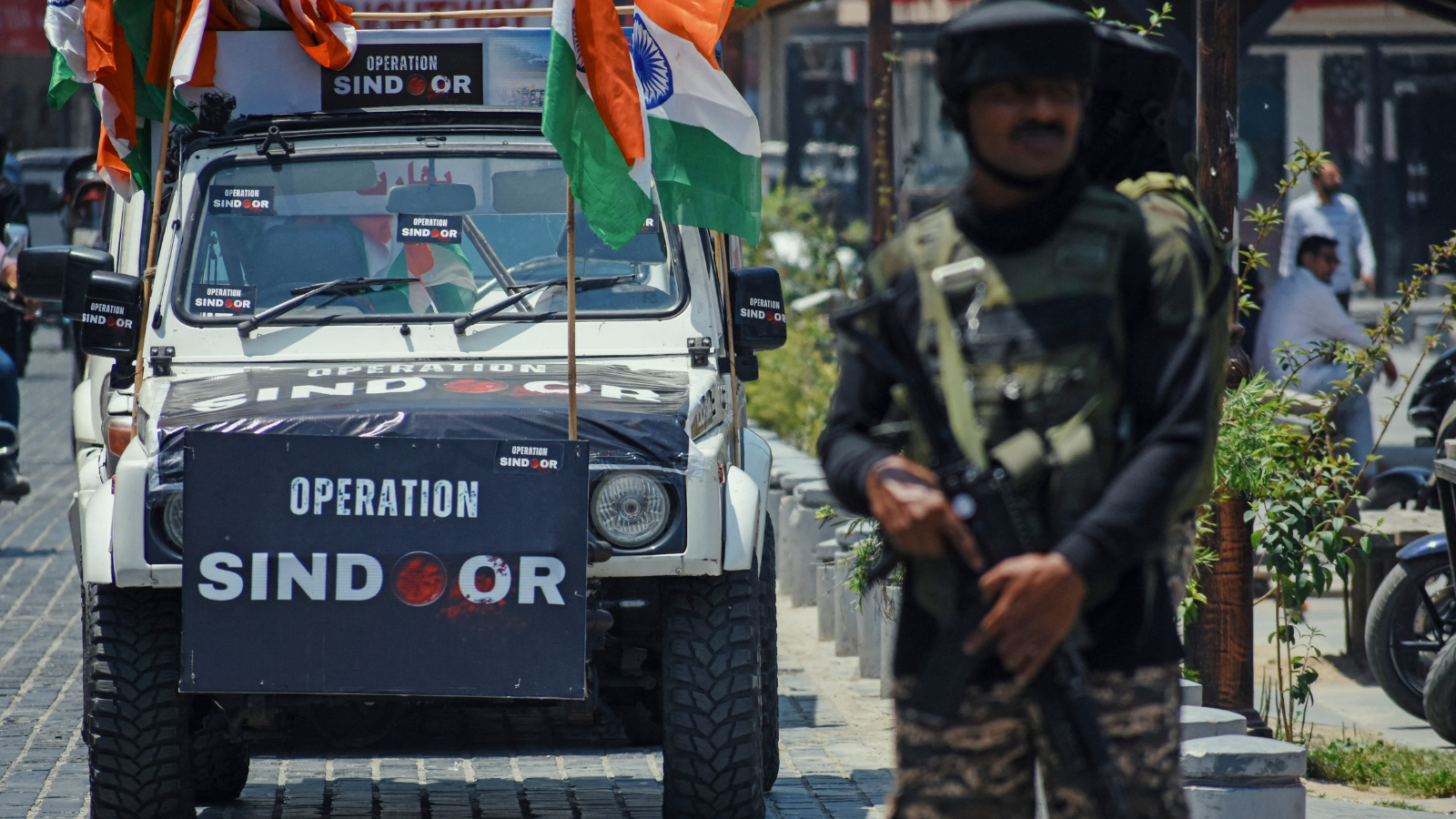
    Military Lessons from Operation Sindoor

    The India-Pakistan conflict that played out between May 6 and May 10, 2025, offers several military lessons. This article presents key takeaways from Operation Sindoor and breaks down how India’s preparations shaped the outcome and what more is needed to strengthen future readiness.

      Dinakar Peri

Get more news and analysis from
Carnegie India
Carnegie India logo, white
Unit C-4, 5, 6, EdenparkShaheed Jeet Singh MargNew Delhi – 110016, IndiaPhone: 011-40078687
  • Research
  • About
  • Experts
  • Projects
  • Events
  • Contact
  • Careers
  • Privacy
  • For Media
Get more news and analysis from
Carnegie India
© 2026 Carnegie Endowment for International Peace. All rights reserved.