

Other
Sharon Squassoni
{
  "authors": [
    "Sharon Squassoni"
  ],
  "type": "legacyinthemedia",
  "centerAffiliationAll": "dc",
  "centers": [
    "Carnegie Endowment for International Peace"
  ],
  "collections": [
    "U.S. Nuclear Policy"
  ],
  "englishNewsletterAll": "ctw",
  "nonEnglishNewsletterAll": "",
  "primaryCenter": "Carnegie Endowment for International Peace",
  "programAffiliation": "NPP",
  "programs": [
    "Nuclear Policy"
  ],
  "projects": [],
  "regions": [
    "North America",
    "United States",
    "Caucasus",
    "Russia"
  ],
  "topics": [
    "Foreign Policy",
    "Nuclear Policy"
  ]
}
Source: Getty
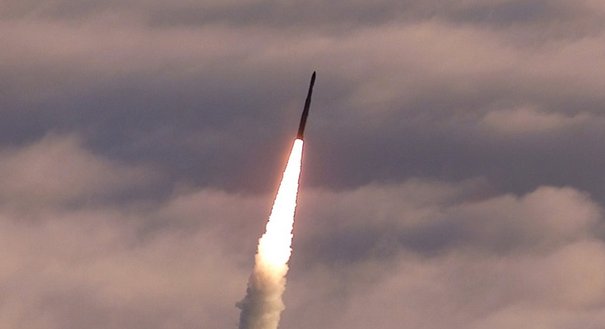
President Obama's decision to scrap the Bush administration's plans for a missile defense system in Poland and the Czech Republic will provide more breathing room for U.S.-Russian strategic arms control negotiations.
Source: New York Times

What are the consequences of President Obama’s decision? Will the alternative — deploying smaller missiles, at first aboard ships and later elsewhere in Europe or in Turkey — work?
Getting Russia Onboard
The most immediate outcome of President Obama’s decision to replace the ground-based interceptors and radars in Poland and the Czech Republic, respectively, with Aegis-based missiles and x-band radars is to provide more breathing room for U.S. -Russian strategic arms control negotiations. The arms control negotiations need to produce agreement before December 2009, when the START treaty expires, and the Russians have continued to complain about George W. Bush’s decision last year to deploy ground-based missile defense systems in Europe.
This link to the arms talks may have been regrettable but unavoidable. Given that the administration was likely to overturn the Bush missile defense deployments anyway, it may be good timing in terms of getting the most mileage from this concession. If it is true that Iranian long-range missile development has been moving more slowly than forecasted — and there is no reason not to believe that, since their capabilities in this area have been overestimated for more than a decade — then deploying a more flexible system against short- and medium-range missiles on an earlier timeframe makes sense.
The issue then remains what options the U.S. and Europe will seek if or when the Iranians actually do deploy a longer range ballistic missile. Will it be a mobile ground-based interceptor, which Boeing floated this summer? Or will relations with Russia in the future prove to be less of an impediment to fixed-missile defense sites? Better yet, will the threat of an Iranian nuclear-tipped missile have faded from view?
One area that absolutely requires Russia’s undivided attention and cooperation is persuading Iran to step back from the nuclear abyss. President Obama knows that. And if a change in missile defense deployments helps that happen, so much the better.

Former Senior Associate, Nuclear Policy Program
Squassoni came to Carnegie from the Congressional Research Service. She also served for nine years in the executive branch. Her last position at the State Department was director of Policy Coordination in the Nonproliferation Bureau.
Recent Work
Sharon Squassoni
Sharon Squassoni
Carnegie India does not take institutional positions on public policy issues; the views represented herein are those of the author(s) and do not necessarily reflect the views of Carnegie, its staff, or its trustees.

How is AI reshaping space security, creating governance challenges, and where does international diplomacy stand today?


Tejas Bharadwaj, Almudena Azcárate Ortega

After the chill in ties between 2020 and 2024 that brought India–China relations to their lowest point in several decades, the two countries have engaged each other afresh. This paper argues that there are predominantly four imperatives guiding India’s approach to China, and they exist in an order of priority.

Saheb Singh Chadha

This piece argues that India’s central challenge is not managing a single flashpoint but resolving the underlying tension between expansion and institutional coherency of the BRICS grouping.

Vrinda Sahai

A partnership between India, a country of subcontinental size, and Africa, a continent of fifty-four countries, may seem asymmetric until one notes that both are home to nearly the same number of people—1.4 billion. This essay spells out the existing challenges to the partnership, its optimal potential, and the possible pathways to realize it over the next quarter-century.

Rajiv Bhatia

The U.S.–India semiconductor cooperation story is well-stocked with top-level strategic intent. What remains unresolved, however, are some underlying challenges that will determine whether the cooperation actually functions. Three such friction points stand out.

Shruti Mittal