

Commentary
How is AI reshaping space security, creating governance challenges, and where does international diplomacy stand today?
Tejas Bharadwaj, Almudena Azcárate Ortega
{
  "authors": [],
  "type": "pressRelease",
  "centerAffiliationAll": "dc",
  "centers": [
    "Carnegie Endowment for International Peace",
    "Malcolm H. Kerr Carnegie Middle East Center"
  ],
  "collections": [],
  "englishNewsletterAll": "menaTransitions",
  "nonEnglishNewsletterAll": "",
  "primaryCenter": "Carnegie Endowment for International Peace",
  "programAffiliation": "MEP",
  "programs": [
    "Middle East"
  ],
  "projects": [],
  "regions": [
    "United States",
    "Middle East",
    "Egypt",
    "Gulf",
    "Levant",
    "Maghreb"
  ],
  "topics": [
    "Political Reform",
    "Democracy"
  ]
}
REQUIRED IMAGE
To have a chance at impacting political reform in the Middle East, the Obama administration should open a dialogue with governments in the region, modeled on the Helsinki process that was used to improve relations with the Soviet bloc.
WASHINGTON, Nov 19—President Obama is under pressure to relaunch the political reform agenda in the Middle East, but low U.S. credibility and the region’s political stagnation leave little hope that typical methods will be successful. The last time a U.S. administration faced a similar situation with such unfavorable circumstances for advancing political reform was over 30 years ago during the height of the Cold War.
To have a chance at impacting political reform in the Middle East under the present circumstances, the Obama administration should open a dialogue with governments in the region, modeled on the Helsinki process that was used to improve relations with the Soviet bloc. The United States must be willing to discuss the universal principles that should underlie its own Middle East policy if they want to engage Arab countries in a discussion of the principles they should respect, contends a new brief by Marina Ottaway.
If the Obama administration wants to embark on a new policy of promoting political reform, it must understand certain realities:
“There is, of course, a much easier way for the Obama administration to show that the United States still cares about political reform in the Middle East, one that would not require the United States to adjust its own policies,” writes Ottaway. “It could go back to exhorting Arab governments to change; it could launch new initiatives on women’s rights or education; it could even become more daring and enter into a dialogue with Islamist parties. Given the conditions that exist in the Arab world now, such steps would make little difference and do nothing to restore the United States’ much-eroded credibility on the subject of democracy and political reform.”
###
NOTES
Carnegie India does not take institutional positions on public policy issues; the views represented herein are those of the author(s) and do not necessarily reflect the views of Carnegie, its staff, or its trustees.

How is AI reshaping space security, creating governance challenges, and where does international diplomacy stand today?


Tejas Bharadwaj, Almudena Azcárate Ortega

The U.S.–India semiconductor cooperation story is well-stocked with top-level strategic intent. What remains unresolved, however, are some underlying challenges that will determine whether the cooperation actually functions. Three such friction points stand out.

Shruti Mittal
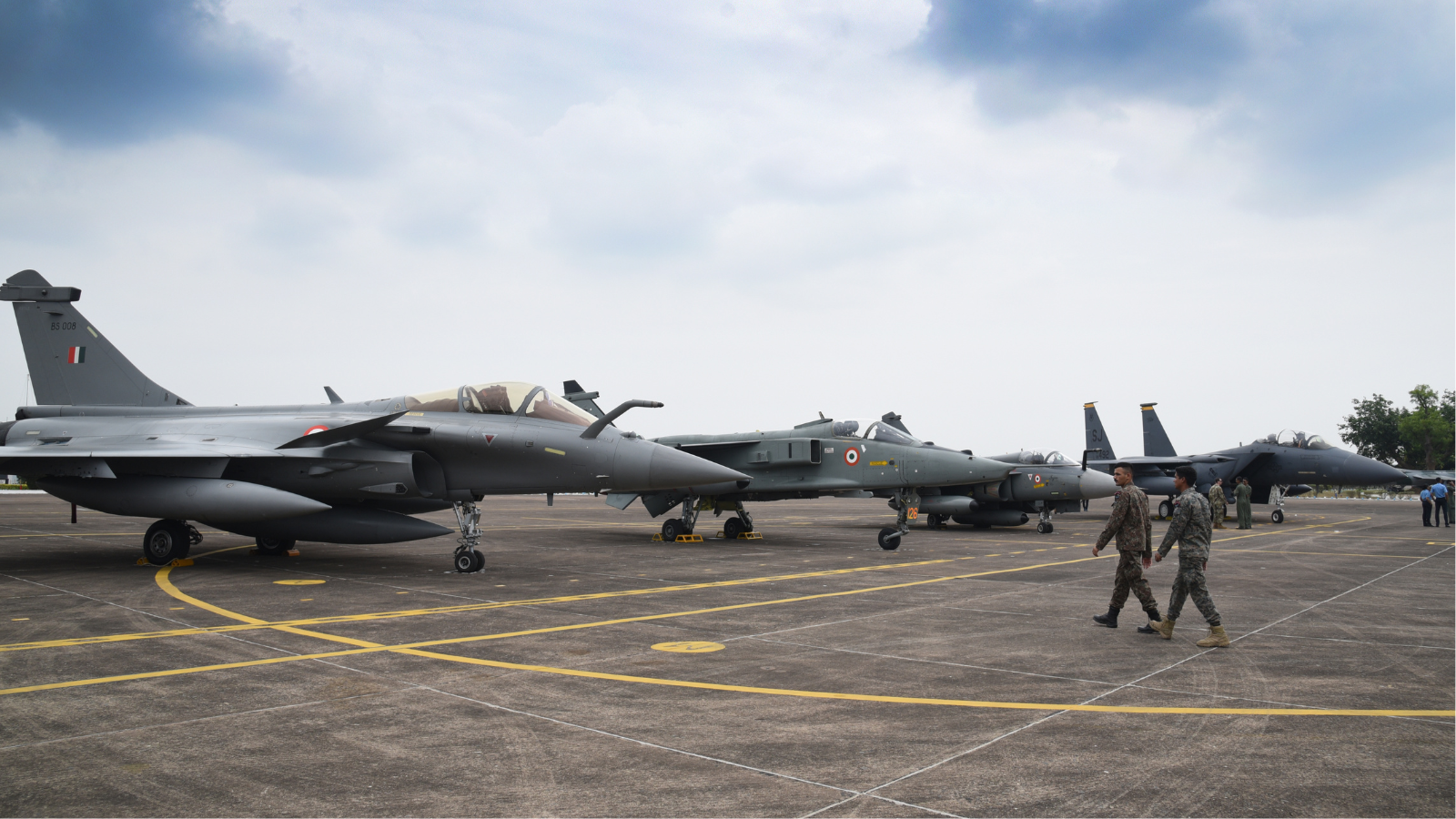
India and the United States are close to concluding a Reciprocal Defense Procurement Agreement (RDPA) that will allow firms from the two countries to sell to each other’s defense establishments more easily. While this may not remedy the specific grievances both sides may have regarding larger bilateral issues, an RDPA could restore some momentum, following the trade deal announcement.

Konark Bhandari

On the last day of the India AI Impact Summit, India signed Pax Silica, a U.S.-led declaration seemingly focused on semiconductors. While India’s accession to the same was not entirely unforeseen, becoming a signatory nation this quickly was not on the cards either.
Konark Bhandari

This piece examines India’s response to U.S. sanctions and tariffs, specifically assessing the immediate market consequences, such as alterations in import costs, and the broader strategic implications for India’s energy security and foreign policy orientation.

Vrinda Sahai