Armenia and Turkey have a chance to move forward from their troubled past by ratifying the historic protocols signed in October 2009. While the governments in both Yerevan and Ankara face strong opposition to the protocols, a failure to ratify the agreement could have disastrous consequences for the entire region.
Armenia and Turkey: The Truce in Need of a RescueFor a while, it looked like the start of a great reconciliation. Armenia and Turkey have lived beneath the vast shadow of the mass murder of Armenians in eastern Turkey during World War I, and to this day they maintain no diplomatic ties. But in October, the Armenian and Turkish foreign ministers met in Switzerland and signed two protocols to set up relations, open their common border -- closed since 1993 -- and begin addressing the painful disputes that divide them. Each nation's governments must still ratify the agreements. The United States, with its large Armenian American community and strategic alliance with Turkey, threw its weight behind the deal.
But this great truce is already in need of a rescue, and if it breaks down, we will end up in a worse place than where we started. In January, Turkey showed signs of having cold feet. Its foreign ministry objected to a judgment by the Armenian constitutional court supporting the protocols on the grounds that they are consistent with the founding principles of the state, which commit it to pursuing recognition of the 1915 killings as genocide.
The endorsement of the court, which the U.S. government welcomed, actually opens the way for the Armenian parliament to ratify the protocols. Turkey's move was a fairly transparent device to put the brakes on the process.
Why is Turkey trying to backtrack? Its government agreed to the protocols, in part because it wanted to prevent the U.S. administration and Congress from passing a resolution describing the Armenian massacres as genocide. But Ankara was surprised by the vehemence of the opposition the deal generated both at home and in its ally, Azerbaijan, which lost a conflict with the Armenians over the disputed region of Nagorno-Karabakh in the early 1990s.
The text of the protocols does not explicitly mention Nagorno-Karabakh, but the dispute looms large in the background. Turkey originally shut the border with Armenia in 1993; the Armenians captured an Azerbaijani province during the Nagorno-Karabakh war. When the accord was signed last year, the Turks hoped that there would be a breakthrough in the peace talks over the conflict, but that hope is fading. Turkish Prime Minister Recep Tayyip Erdogan has boxed himself in by proclaiming that the protocols will not be implemented until Armenia withdraws from occupied Azerbaijani territory.
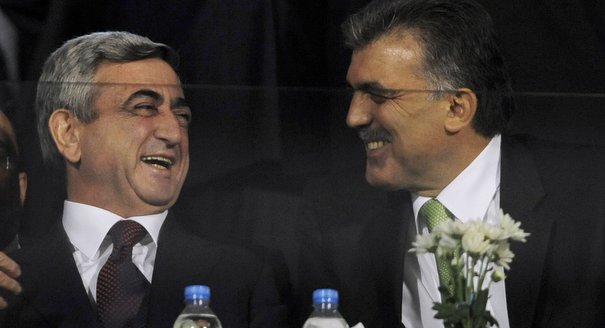
A rapprochement would be good news for Armenia, which would see its main border to the West opened and an end to years of regional isolation. Yet Armenian President Serge Sarkisian also faces unexpectedly strong opposition. In the diaspora, there are loud complaints that the provisions to confirm the existing Armenian-Turkish border and set up a joint historians' commission on the massacres relieve pressure on Ankara to own up to the Armenian genocide.
Yet the world would never tolerate a redrawing of Turkey's borders -- even Josef Stalin failed to accomplish that in the flush of victory over the Nazis in 1945 -- and the Turkish government is unlikely to recognize the Armenian genocide with a gun pressed to its head. Turkey's own growing internal debate about the crimes of 1915 is a much surer road to their eventual acknowledgment than political lobbying from abroad.
On the Armenian side, it would be political suicide for Sarkisian to make a major concession over Nagorno-Karabakh -- such as a unilateral withdrawal from occupied Azerbaijani land. Yet it is not unreasonable for the Turks to expect some progress. After all, they closed the Armenian border in solidarity with their Azerbaijani brethren, who would be furious if it were reopened without any move forward on the Nagorno-Karabakh dispute. At the very least, Azerbaijan could retaliate by charging the Turks higher gas prices and favoring Russian export routes over the Nabucco gas pipeline projected to traverse Turkey en route to Europe.
Allowing these protocols to fail would unleash a destructive chain of events. An aggrieved U.S. Congress might press ahead with a genocide resolution, a move that would provoke a strong anti-American backlash in Turkey. The already faltering peace process over the Nagorno-Karabakh conflict -- the major issue impeding peaceful development in the South Caucasus -- would be hit hard, and calls for war could resume in Azerbaijan.
But Armenia can take smaller steps to break the deadlock. Owing to the geography of this region, everyone suffers. Azerbaijan also has an isolated territory that suffers economically -- the exclave of Nakhichevan, separated from the rest of Azerbaijan by an unfriendly Armenia, its road and rail links severed. As a gesture of goodwill, the Yerevan government could take steps to ease the blockade of Nakhichevan in parallel with the opening of the Armenian-Turkish border. The Armenians could also begin work on rehabilitating the long-defunct railway line that once connected Azerbaijan, Armenia, Nakhichevan and Turkey. It is a sad symbol of the closed borders and suspicions that cripple this region, but one day it could be a major east-west transport route. The Turks would be wise to hail such an initiative as a success and move on with ratifying the protocols.
More broadly, better relations with Armenia offer Turkey a chance to lift the burden of history from its shoulders. Turkey's ambitious foreign policy, with its goal of "zero problems with its neighbors" and becoming the central power in its region, will come to nothing if its enmity with Armenia endures. Tiny Armenia may be dwarfed by Turkey's size and clout, but it can lay claim to a moral imperative.
Barkey served as a member of the U.S. State Department Policy Planning Staff, working primarily on issues related to the Middle East, the Eastern Mediterranean, and intelligence from 1998 to 2000.
Carnegie India does not take institutional positions on public policy issues; the views represented herein are those of the author(s) and do not necessarily reflect the views of Carnegie, its staff, or its trustees.
After the chill in ties between 2020 and 2024 that brought India–China relations to their lowest point in several decades, the two countries have engaged each other afresh. This paper argues that there are predominantly four imperatives guiding India’s approach to China, and they exist in an order of priority.
This piece argues that India’s central challenge is not managing a single flashpoint but resolving the underlying tension between expansion and institutional coherency of the BRICS grouping.
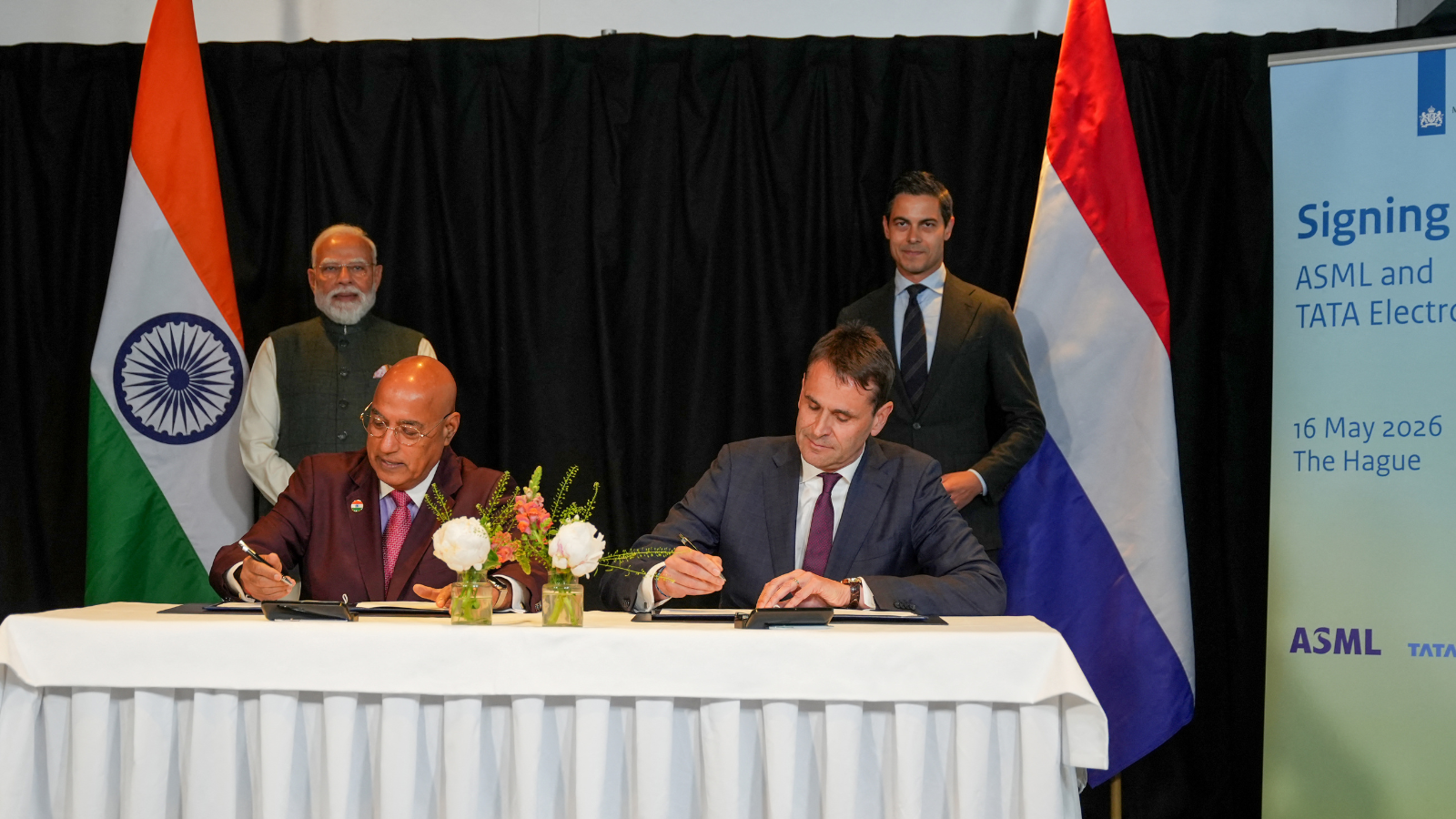
The ASML MoU with Tata Electronics is an indicator of how far the Indian semiconductor ecosystem has come. This ecosystem has been years in the making and represents real commercial logic.
A partnership between India, a country of subcontinental size, and Africa, a continent of fifty-four countries, may seem asymmetric until one notes that both are home to nearly the same number of people—1.4 billion. This essay spells out the existing challenges to the partnership, its optimal potential, and the possible pathways to realize it over the next quarter-century.
The India–EU Free Trade Agreement (FTA) is shaping up to be one of the most consequential trade negotiations, both economically and strategically. But, what’s in the agreement, what’s missing, and what will determine its success in the years ahead