• Research
  • About
  • Experts
Carnegie India logoCarnegie lettermark logo
AI
{
  "authors": [],
  "type": "other",
  "centerAffiliationAll": "dc",
  "centers": [
    "Carnegie Endowment for International Peace",
    "Carnegie Europe",
    "Malcolm H. Kerr Carnegie Middle East Center"
  ],
  "collections": [],
  "englishNewsletterAll": "menaTransitions",
  "nonEnglishNewsletterAll": "",
  "primaryCenter": "Carnegie Endowment for International Peace",
  "programAffiliation": "MEP",
  "programs": [
    "Middle East"
  ],
  "projects": [],
  "regions": [
    "United States",
    "Middle East",
    "Egypt",
    "Gulf",
    "Levant",
    "Maghreb",
    "North America"
  ],
  "topics": [
    "Political Reform",
    "Security",
    "Economy"
  ]
}
REQUIRED IMAGE

REQUIRED IMAGE

Other

Marwan Muasher to lead Carnegie Endowment’s work in the Middle East and Washington

Marwan Muasher, a prominent Jordanian diplomat and politician who served as Jordan’s foreign minister and deputy prime minister, will join the Carnegie Endowment. As vice president for studies, Muasher will oversee the work of the Endowment’s Middle East Program in Washington and its Middle East Center in Beirut.

Link Copied
Published on Apr 7, 2010

WASHINGTON, Apr 7—Marwan Muasher, a prominent Jordanian diplomat and politician who served as Jordan’s foreign minister and deputy prime minister, will join the Carnegie Endowment. As vice president for studies, Muasher will oversee the work of the Endowment’s Middle East Program in Washington and its Middle East Center in Beirut.

Making the announcement, Jessica Mathews, president of the Endowment, said:

“The unique, collaborative work of an established and leading program in Washington and our flourishing regional Center in Beirut—recently voted the leading think tank in the Middle East and North Africa—requires top level leadership and direction. There is no one better suited to provide that than Marwan Muasher. His unique understanding of the political, economic, and social needs of the region and the United States will provide critical direction to our research and ensure it offers practical, workable solutions for policy makers around the world. We are honored to have him join us.”

Muasher said:

“I am delighted to join Carnegie and look forward to building on the success in Washington and the Middle East. With the launch of its Middle East Center in Beirut three years ago, the Carnegie Endowment is unique among think tanks in offering research and analysis from both the region and the United States. Such collaboration among scholars beyond Washington, D.C., is essential for providing solutions to the challenges facing policy makers in both parts of the world. With Marina Ottaway and Paul Salem, I look forward to continuing with and building upon the exceptional caliber of research that has defined Carnegie’s analysis on the Middle East, particularly in the area of political reform.”

Muasher, who will join the Endowment in August, currently serves as senior vice president of external affairs at the World Bank. His long career has spanned the areas of diplomacy, development, civil society, and communications. Muasher served as his country’s spokesman and member of the delegation to the peace talks with Israel, and in 1995 opened Jordan’s first embassy in Israel. While serving as the Jordanian ambassador to Washington (1997–2002), the first free trade agreement between the United States and an Arab nation was signed.

As foreign minister, he played a key role in developing and promoting the Arab Peace Initiative. As deputy prime minister, he led a national, participatory effort to produce “The National Agenda,” a blueprint for political, economic, and administrative reform in the country. It proposed changes to the electoral law, elimination of all legal discrimination against women, legislation to allow civil society to operate with no government interference, and proposals to address the country’s biggest economic challenges—rising deficits and energy bills. The document is the first such pioneering and comprehensive effort in the Arab world.

###


NOTES

  • Marwan Muasher, who will join the Endowment in August, currently serves as senior vice president of external affairs at the World Bank. His long career has spanned the areas of diplomacy, development, civil society, and communications. Muasher served as his country’s spokesman and member of the delegation to the peace talks with Israel, and in 1995 opened Jordan’s first embassy in Israel. While serving as the Jordanian ambassador to Washington (1997–2002), the first free trade agreement between the United States and an Arab nation was signed.
  • The Carnegie Middle East Program combines in-depth local knowledge with incisive comparative analysis to examine economic, socio-political, and strategic interests in the Arab world to provide analysis and recommendations in both English and Arabic that are deeply informed by knowledge and views from the region.
  • The Carnegie Middle East Center based in Beirut, Lebanon, aims to better inform the process of political change in the Middle East.
  • Carnegie's Arab Reform Bulletin offers a monthly analysis of political and economic developments in Arab countries.
  • Press Contact: David Kampf, 202/939-2233, dkampf@ceip.org

Political ReformSecurityEconomyUnited StatesMiddle EastEgyptGulfLevantMaghrebNorth America

Carnegie India does not take institutional positions on public policy issues; the views represented herein are those of the author(s) and do not necessarily reflect the views of Carnegie, its staff, or its trustees.

More Work from Carnegie India

  • Commentary
    The Unresolved Challenges in U.S.–India Semiconductor Cooperation

    The U.S.–India semiconductor cooperation story is well-stocked with top-level strategic intent. What remains unresolved, however, are some underlying challenges that will determine whether the cooperation actually functions. Three such friction points stand out.

      Shruti Mittal

  • Article
    India’s Press Note 3 Gamble: Opening the FDI Door to China

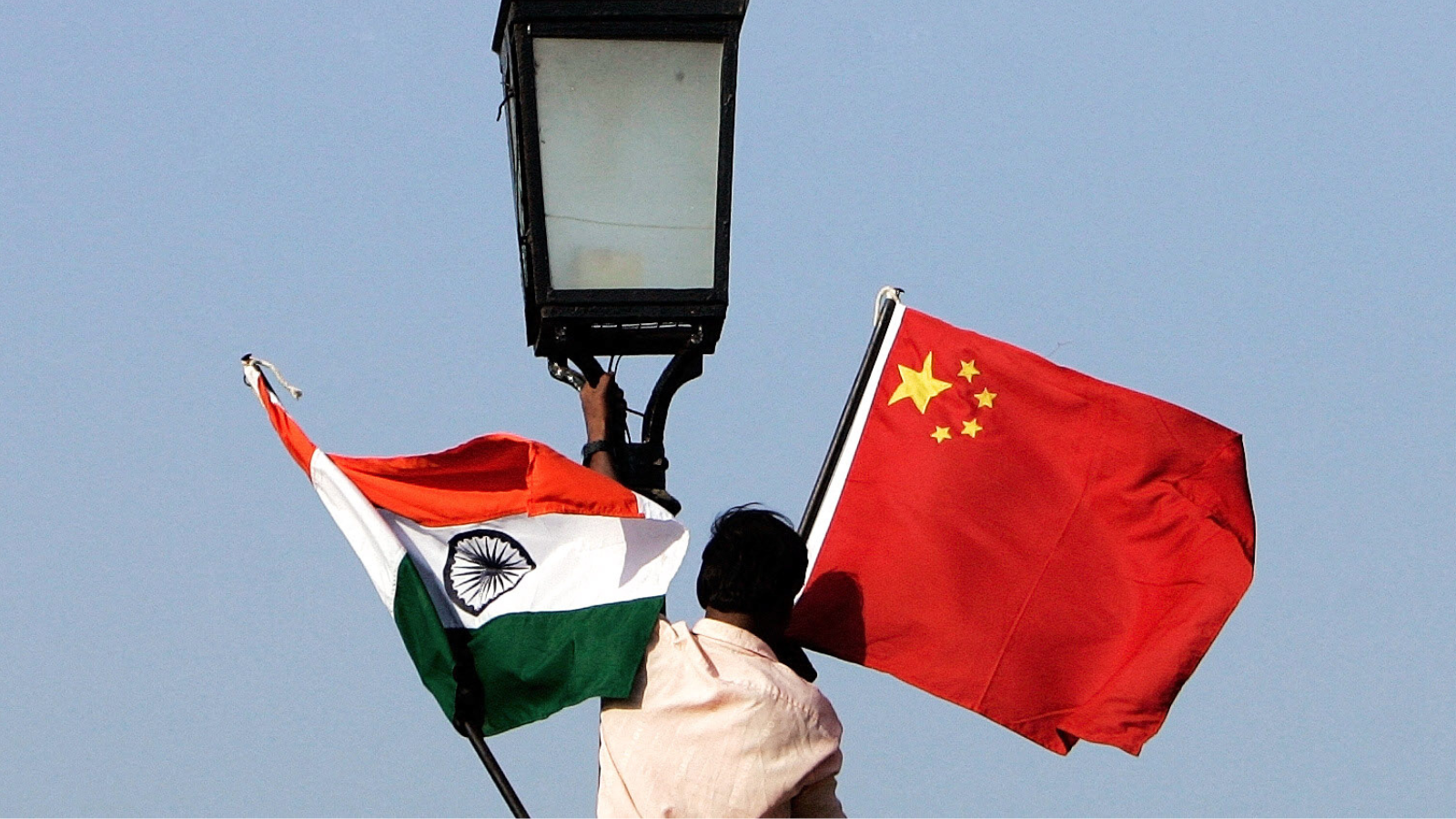
    On March 10, 2026, India’s Union Cabinet approved amendments to Press Note 3, a regulation that mandated government approval on all foreign direct investment (FDI) from countries sharing a land border with India. This amendment raises questions primarily about whether its stated benefits will materialize and if the risks have been adequately weighed. This piece will address the same.

      Konark Bhandari

  • Article
    India’s Oil Security Strategy: Structural Vulnerabilities and Strategic Choices

    This piece argues that the present Indian strategy, based on opportunistic diversification and utilization of limited strategic reserves, remains inadequate when confronting supply disruptions. It evaluates India’s options in the short, medium, and long terms.

      Vrinda Sahai

  • Article
    What Could a Reciprocal Defense Procurement Agreement Do for U.S.-India Ties?

    India and the United States are close to concluding a Reciprocal Defense Procurement Agreement (RDPA) that will allow firms from the two countries to sell to each other’s defense establishments more easily. While this may not remedy the specific grievances both sides may have regarding larger bilateral issues, an RDPA could restore some momentum, following the trade deal announcement.

      Konark Bhandari

  • Commentary
    India Signs the Pax Silica—A Counter to Pax Sinica?

    On the last day of the India AI Impact Summit, India signed Pax Silica, a U.S.-led declaration seemingly focused on semiconductors. While India’s accession to the same was not entirely unforeseen, becoming a signatory nation this quickly was not on the cards either.

      Konark Bhandari

Get more news and analysis from
Carnegie India
Carnegie India logo, white
Unit C-4, 5, 6, EdenparkShaheed Jeet Singh MargNew Delhi – 110016, IndiaPhone: 011-40078687
  • Research
  • About
  • Experts
  • Projects
  • Events
  • Contact
  • Careers
  • Privacy
  • For Media
Get more news and analysis from
Carnegie India
© 2026 Carnegie Endowment for International Peace. All rights reserved.