

Q&A
Stephen Tankel
{
  "authors": [
    "Stephen Tankel"
  ],
  "type": "legacyinthemedia",
  "centerAffiliationAll": "dc",
  "centers": [
    "Carnegie Endowment for International Peace"
  ],
  "collections": [],
  "englishNewsletterAll": "ctw",
  "nonEnglishNewsletterAll": "",
  "primaryCenter": "Carnegie Endowment for International Peace",
  "programAffiliation": "SAP",
  "programs": [
    "South Asia"
  ],
  "projects": [],
  "regions": [
    "South Asia",
    "Pakistan"
  ],
  "topics": [
    "Political Reform",
    "Security"
  ]
}
Source: Getty
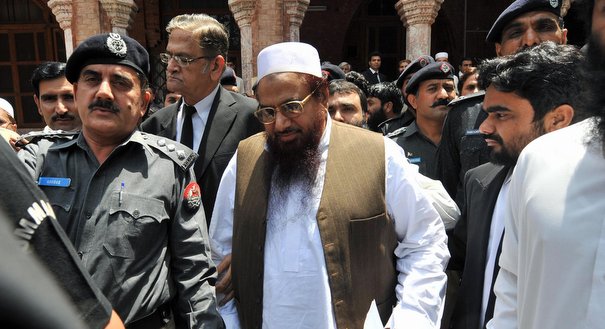
Lashkar-e-Taiba is one of Pakistan’s oldest and most powerful jihadi groups, whose global reach has only expanded since it launched a multi-target attack on the Indian city of Mumbai in November 2008.
Source: New America Foundation

The boldness of the Mumbai attacks and target selection suggested LeT continued to prioritize jihad against India, but was moving deeper into al-Qaeda’s orbit. Approximately one year after Mumbai, U.S. President Barack Obama wrote a letter to his Pakistani counterpart, President Asif Ali Zardari, in which he specifically mentioned LeT as one of the militant groups against which the government should act. A chorus of U.S. diplomats, security officials and military officers reiterated this call for action, pressuring Pakistan publicly as well as privately to move against LeT. Yet LeT’s position remains relatively secure. There are two main reasons. First, the country is facing a serious insurgency and the group remains one of the few militant outfits that officially refrain from launching attacks in Pakistan. The security establishment has determined that to avoid additional instability it must not take any action that could lead LeT to change this position. Second, the Pakistani army and its powerful Inter-Services Intelligence Directorate (ISI) have long considered LeT to be the country’s most reliable proxy against India and the group still provides utility in this regard as well as the potential for leverage at the negotiating table. Thus, the consensus is that, at least in the short-term, taking steps to dismantle the group would chiefly benefit India, while Pakistan would be left to deal with the costs.

Former Nonresident Scholar, South Asia Program
Tankel was a nonresident scholar at the Carnegie Endowment, where his research focuses on insurgency, terrorism, and the evolution of nonstate armed groups.
Recent Work
Stephen Tankel
Stephen Tankel
Carnegie India does not take institutional positions on public policy issues; the views represented herein are those of the author(s) and do not necessarily reflect the views of Carnegie, its staff, or its trustees.

In any defense establishment, change is an ongoing process. However, despite the best of intentions, existing bureaucracies, bound by habit and years of socialization, have their limits in implementing transformative change.

Anit Mukherjee

After the chill in ties between 2020 and 2024 that brought India–China relations to their lowest point in several decades, the two countries have engaged each other afresh. This paper argues that there are predominantly four imperatives guiding India’s approach to China, and they exist in an order of priority.

Saheb Singh Chadha

This piece argues that the present Indian strategy, based on opportunistic diversification and utilization of limited strategic reserves, remains inadequate when confronting supply disruptions. It evaluates India’s options in the short, medium, and long terms.

Vrinda Sahai
Trump 2.0 has unsettled India’s external environment—but has not overturned its foreign policy strategy, which continues to rely on diversification, hedging, and calibrated partnerships across a fractured order.



Milan Vaishnav, ed., Sameer Lalwani, Tanvi Madan, …

This piece examines India’s response to U.S. sanctions and tariffs, specifically assessing the immediate market consequences, such as alterations in import costs, and the broader strategic implications for India’s energy security and foreign policy orientation.
Vrinda Sahai