

Paper
Ashley J. Tellis
{
  "authors": [
    "Ashley J. Tellis"
  ],
  "type": "legacyinthemedia",
  "centerAffiliationAll": "dc",
  "centers": [
    "Carnegie Endowment for International Peace"
  ],
  "collections": [],
  "englishNewsletterAll": "ctw",
  "nonEnglishNewsletterAll": "",
  "primaryCenter": "Carnegie Endowment for International Peace",
  "programAffiliation": "SAP",
  "programs": [
    "South Asia"
  ],
  "projects": [],
  "regions": [
    "North America",
    "United States",
    "South Asia",
    "India"
  ],
  "topics": [
    "Security",
    "Military",
    "Foreign Policy"
  ]
}
Source: Getty
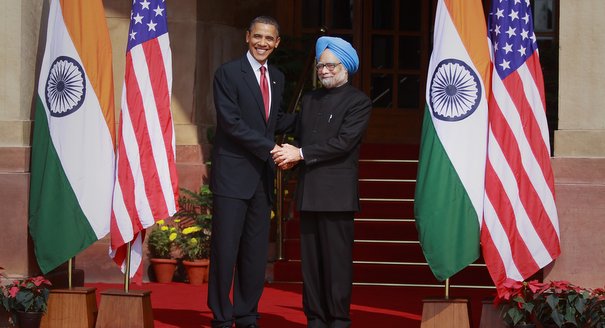
Among U.S. policymakers, disappointment with India has raised the question of whether the American effort to cement a strategic partnership with India was worth it after all.
Source: Force

To be sure, both outcomes can be explained away. The American contenders in the MMRCA race were always long shots, and they stood their best chance only if the government of India focused on value rather than pursuing the finest flying machines that money could buy. When the Indian Air Force settled for the latter — an arguably reasonable decision — the American entrants lost out. Similarly, the NLL is undoubtedly inconsistent with the international Convention on Supplementary Compensation for Nuclear Damage, and it undermines the ability of the American nuclear industry to do business in India. But it does not discriminate against the United States singularly. Rather, it impairs uniformly the ability of all foreign and domestic private suppliers to participate in India’s planned nuclear renaissance.
Like so much else in India, the nuclear liability law too will be eventually fixed — after many exertions, a great deal of frustration, and much pain. India, it seems, always walks straight in crooked lines. But the intervening disappointment with India in the United States, which is driven by a multiplicity of issues — the current paralysis in Indian governmental decision-making, the awkward yet strident positions taken by India in multilateral institutions on the Arab awakening, the seeming reluctance to deepen bilateral defence engagement even when it appears clearly in Indian interest, and the listless Indian pursuit of economic reforms — has raised the question of whether the American effort to cement a strategic partnership with India at the high cost borne by the United States was worth it after all.
Former Senior Fellow
Ashley J. Tellis was a senior fellow at the Carnegie Endowment for International Peace.
Recent Work
Ashley J. Tellis
Ashley J. Tellis
Carnegie India does not take institutional positions on public policy issues; the views represented herein are those of the author(s) and do not necessarily reflect the views of Carnegie, its staff, or its trustees.

The Indian Ocean Region hosts one of the densest concentrations of subsea cables in the world. Yet, despite accounting for a significant share of global internet traffic, India’s participation remains limited.

Charukeshi Bhatt

How is AI reshaping space security, creating governance challenges, and where does international diplomacy stand today?


Tejas Bharadwaj, Almudena Azcárate Ortega

After the chill in ties between 2020 and 2024 that brought India–China relations to their lowest point in several decades, the two countries have engaged each other afresh. This paper argues that there are predominantly four imperatives guiding India’s approach to China, and they exist in an order of priority.

Saheb Singh Chadha

This piece argues that India’s central challenge is not managing a single flashpoint but resolving the underlying tension between expansion and institutional coherency of the BRICS grouping.

Vrinda Sahai
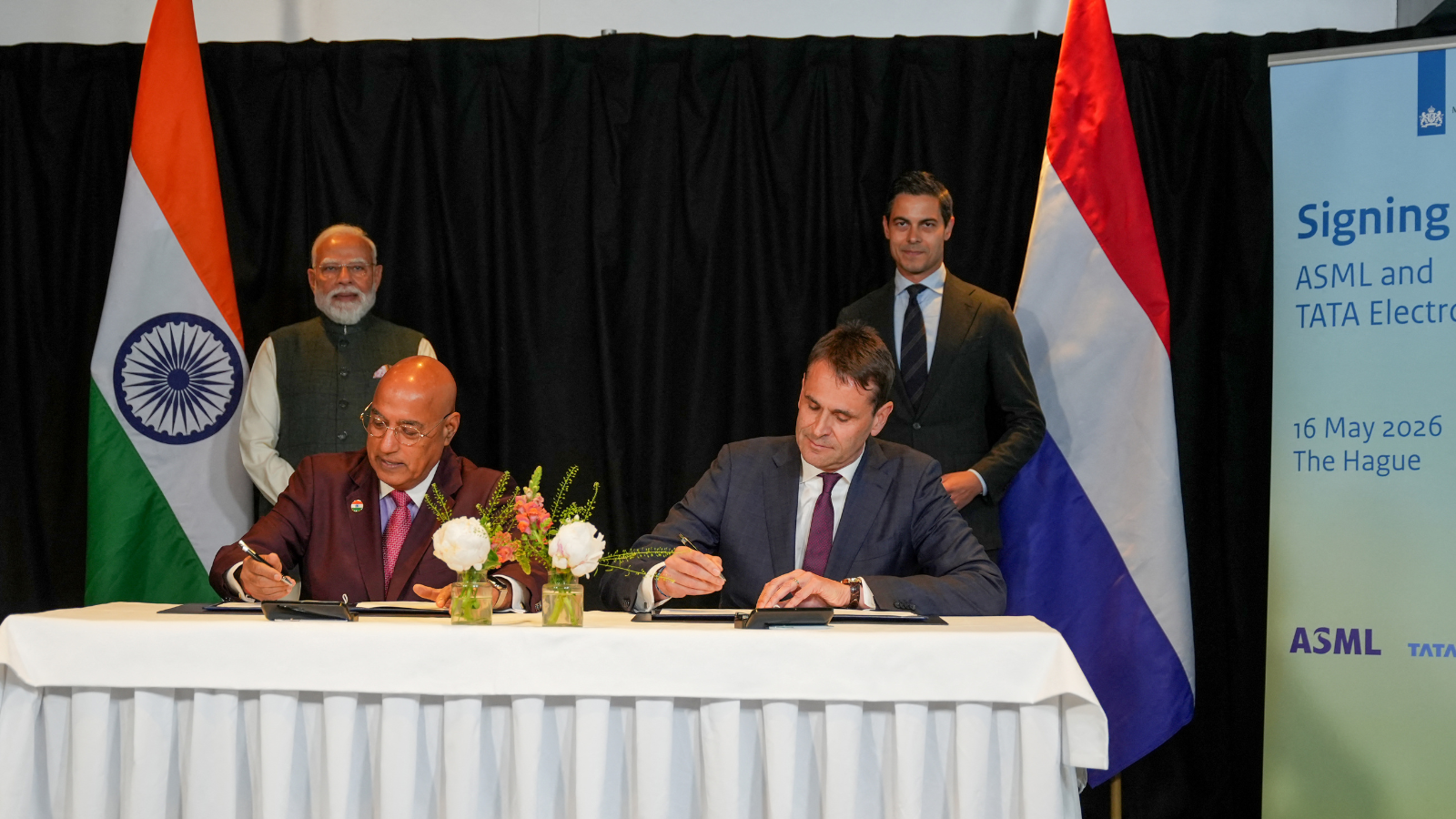
The ASML MoU with Tata Electronics is an indicator of how far the Indian semiconductor ecosystem has come. This ecosystem has been years in the making and represents real commercial logic.

Konark Bhandari