

Research
- +6
Yasmine Farouk, Nathan J. Brown, Maysaa Shuja Al-Deen, …
{
  "authors": [
    "Anouar Boukhars"
  ],
  "type": "legacyinthemedia",
  "centerAffiliationAll": "dc",
  "centers": [
    "Carnegie Endowment for International Peace",
    "Malcolm H. Kerr Carnegie Middle East Center"
  ],
  "collections": [],
  "englishNewsletterAll": "menaTransitions",
  "nonEnglishNewsletterAll": "",
  "primaryCenter": "Carnegie Endowment for International Peace",
  "programAffiliation": "MEP",
  "programs": [
    "Middle East"
  ],
  "projects": [],
  "regions": [
    "North Africa",
    "Algeria",
    "Mauritania",
    "Morocco",
    "Mali",
    "Maghreb"
  ],
  "topics": [
    "Political Reform",
    "Security"
  ]
}
Source: Getty
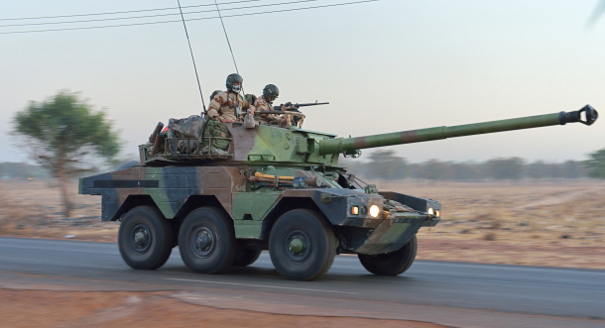
The fragile states of the Sahara and just below the desert pose significant challenges—not just for the United States and Europe, but also for the North African states themselves.
Source: New York Times

Nations in this region are ill equipped to deal with these problems. In fact, in most countries of the Sahel (the belt across Africa, just south of the desert), local governments have exacerbated conflict, either through inept responses or, in some cases, active collusion with criminal networks, Islamist militants, or ethnic dissidents.
International actors can play a crucial role in helping fragile states address their internal stresses. But assistance programs should be tailored to fit the specific needs of each country. In cases like Mauritania, where social and ethnic polarization is high and is conducive to violence, the focus should be on adopting and implementing legal frameworks that ensure inclusive political participation and equal access to economic resources and services. In situations of high criminality, like in Mali, professionalization of the police, prosecution and other actors in the criminal justice system is a must. But state actors must also thwart the criminal marketplace and the financial flows of the proceeds of trafficking. Otherwise efforts to empower the executive branch and prop up the military, police and judiciary are counterproductive, as was the case in Mali before the coup.The international community can also help mitigate external pressures by promoting regional cooperation in sharing intelligence, monitoring financial flows from drug trafficking and conducting joint military operations. International efforts have been hindered by several factors. Western governments and international donors have focused more heavily on propping up the capacity of individual fragile states, but largely ignored that insecurity is often multifaceted and is a product of both internal and external factors. The competition and different perception of threats among regional neighbors also hinders regional cooperation.
For example, Algeria is distrustful of its neighbors, especially the so-called pro-French axis, led by Morocco and the weaker states of the Sahel. This distrust is a serious obstacle for the region, because Algeria today has the power to be influential. The country has the largest defense budget on the African continent ($10.3 billion in 2012), far-reaching military power (because of its large fleet of aircraft) and recognized counterterrorism expertise. It also serves as a founding member and leader in several regional and global counterterrorism forums.
If Algeria refuses to engage in the conflict in Mali, then the international community must look for leadership in Morocco, the other North African heavyweight directly affected by the chaos in the Sahel. Morocco has the will, the influence and the capability to contribute to conflict resolution in the region.
This article originally appeared in the New York Times.
Former Nonresident Fellow, Middle East Program
Boukhars was a nonresident fellow in Carnegie’s Middle East Program. He is a professor of countering violent extremism and counter-terrorism at the Africa Center for Strategic Studies, National Defense University.
Recent Work



Yasmine Farouk, Nathan J. Brown, Maysaa Shuja Al-Deen, …

Frederic Wehrey, Nathan J. Brown, Bader Al-Saif, …
Carnegie India does not take institutional positions on public policy issues; the views represented herein are those of the author(s) and do not necessarily reflect the views of Carnegie, its staff, or its trustees.

In any defense establishment, change is an ongoing process. However, despite the best of intentions, existing bureaucracies, bound by habit and years of socialization, have their limits in implementing transformative change.

Anit Mukherjee

After the chill in ties between 2020 and 2024 that brought India–China relations to their lowest point in several decades, the two countries have engaged each other afresh. This paper argues that there are predominantly four imperatives guiding India’s approach to China, and they exist in an order of priority.

Saheb Singh Chadha

A partnership between India, a country of subcontinental size, and Africa, a continent of fifty-four countries, may seem asymmetric until one notes that both are home to nearly the same number of people—1.4 billion. This essay spells out the existing challenges to the partnership, its optimal potential, and the possible pathways to realize it over the next quarter-century.

Rajiv Bhatia

This piece argues that the present Indian strategy, based on opportunistic diversification and utilization of limited strategic reserves, remains inadequate when confronting supply disruptions. It evaluates India’s options in the short, medium, and long terms.

Vrinda Sahai

This piece examines India’s response to U.S. sanctions and tariffs, specifically assessing the immediate market consequences, such as alterations in import costs, and the broader strategic implications for India’s energy security and foreign policy orientation.
Vrinda Sahai