

Commentary
Nathalie Tocci, Jan Techau
{
  "authors": [
    "Jan Techau"
  ],
  "type": "legacyinthemedia",
  "centerAffiliationAll": "",
  "centers": [
    "Carnegie Endowment for International Peace",
    "Carnegie Europe",
    "Malcolm H. Kerr Carnegie Middle East Center"
  ],
  "collections": [
    "Europe’s Southern Neighborhood"
  ],
  "englishNewsletterAll": "",
  "nonEnglishNewsletterAll": "",
  "primaryCenter": "Carnegie Europe",
  "programAffiliation": "",
  "programs": [],
  "projects": [],
  "regions": [
    "Middle East",
    "Europe",
    "Egypt",
    "North Africa",
    "Western Europe"
  ],
  "topics": [
    "Foreign Policy",
    "Political Reform",
    "Democracy"
  ]
}
Source: Getty
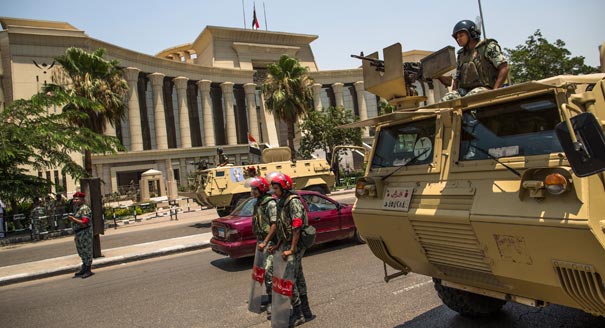
Europeans can do little to help end violence in Egypt, but Mohammed Morsi will not want to create a situation that would make a partnership with the EU impossible.
Source: Deutsche Welle

Jan Techau: I think there's huge concern on behalf of the Europeans that this entire transition process can get out of hand and go in a distinctively wrong direction. There are lots of indicators that this may already be the case. But here in Brussels, the focus is on balance-thinking. Obviously the situation is not ideal, and obviously many people are greatly disappointed in Mohammed Morsi and in the way he's conducted affairs.
On the other hand, people here are quite realistic that you can't turn Egypt into a democracy overnight - after so many years of autocratic rule. So people are willing to cut the Egyptians some slack. They also understand the value of order that needs to be restored. But they're watching the situation very keenly in a very concerned way.Jan Techau: As always, it's hybrid business here in Brussels. There's constant talk about it - in the European institutions, at the External Action Service and on an ambassadorial level. They are all getting the latest intelligence and are trying to make sense of the situation. Then there are talks in the member states in the national capitals, primarily in the three big ones - London, Paris, Berlin - but also on the southern flank of the European Union, which is especially involved. They have their own assessment and their own ideas. The magic trick in foreign policy is to somehow achieve a coordinated assessment of the situation. That's pretty difficult.
A key role is played by the EU delegation, which is now an embassy really, that reports from Egypt and delivers an independent assessment of what's happening. All of this is currently being looked at. But the situation in Egypt is volatile and in flux. It's been difficult to exercise influence over Egypt after the end of Mubarak, and it's getting even more difficult now.
Jan Techau: The question is: What do you mean by involvement? The way the EU and the Europeans per se can influence the situation on the ground is very limited. One of the hallmarks of this revolutionary movement that brought Mohammed Morsi to power is that the people want their own decisions. They don't have an interest in getting outside powers involved very deeply. They're interested in trade; they're interested in development in the widest sense. Investment and agreements of that kind have been made between the Egyptians and the EU just recently. But the political influence you can have on the ground is very limited. Obviously, there's no military option.
In a situation of crisis, in particular, where the news is coming out on a minute by minute basis, it's very difficult to exercise a calming influence. In the end, Mohammed Morsi needs to manage the crisis in a way that leaves the door open to afterwards still talk to the Europeans, and not create facts on the ground that make him an impossible partner. I think the ball is very much in his court at the moment.
Jan Techau: I think the ball is mostly in Mohammed Morsi's court. The key in the kind of offer that Mohammed Morsi made is that he means it. It's important that he actually gives a real opening to these forces and does not just create some kind of a fig leaf, some kind of a token meeting that in the end is only there to calm down the masses.
Mohammed Morsi has not fully understood that the political situation in Egypt has changed in a way that you can't just restore autocratic rule under a different label, under the Muslim Brotherhood label. The situation has changed because of the revolution. More inclusion is needed. All kinds of people now have a voice. All of these people have to have a say. You will not get social peace in Egypt if you still think that you can talk to the people and it doesn't mean anything. This is the kind of learning curve that Mohammed Morsi is experiencing at the moment. The question is: How flexible can he be? Does he have it in himself to embrace the situation? Will his political allies let him? Ultimately only the Egyptians can answer these questions. Not us.
Jan Techau: Their influence is limited. The Europeans have a big economic force behind them. They have trade issues that the Egyptians are extremely interested in. The Europeans are also very strong at tourism and other factors, which the Egyptians bitterly need. That gives the Europeans some leverage. But that's more long-term political leverage than it is immediate crisis management leverage.
I don't think that any European leader can have much of an influence at this point. Nobody can pick up the phone and tell Mohammed Morsi how to do it. I think we can only take a long-term perspective. That is the trickiness of the issue: 95 percent of foreign policy consists of managing of things that happen on a daily basis. Only 5 percent is long-term. That's why much of the long-term outcome depends on crisis situations like this. So the immediate influence is very limited. The same goes for the Americans, who have a very strong military cooperation with Egypt. There, it's even more difficult to exercise influence because the role of the military in all of this is reduced. Mohammed Morsi is less dependent on them than Egypt's previous rulers were. He has his own mandate.
So my feeling is that the Americans - just like the Europeans - are hoping that this crisis can get resolved in a somewhat decent way. And then, they hope, the more long-term political process can start again, in which we have a stronger influence and can play out the cards that we have.
Jan Techau: I think the eminence of Mohammed Morsi's position doesn't only come from the fact that Egypt is the cradle of the Muslim Brotherhood. When you look at the political nature of the Muslim Brotherhood around the Arab World, they're significantly different in all of the various countries that have had these revolutions. They're all very much local actors. There's not really a pan-Muslim Brotherhood ideology that they'd be strictly vetted to - even though it looks convenient for us to believe that.
The real eminence, the real reason why it's important is that Egypt has traditionally been the culturally and economically leading country in the region. It's the country which sets the pace, if you will. It has a blueprint function for other democratic societies. That's the responsibility that Morsi has. It's interesting how he's sending out mixed signals. On the one hand, he's very difficult on the domestic front, and Egyptians are not happy with the way he's handling it. On the other hand, he's kept some kind of cold peace with Israel, and he's done so in a rather skillful way. The treaty with Israel and Egypt stands. That plays a huge role in the entire region. It is of very high political and symbolic value that the Muslim Brotherhood, the new government in Egypt, is following the letters of that treaty. It's not warm love, but it's certainly better than the opposite, which would be some kind of armed conflict.
I think the foreign policy agenda of Mohammed Morsi has overall been a lot more satisfactory to Western observers than his domestic scheme. But in the end, the two need to match. And so far, we're not seeing much of that.
Jan Techau: I really don't know how the political forces will play out over the next few weeks or days and how strong they are in the end. Mohammed Morsi will need huge political leadership skills to first of all understand what's going on and secondly get the opposition in and accommodate them. He also has to keep his own power base and have an eye on the wider foreign policy scheme. It's impossible at this point to say who's going to prevail. The only fair assumption is that if the opposition don't get their way at least partly, we will see protracted turmoil in Egypt. The genie is out of the bottle after the revolution. The Egyptians are not easily treated like children any more. So the government needs a formula that makes people happy – and that's a very difficult task.
Director, Europe Team, Eurasia Group
Techau is director with Eurasia Group's Europe team, covering Germany and European security from Berlin. Previously, he was director of Carnegie Europe.
Recent Work
Nathalie Tocci, Jan Techau
Jan Techau
Carnegie India does not take institutional positions on public policy issues; the views represented herein are those of the author(s) and do not necessarily reflect the views of Carnegie, its staff, or its trustees.

After the chill in ties between 2020 and 2024 that brought India–China relations to their lowest point in several decades, the two countries have engaged each other afresh. This paper argues that there are predominantly four imperatives guiding India’s approach to China, and they exist in an order of priority.

Saheb Singh Chadha

This piece argues that India’s central challenge is not managing a single flashpoint but resolving the underlying tension between expansion and institutional coherency of the BRICS grouping.

Vrinda Sahai
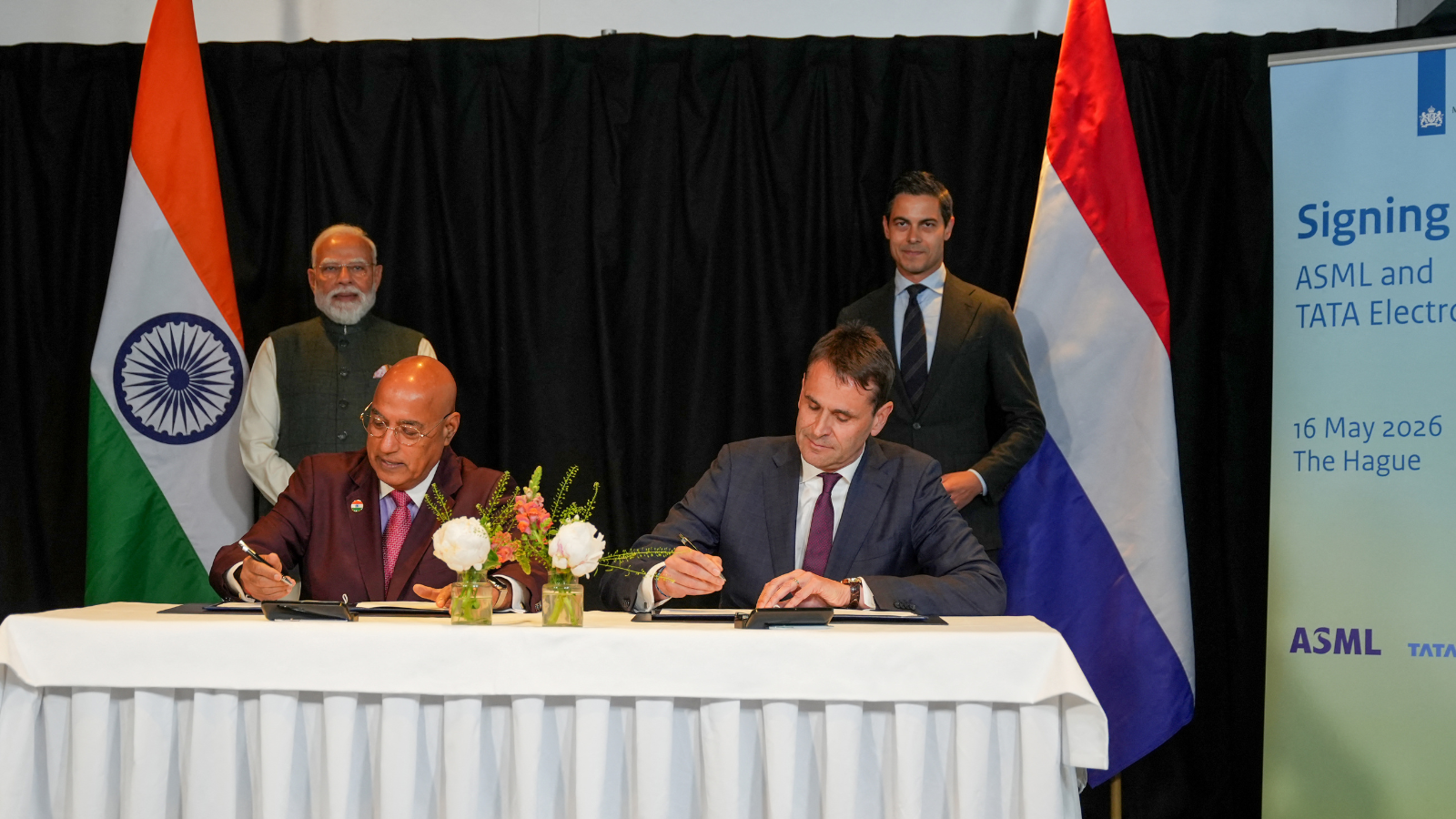
The ASML MoU with Tata Electronics is an indicator of how far the Indian semiconductor ecosystem has come. This ecosystem has been years in the making and represents real commercial logic.

Konark Bhandari

A partnership between India, a country of subcontinental size, and Africa, a continent of fifty-four countries, may seem asymmetric until one notes that both are home to nearly the same number of people—1.4 billion. This essay spells out the existing challenges to the partnership, its optimal potential, and the possible pathways to realize it over the next quarter-century.

Rajiv Bhatia

The India–EU Free Trade Agreement (FTA) is shaping up to be one of the most consequential trade negotiations, both economically and strategically. But, what’s in the agreement, what’s missing, and what will determine its success in the years ahead
Vrinda Sahai, Nicolas Köhler-Suzuki