

In The Media
David Rothkopf
{
  "authors": [
    "David Rothkopf"
  ],
  "type": "legacyinthemedia",
  "centerAffiliationAll": "",
  "centers": [
    "Carnegie Endowment for International Peace",
    "Malcolm H. Kerr Carnegie Middle East Center"
  ],
  "collections": [
    "Arab Awakening"
  ],
  "englishNewsletterAll": "",
  "nonEnglishNewsletterAll": "",
  "primaryCenter": "Carnegie Endowment for International Peace",
  "programAffiliation": "",
  "programs": [],
  "projects": [],
  "regions": [
    "Middle East",
    "North Africa",
    "Egypt",
    "Levant",
    "Maghreb"
  ],
  "topics": [
    "Political Reform",
    "Security",
    "Foreign Policy"
  ]
}
Source: Getty
The United States may soon face a choice between permanent chaos or the next generation of strongmen in the Middle East.
Source: Foreign Policy
In conversations last week with Middle East experts from the U.S. government and from the region, a disturbing set of themes recurred. First, there was a growing sense that absent some major initiative that currently lacks a leader, concept, and resources, Bashar al-Assad's regime in Syria could hold on for years to come, perhaps even as long as another decade. Next, were that to be the case or even if Assad were to fall sooner, Syria would remain an open wound, an ever more desolate, violent, chaotic battleground. Finally, even in the wake of a conflict-ending settlement, if Syria were to land in the hands of extremists, the aftershocks would reverberate around the region, spreading outward from Syria to Lebanon, Jordan, Iraq, Israel, and the Palestinian territories.
Combine all this with the growing sense of unease about the outcomes of "Arab Spring" upheavals in Tunisia, Libya, and Egypt and concerns regarding regimes in the Persian Gulf -- not to mention Afghanistan and sub-Saharan Africa -- and there is a credible scenario that calls for years of unending ebbing-and-flowing upheaval from Mali to Pakistan with few reliable pockets of stability in between. It is by no means a certainty, but one possibility is that we go from having been concerned about failed states to having to grapple with the harsh realities of a failed region.We could be in the midst of what will someday be seen as decades of interconnected conflicts. For this reason and because most of the world's major powers fear this outcome and the potential costs it would pose for them, there is a growing sense that rather than focusing on democratic outcomes to all this upheaval, the United States and others will soon be contenting themselves with another generation of strongmen throughout the Greater Middle East. The U.S. willingness to embrace dubious "partners" like Afghanistan's Hamid Karzai or Iraq's Nouri al-Maliki and U.S. reluctance to publicly criticize leaders with questionable values such as Egypt's Mohamed Morsy are seen as signs of this growing predisposition.
Similarly, these analysts see U.S. reluctance to undertake policies that might meaningfully affect outcomes in some of these at-risk countries as a contributing factor both to the coming era of protracted instability and to the likely rise in our appetite for strongmen. Syria is again a signature case. While the United States has in recent weeks ratcheted up its rhetoric and its peripheral involvement in the situation there, America's inaction is still seen as more important to the situation on the ground as its action.
Sending 200 troops into Jordan, making a commitment to provide more night-vision goggles, or having the CIA sort through the opposition in the hopes of finding a leader we can live with are all positive steps. But they are offset, and their true character as symbolic or halfway measures is revealed, by articles such as that in April 23's New York Times once again noting that the Israelis (like others) have concluded that Assad has used chemical weapons in his own country, thus crossing U.S. President Barack Obama's "red line."
When the red line was established, it was hardly thought that the potential U.S. response would be sending over more body armor. But now that using a new tougher list of adjectives appears to be the prime change in U.S. behavior, an inadvertent message has been sent: America's bark is worse than its bite. This is a dangerous message to send to dangerous people. Thus, while drawing red lines is risky behavior, Obama appears now to be on a course toward demonstrating that ignoring them after the fact is even riskier.
It could be argued that the U.S. intelligence community is still evaluating the evidence of the chemical attacks. Perhaps it is doing much more behind the scenes than the public knows. The reality, however, is that the situation is deteriorating. Further, U.S. efforts to marshal others into a constructive role have produced mixed results. Some, like the government of Qatar and to a degree that of Turkey, stand accused of supporting extremists. Others, like Saudi Arabia and the United Arab Emirates, have sought a different path but think that without stronger U.S. leadership, effective international action is not going to be possible.
The problem of course, is that the American people's appetite for further deep involvement in the region is near zero. Iraq and Afghanistan have proved to be costly disasters. Americans have very serious problems at home. New energy resources in the United States have led to a sense that Americans will find it ever easier to distance themselves from the region's problems. America's European allies have no organized foreign policy to speak of, have less appetite than the United States does to be involved on the ground in the region, and have even greater problems at home. The Russians are being systematically unhelpful. The Chinese are only willing to get involved at the margins, essentially making the case themselves that they are not ready for prime time. Regional actors range from the malevolent in Iran to the relatively weak, at risk, motivationally questionable, or all of the above among most of the moderate states. And none of these factors seems likely to change anytime soon.
Thus, we face a region in which there are few effective external or regional stabilizing forces. At the same time, Syria has illustrated that even if the United States, Europe, or others are slow to take significant action, extremist groups seeking to capitalize on the action are moving quickly to take advantage of the void. Estimates have Syria's al-Nusra Front, which has pledged its fealty to al Qaeda, now surpassing 12,000 in strength, with foreign fighters drawn from every corner of Europe and the surrounding region.
This leaves a choice between protracted chaos and autocrats. It doesn't take an Einstein to do the math. In that equation, democracy and the hope for real political reform in the region seem likely to lose out.
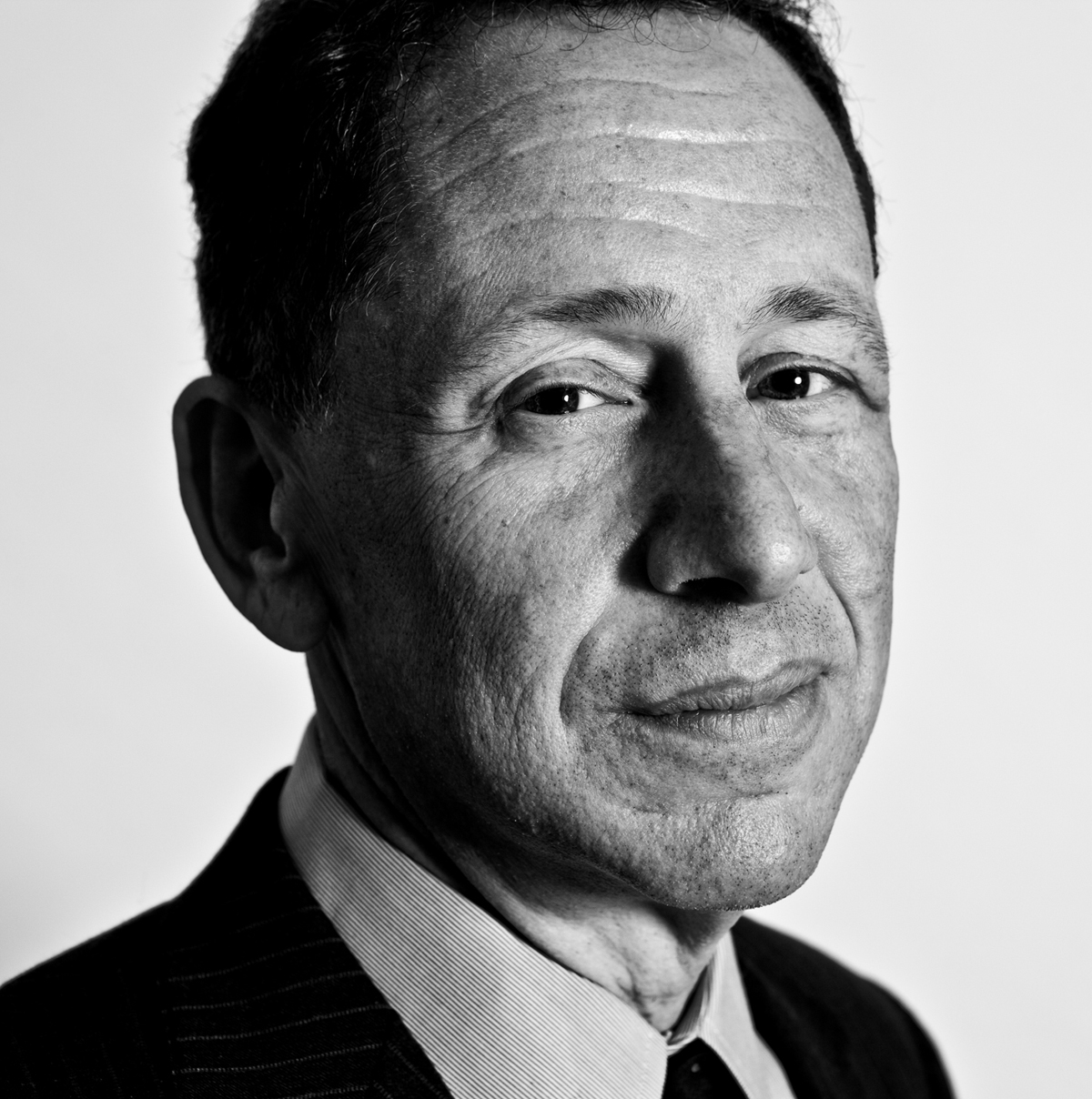
Former Visiting Scholar
David Rothkopf was a visiting scholar at the Carnegie Endowment as well as the former CEO and editor in chief of the FP Group.
Recent Work
David Rothkopf
David Rothkopf
Carnegie India does not take institutional positions on public policy issues; the views represented herein are those of the author(s) and do not necessarily reflect the views of Carnegie, its staff, or its trustees.

In any defense establishment, change is an ongoing process. However, despite the best of intentions, existing bureaucracies, bound by habit and years of socialization, have their limits in implementing transformative change.

Anit Mukherjee

After the chill in ties between 2020 and 2024 that brought India–China relations to their lowest point in several decades, the two countries have engaged each other afresh. This paper argues that there are predominantly four imperatives guiding India’s approach to China, and they exist in an order of priority.

Saheb Singh Chadha

This piece argues that India’s central challenge is not managing a single flashpoint but resolving the underlying tension between expansion and institutional coherency of the BRICS grouping.

Vrinda Sahai

A partnership between India, a country of subcontinental size, and Africa, a continent of fifty-four countries, may seem asymmetric until one notes that both are home to nearly the same number of people—1.4 billion. This essay spells out the existing challenges to the partnership, its optimal potential, and the possible pathways to realize it over the next quarter-century.

Rajiv Bhatia

The India–EU Free Trade Agreement (FTA) is shaping up to be one of the most consequential trade negotiations, both economically and strategically. But, what’s in the agreement, what’s missing, and what will determine its success in the years ahead
Vrinda Sahai, Nicolas Köhler-Suzuki