

Article
Marc Pierini
{
  "authors": [
    "Marc Pierini"
  ],
  "type": "legacyinthemedia",
  "centerAffiliationAll": "",
  "centers": [
    "Carnegie Endowment for International Peace",
    "Carnegie Europe",
    "Malcolm H. Kerr Carnegie Middle East Center"
  ],
  "collections": [
    "Europe’s Southern Neighborhood",
    "Arab Awakening"
  ],
  "englishNewsletterAll": "",
  "nonEnglishNewsletterAll": "",
  "primaryCenter": "Carnegie Europe",
  "programAffiliation": "",
  "programs": [],
  "projects": [],
  "regions": [
    "Middle East",
    "Egypt",
    "North Africa"
  ],
  "topics": [
    "Political Reform",
    "Economy",
    "Civil Society"
  ]
}
Source: Getty
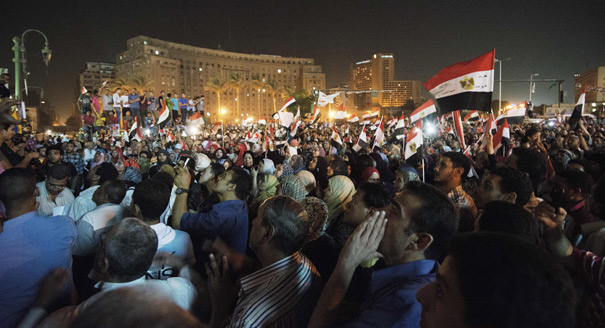
Tension has increased between supporters and opponents of President Morsi, with both threatening to stage mass protests on the one year anniversary of the president taking office.
Source: Voice of Russia
VOICE OF RUSSIA: Do you think that opposition rallies against Morsi will turn violent?
MARC PIERINI: I think the situation is very tense because the economic situation of the Egyptian people was bad before the revolution and became worse after the revolution, especially tourism has fallen sharply, foreign direct investment is reluctant, there is shortage of usable reserves etc. So, the economy is really on the brink of disaster. On top of that the president of Egypt has said very clearly that he was relying on ballot box only as his form of democracy and, therefore, is not engaged in dialogue with people who have not voted for him and that has aggravated the division in the Egyptian society. This is where we stand now. The situation was bad before, has become worse now and of course the army announcement now makes it a little bit more worrying I would say.
VOICE OF RUSSIA: You’ve mentioned a few times that the situation in Egypt has got worse. Do you think it is due to some wrong actions by Morsi’s government or it is because they didn’t do enough to prevent that?MARC PIERINI: I think it is more inaction than anything else. Everybody expected an agreement with the IMF as unpleasant as this is. This is a necessary step to reassure foreign investors, also the fact that there is no dialogue with opposition forces indeed worries investors. Instability in general worries tourists obviously and as everybody knows the Egyptian economy rests very largely on tourism, on foreign investment and on Suez Canal revenues. And if the two of these three main sources of income are badly hit, then the whole Egyptian economy is hit.
VOICE OF RUSSIA: Regarding this turbulence, do you think Morsi’s government would somehow take those protests into consideration and change their policy or they will pursue the same policy?
MARC PIERINI: One would hope they will take this into the account. But as you may have seen since November the polarization in the society has increase rather than decreased and, therefore, so far at least wisdom has not prevailed and the new rulers of Egypt have not heeded their citizens. That is where we stand at this point. Whether they will, I hope they will because one thing is not going away – it is the economic reality is underpinning the Egyptian economy, as I said foreign support, tourism, Suez Canal – this is all absolutely necessary for the Egyptian economy to keep going and this reality is not altered by the ballot box.
VOICE OF RUSSIA: If we talk about the opposition’s demands, what is your assessment? Do they have a person or politicians or any political force that they think would do things better than Morsi?
MARC PIERINI: That is the real problem of the current situation in political terms because we have a lot of people with extremely good ideas, good reasoning, sensible things to do in the opposition except that they are all very divided, number one, the Liberals, if you want, are divided, and two: altogether they have fewer followers than the Muslim Brotherhood. But the problem here is really the underlying concept. If at this stage of the Egyptian revolution the president and his allies want to continue governing by ballot box rules only, they are in a terribly difficult situation because even a large part of the people who voted for them are not seeing any practical improvement in their daily life, they are in the street, let alone who didn’t vote for them.
VOICE OF RUSSA: Now, what do you think, if the government continues pursuing the same policy, would those protests go on and on or they would somehow decrease?
MARC PIERINI: I would think that they would go on simply because with the revolution and with what happened since November, the citizens of Egypt have passed the barrier of fear, they know that they can express their feelings directly and especially if they feel that one camp winning the election is taking revenge on the other, then they will continue to do so. The limit however is that if this creates more and more instability, you will have less and less tourism, more reluctant investors and it is a spiral. I think this is what has prompted the army statement.
VOICE OF RUSSIA: Could the division between supporters and opponents of Morsi lead to a civil war?
MARC PIERINI: No, I don’t think it will go as far as civil war. It is a division that runs very deep, it is a division which is more complex than just religious conservatives and the more secularists not agreeing with Morsi at this point. But I am quite convinced personally that the army will not tolerate that it goes into a civil war.
This transcript was originally published in the Voice of Russia.

Senior Fellow, Carnegie Europe
Marc Pierini is a senior fellow at Carnegie Europe, where his research focuses on developments in the Middle East and Turkey from a European perspective.
Recent Work
Marc Pierini
Marc Pierini
Carnegie India does not take institutional positions on public policy issues; the views represented herein are those of the author(s) and do not necessarily reflect the views of Carnegie, its staff, or its trustees.

A partnership between India, a country of subcontinental size, and Africa, a continent of fifty-four countries, may seem asymmetric until one notes that both are home to nearly the same number of people—1.4 billion. This essay spells out the existing challenges to the partnership, its optimal potential, and the possible pathways to realize it over the next quarter-century.

Rajiv Bhatia

On March 10, 2026, India’s Union Cabinet approved amendments to Press Note 3, a regulation that mandated government approval on all foreign direct investment (FDI) from countries sharing a land border with India. This amendment raises questions primarily about whether its stated benefits will materialize and if the risks have been adequately weighed. This piece will address the same.

Konark Bhandari

This piece examines India’s response to U.S. sanctions and tariffs, specifically assessing the immediate market consequences, such as alterations in import costs, and the broader strategic implications for India’s energy security and foreign policy orientation.

Vrinda Sahai

This paper examines the evolution of India-China economic ties from 2005 to 2025. It explores the impact of global events, bilateral political ties, and domestic policies on distinct spheres of the economic relationship.

Santosh Pai
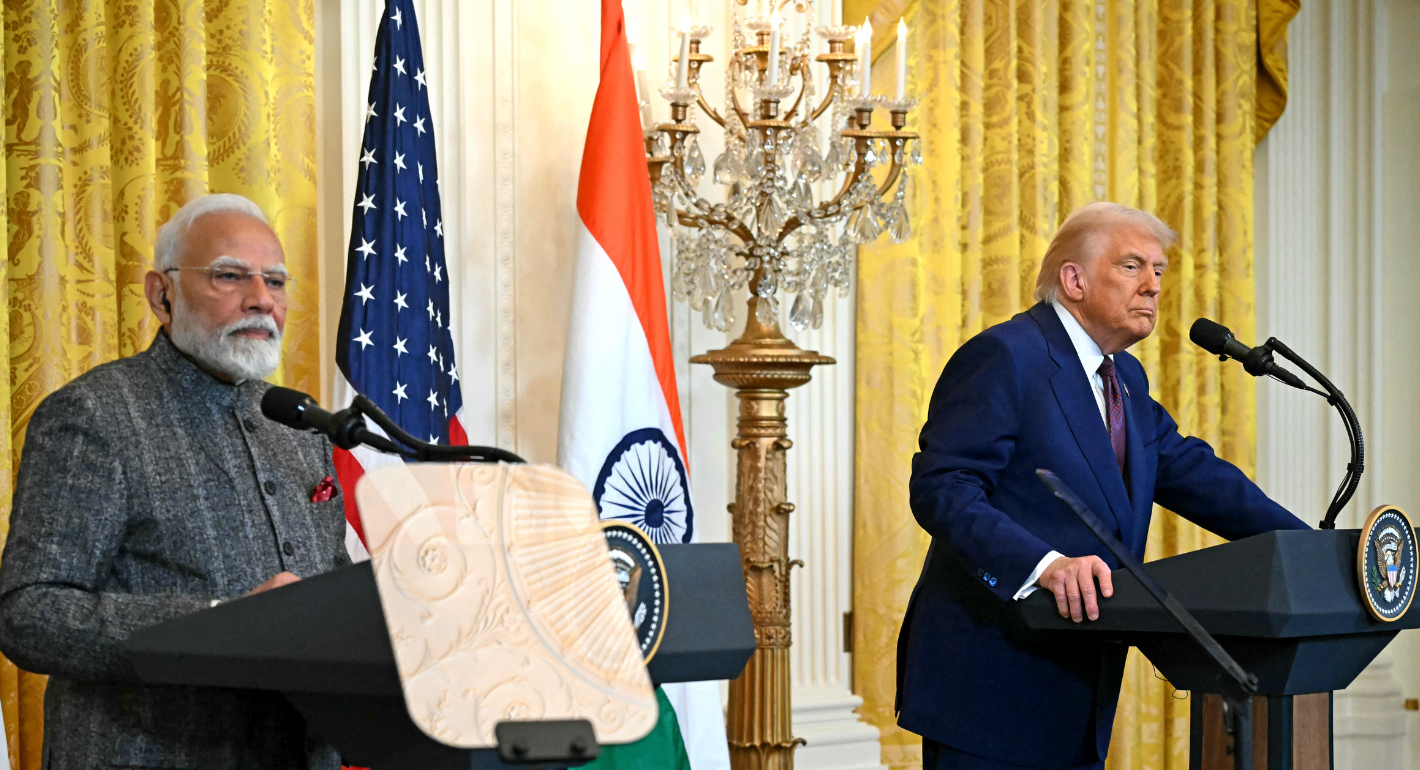
The India-U.S. relationship currently appears buffeted between three “Ts”—TRUST, Tariffs, and Trump.
Arun K. Singh