

Article
C. Raja Mohan, Darshana M. Baruah
{
  "authors": [
    "C. Raja Mohan"
  ],
  "type": "legacyinthemedia",
  "centerAffiliationAll": "dc",
  "centers": [
    "Carnegie Endowment for International Peace",
    "Carnegie India"
  ],
  "collections": [],
  "englishNewsletterAll": "ctw",
  "nonEnglishNewsletterAll": "",
  "primaryCenter": "Carnegie India",
  "programAffiliation": "SAP",
  "programs": [
    "South Asia"
  ],
  "projects": [],
  "regions": [
    "North America",
    "United States",
    "South Asia",
    "India"
  ],
  "topics": [
    "Economy",
    "Trade",
    "Security",
    "Military",
    "Foreign Policy"
  ]
}
Source: Getty
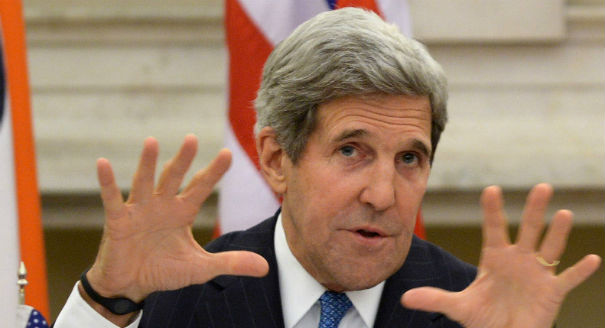
Manmohan Singh and John Kerry can’t let political obstacles get in the way of their countries’ strategic partnership.
Source: Indian Express
Prime Minister Manmohan Singh and visiting U.S. Secretary of State John Kerry are close to a rare double distinction—one definitive and the other dubious. The question this week is if Singh and Kerry have the will to reinforce the former and the wisdom to avoid the latter. Having helped build a new edifice of Indo-U.S. relations, Singh and Kerry are in danger of letting political timidity and bureaucratic pettifogging undermine the foundations of the India-US strategic partnership.
Singh risked all his political capital in 2008 when he pushed for parliamentary approval of the historic civil nuclear initiative, despite Sonia Gandhi's nagging self-doubt, L.K. Advani's incredible opportunism and Prakash Karat's ideological hostility. Kerry, then an influential senator, mobilized much-needed domestic political support in the U.S. for the controversial nuclear deal with India. As a Boston liberal, Kerry's political instincts were to question the nuclear exception that Bush was carving out for India. But Kerry prevented the Democrats from killing the deal to spite Bush in an election year.Five years later comes the dubious part. Kerry, as the U.S. secretary of state, and Prime Minister Manmohan Singh are presiding over a needless drift in bilateral relations. When they sit down on Monday, the PM and Kerry must honestly assess the sources of the current paralysis and find a way to impart some fresh political momentum to the partnership.
When George W. Bush and Atal Bihari Vajpayee began to pursue a partnership at the turn of the last decade, it was an act of political faith rather than a cold strategic calculation. They believed that Washington and Delhi could build a future that would be very different from the dismal part. Singh was quick to grasp the new possibilities with Washington and ran with the baton that he took from Vajpayee in 2004. He concluded bold agreements to end India's nuclear isolation and expand defence cooperation with the United States.
If Singh purposefully drove the engagement with America in the first term, he seemed to lose either interest or control over the dialogue with the United States in the second. In Washington, Obama seemed distracted by the two costly wars and a rare economic crisis. Obama's efforts to befriend China to stabilize Asia and seek the Pakistan army's help in withdrawing from Afghanistan have injected a measure of ambiguity into America's bilateral relations with India.
Meanwhile, sections of the Indian establishment have deliberately sought to create some political distance between Delhi and Washington and sell discredited ideas from the Cold War past as great strategic insights. Singh nearly bought the crazy proposition that a bird in the hand was worth a lot less than two in the bush. The belief in Delhi that going slow with America might convince China to offer India a boundary deal now stands discredited, thanks to the Chinese military intrusion into Ladakh during April-May.
Singh must rely on common sense rather than the overly clever theories that have derailed India's diplomacy in the second tenure of the UPA. Trusting his own judgment in the first term, the PM significantly improved relations with the United States, China and Japan without giving any one of them a veto over India's policies towards the others.
Having seen the awful consequences of departing from that policy in the second term, the PM must now return to the policy of seeking stronger ties with both Beijing and Washington. In the first term, Singh also refused to buy the conventional argument in Delhi that cited the U.S.-Pak relationship as an excuse for not improving ties with Washington or Islamabad.
Today, that argument is being reheated and served with reference to the changing dynamic in Afghanistan and Pakistan. The current tumult in the northwestern marches of the subcontinent demands, instead, that Delhi intensify talks with Washington on regional security, increase military and diplomatic support to Kabul and begin a political engagement with the newly elected civilian leaders in Islamabad.
At critical moments in India's diplomacy over the last decade, the PM trusted his own instincts rather than let the obstreperous officialdom limit India's choices. In his first meeting with Bush in September 2004, Singh concluded that "the best was yet to be" in India-US relations. In his conversation with the then secretary of state, Condoleezza Rice, in March 2005, Singh defined the contours of the civil nuclear initiative. In his talks with Hillary Clinton in July 2009, the PM ensured that the political understanding with Bush would largely endure in the Obama years.
The agenda for Singh's equally important conversation with Kerry, then, presents itself. The first task is to remove the political distrust that has accumulated between Delhi and Washington, and on a range of bilateral, regional and global issues.
The second is to lay down a specific set of objectives that must be accomplished by the time Singh arrives in Washington for a summit with Obama later this year. The emphasis must be on implementing the pending commitments to each other and taking up one or two new initiatives.
Failure to clear the air and define the next steps would begin to weaken the India-U.S. relationship just when Delhi and Washington need each other more than ever before. The United States is a weaker power today than under Bush. India's own strategic prospects have dimmed amidst the slowdown of economic reforms and the return of foreign policy conservatism.
The construction of the India-U.S. strategic partnership in the 2000s was an entirely unexpected political bonus. Making it work now is an absolute necessity for both Delhi and Washington as they struggle to cope with a challenging environment at home and abroad.
Former Nonresident Senior Fellow, Carnegie India
A leading analyst of India’s foreign policy, Mohan is also an expert on South Asian security, great-power relations in Asia, and arms control.
Recent Work

C. Raja Mohan, Darshana M. Baruah


Alexander Gabuev, Paul Haenle, C. Raja Mohan, …
Carnegie India does not take institutional positions on public policy issues; the views represented herein are those of the author(s) and do not necessarily reflect the views of Carnegie, its staff, or its trustees.

In any defense establishment, change is an ongoing process. However, despite the best of intentions, existing bureaucracies, bound by habit and years of socialization, have their limits in implementing transformative change.

Anit Mukherjee
As AI grows more sophisticated, as the supply chains that power it become more contested, and as access to frontier models becomes geopolitically charged, India must begin to ask a different set of questions. Not what applications it can build on someone else’s infrastructure but what the world needs.

Konark Bhandari

The Indian Ocean Region hosts one of the densest concentrations of subsea cables in the world. Yet, despite accounting for a significant share of global internet traffic, India’s participation remains limited.

Charukeshi Bhatt

How is AI reshaping space security, creating governance challenges, and where does international diplomacy stand today?


Tejas Bharadwaj, Almudena Azcárate Ortega

After the chill in ties between 2020 and 2024 that brought India–China relations to their lowest point in several decades, the two countries have engaged each other afresh. This paper argues that there are predominantly four imperatives guiding India’s approach to China, and they exist in an order of priority.

Saheb Singh Chadha