

Commentary
Sarah Chayes
{
  "authors": [
    "Sarah Chayes"
  ],
  "type": "legacyinthemedia",
  "centerAffiliationAll": "dc",
  "centers": [
    "Carnegie Endowment for International Peace"
  ],
  "collections": [],
  "englishNewsletterAll": "democracy",
  "nonEnglishNewsletterAll": "",
  "primaryCenter": "Carnegie Endowment for International Peace",
  "programAffiliation": "DCG",
  "programs": [
    "Democracy, Conflict, and Governance"
  ],
  "projects": [],
  "regions": [
    "North America",
    "United States"
  ],
  "topics": [
    "Political Reform",
    "Democracy",
    "Security",
    "Foreign Policy"
  ]
}
Source: Getty
The U.S. government’s single-minded focus on preventing terrorism on its soil has resulted in a myopic foreign policy.
Source: Los Angeles Times
"This is a great time to be a white-collar criminal."
An assistant U.S. attorney I know startled me with this remark in 2002. The bulk of her FBI investigators, she explained, had been pulled off to work on terrorism, which left traditional crime investigations sorely understaffed.
Little has changed since then. For more than a decade, the U.S. government has been focused on one type of threat above all others: terrorism. This obsession has not only been used to justify an erosion of Americans' privacy, it has opened them to other dangers and, paradoxically, made it easier for terrorists to achieve success.
Let me explain.
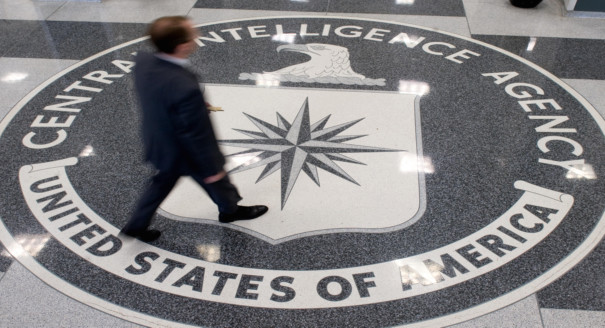
During the years I worked in the Pentagon, 2010 and 2011, officials there were responding to what many understood to be an implied directive from the commander in chief: to bring the risk of terrorist attack on U.S. soil to 0%. The entire apparatus swiveled toward that single goal.And it wasn't just the Pentagon. Since 2001, the Central Intelligence Agency has evolved to resemble a paramilitary organization, with most of its effort directed at killing individual suspected terrorists.
But the single-minded focus on that task has led to myopia elsewhere. I have repeatedly watched members of the intelligence community, in their drive to target individuals, overlook other critical aspects even of violent extremism, including how the groups' structures evolve, how they are financed or what underlying grievances fuel them.
Because of the fixation on killing specific terrorist leaders, the intelligence community is neglecting other critical phenomena, such as developments in China, the governance deficit in Arab countries or the use of Africa by transnational criminal networks.
Demanding zero risk of terrorism at home, moreover, makes it easier for terrorists to succeed. If the bar is set at zero, then a single successful attack means the terrorists have triumphed. And it is likely to produce the kind of dramatic overreaction that, according to Osama bin Laden's own writings, is Al Qaeda's ultimate aim: disrupting the U.S. economy, obtaining a disproportionate psychological impact and eroding the trademark values and liberties of U.S. society.
Given the other threats that are being ignored, the question arises as to whether the doubling down on terrorism is truly aimed at protecting Americans.
White-collar crime, for example, is not victimless. Directly and indirectly, it endangers us all. As David Gomez suggested in Foreign Policy recently, more FBI focus on fraudulent banking practices in the early 2000s might have warded off the most catastrophic economic meltdown since the Depression.
Resources have been drained from myriad other risks too. The number of automobile accidents, say, could be reduced with increased availability of public transport. A lack of resources for improving infrastructure has arguably resulted in greater damage from recent natural disasters. But these risks don't seem to capture political leaders' interest the way the possibility of a terrorist attack does.
One explanation might be that it's not really us most of these officials are concerned with protecting. It is their own reputations. The last thing they want is for an attack to occur on their watch, so they have slighted other priorities to provide nearly infinite resources for counter-terrorism; they have overridden principles that used to govern the treatment of detainees and search-and-seizure practices. Ultimately, they have mobilized the vast national security structure to protect not U.S. citizens, as they claim, but their own tenures and legacies.
"You can't have 100% security and also then have 100% privacy," pronounced President Obama in an initial reaction to revelations about U.S. government surveillance of Americans' telephone communications and worldwide online traffic. "We're going to have to make some choices as a society."
Indeed. But the question is whether we are making the right ones.
It's time to regain some balance. A frightened public needs its leadership to work to bring panic within the bounds of reason, not play to it.
No one denies that terrorism is a real and ongoing threat that must be addressed. No one denies the tragedy of lives that have been cut short or wrecked by terrorist attacks. But those tragedies are no more bitter than deaths due to other preventable threats. It is time for the United States, and its political leaders, to begin getting over it.
This article was originally published in the Los Angeles Times.
Former Senior Fellow, Democracy, Conflict, and Governance Program
Sarah Chayes is internationally recognized for her innovative thinking on corruption and its implications. Her work explores how severe corruption can help prompt such crises as terrorism, revolutions and their violent aftermaths, and environmental degradation.
Recent Work
Sarah Chayes
Carnegie India does not take institutional positions on public policy issues; the views represented herein are those of the author(s) and do not necessarily reflect the views of Carnegie, its staff, or its trustees.

In any defense establishment, change is an ongoing process. However, despite the best of intentions, existing bureaucracies, bound by habit and years of socialization, have their limits in implementing transformative change.

Anit Mukherjee

How is AI reshaping space security, creating governance challenges, and where does international diplomacy stand today?


Tejas Bharadwaj, Almudena Azcárate Ortega

After the chill in ties between 2020 and 2024 that brought India–China relations to their lowest point in several decades, the two countries have engaged each other afresh. This paper argues that there are predominantly four imperatives guiding India’s approach to China, and they exist in an order of priority.

Saheb Singh Chadha

This piece argues that India’s central challenge is not managing a single flashpoint but resolving the underlying tension between expansion and institutional coherency of the BRICS grouping.

Vrinda Sahai

A partnership between India, a country of subcontinental size, and Africa, a continent of fifty-four countries, may seem asymmetric until one notes that both are home to nearly the same number of people—1.4 billion. This essay spells out the existing challenges to the partnership, its optimal potential, and the possible pathways to realize it over the next quarter-century.

Rajiv Bhatia