

Article
Thomas Carothers, McKenzie Carrier
{
  "authors": [
    "Thomas Carothers"
  ],
  "type": "legacyinthemedia",
  "centerAffiliationAll": "dc",
  "centers": [
    "Carnegie Endowment for International Peace"
  ],
  "collections": [
    "Arab Awakening",
    "Democracy and Governance"
  ],
  "englishNewsletterAll": "democracy",
  "nonEnglishNewsletterAll": "",
  "primaryCenter": "Carnegie Endowment for International Peace",
  "programAffiliation": "DCG",
  "programs": [
    "Democracy, Conflict, and Governance"
  ],
  "projects": [],
  "regions": [
    "North Africa",
    "Egypt"
  ],
  "topics": [
    "Political Reform",
    "Democracy"
  ]
}
Source: Getty
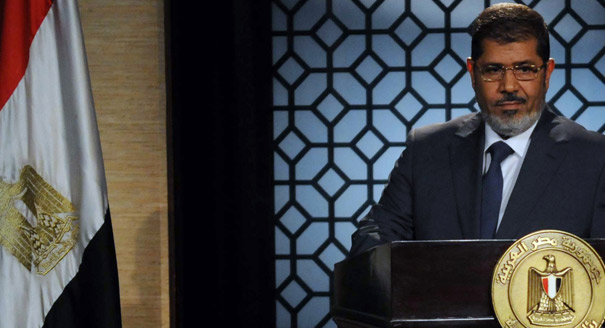
The U.S. government should refrain from doing anything that would suggest interference in Egypt’s internal developments and instead support a peaceful resolution by domestic civilian actors.
Source: BBC World News
Speaking on BBC World News, Thomas Carothers, vice president at the Carnegie Endowment for International Peace, discussed the situation in Egypt, President Morsi's dilemma, and the role of the United States.
Carothers argued that President Morsi either has to make significant political concessions or the current popular protests are likely to continue and intensify further. However, according to Carothers, Morsi's reactions so far suggest that he continues to view the demonstrations as an illegitimate attack on his elected power and remains unwilling to give in to the protesters' demands. Carothers also underlined that suspicions about the U.S. role in Egypt remain extremely high, especially since the army and many protesters believe that the United States has been too supportive of the Morsi government. Carothers suggested that the U.S. government should refrain from doing anything that would suggest interference in Egypt's internal developments and instead support a peaceful resolution by domestic civilian actors.

Harvey V. Fineberg Chair for Democracy Studies; Director, Democracy, Conflict, and Governance Program
Thomas Carothers, director of the Carnegie Endowment for International Peace’s Democracy, Conflict, and Governance Program, is a leading expert on comparative democratization and international support for democracy.
Recent Work

Thomas Carothers, McKenzie Carrier
Thomas Carothers, McKenzie Carrier
Carnegie India does not take institutional positions on public policy issues; the views represented herein are those of the author(s) and do not necessarily reflect the views of Carnegie, its staff, or its trustees.

Experts weigh in on whether the United States is too hostile toward China.

Stephen Wertheim, Evan S. Medeiros, Vijay Gokhale
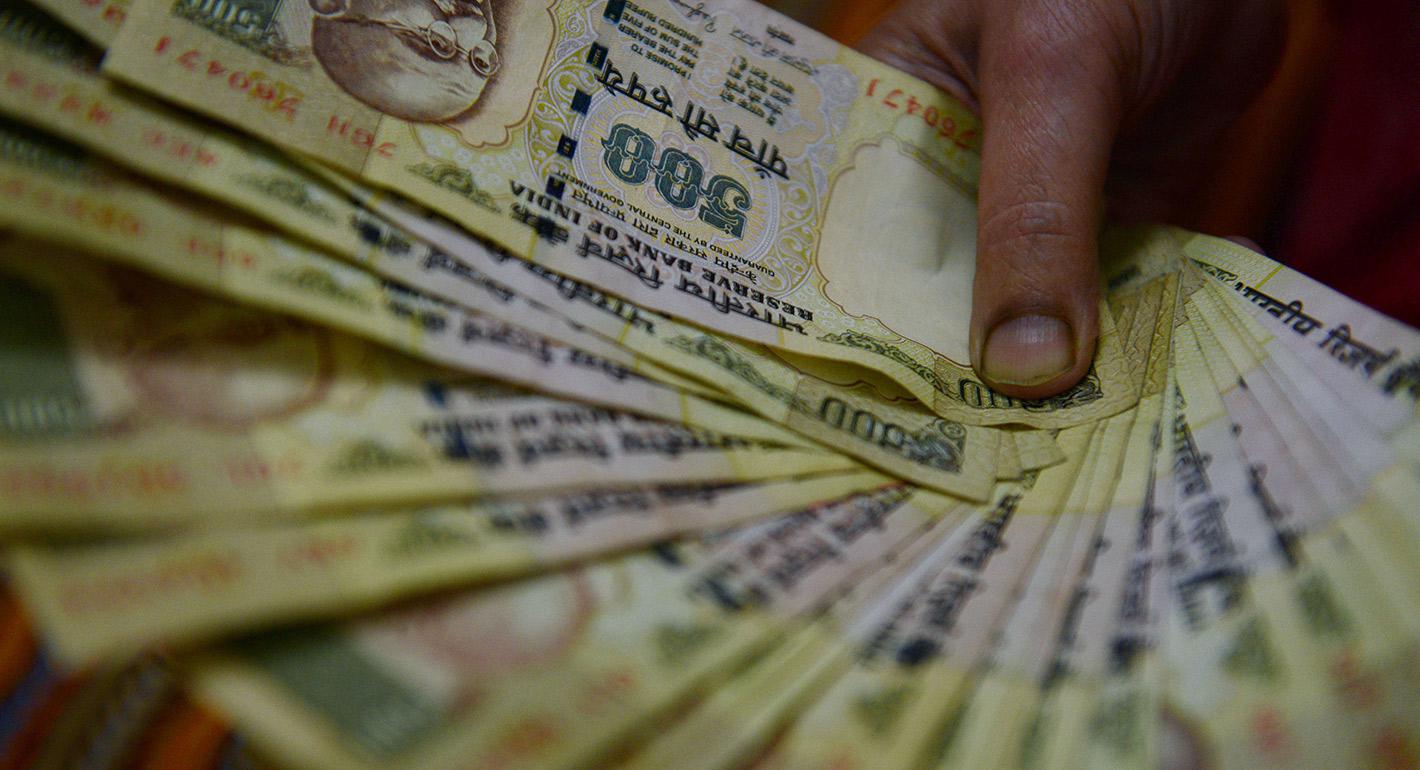
As India’s economy recovers from the coronavirus pandemic, Indian businesses need efficient financial structures to regain their ground. Key reforms to India’s Insolvency and Bankruptcy Code could fill these gaps.

Anirudh Burman

Access to cross-border data is an integral piece of the law enforcement puzzle. India is well placed to lead the discussions on international data agreements subject to undertaking necessary surveillance reforms.
Smriti Parsheera, Prateek Jha
After the coronavirus pandemic wanes, how will China’s reorientation of the Belt and Road Initiative to address global health concerns influence its relationships with South Asian countries?
Deep Pal, Rahul Bhatia
Early in the outbreak, government researchers forecast several high-risk scenarios that were downplayed or ignored in public messaging.
Gautam I. Menon