

Article
C. Raja Mohan, Darshana M. Baruah
{
  "authors": [
    "C. Raja Mohan"
  ],
  "type": "legacyinthemedia",
  "centerAffiliationAll": "dc",
  "centers": [
    "Carnegie Endowment for International Peace",
    "Carnegie China",
    "Carnegie India"
  ],
  "collections": [
    "China’s Foreign Relations"
  ],
  "englishNewsletterAll": "ctw",
  "nonEnglishNewsletterAll": "",
  "primaryCenter": "Carnegie India",
  "programAffiliation": "SAP",
  "programs": [
    "South Asia"
  ],
  "projects": [],
  "regions": [
    "South Asia",
    "India",
    "East Asia",
    "China"
  ],
  "topics": [
    "Security",
    "Foreign Policy"
  ]
}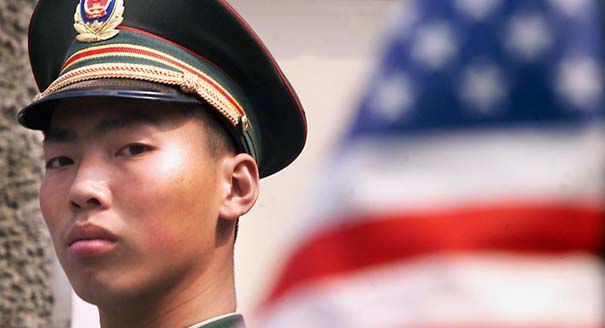
Source: Getty
Xi Jinping, who took charge of the Chinese Communist Party last year, has quickly proclaimed the “Chinese Dream”—or the great renewal of the nation—as the main mission for his decade-long rule.
Source: Indian Express
The leaders of the Chinese Communist Party (CCP) have a long tradition of framing political challenges at home and abroad through simple and catchy slogans. Every recent general secretary has invented a phrase of his own that summarised the main political task of the era. Recall Deng Xiaoping's "four modernisations" that set the stage for the rise of China. Xi Jinping, who took charge of the CCP last year, has quickly proclaimed the "Chinese Dream" —or the great renewal of the nation— as the main mission for his decade-long rule.
The realisation of the Chinese Dream, Xi says, demands a conducive external environment. This in turn demands the construction of a "new pattern of major power relationship", Xi has argued. Although the idea was first unveiled in the final years of Hu Jintao, Xi has made it his own. The army of American analysts who track China have made the phrase an object of intense scrutiny. For, it has become the dominant way of thinking in Beijing about China's complex relationship with the United States.Although the Chinese phrase sounds mysterious, it addresses a familiar problem in the history of international relations. It is about the rise and fall of great powers. But the decline of the old and the rise of the new has rarely been peaceful. The rising powers demand a greater say in the management of the international system, expand their territorial control and widen their spheres of influence. The dominant power of the moment is threatened by the rising one and uses all means, including war, to constrain it.
Historians of international relations, therefore, say big changes in the distribution of power among the major nations often generate war and conflict. Many compare the rise of China today to that of Germany in Europe in the 19th century. Europe had to fight two great wars in the first part of the 20th century to limit Germany's ambitions. Many argue that China's rise today is bound to destabilise the Asian and global orders and a confrontation between Beijing, the rising power, and Washington, the current hegemon, is inevitable.
It is in response to the "theory of China threat" that Xi's predecessor Hu argued that China's rise will be different from other great powers in the past. He sought to assure that China's rise will be peaceful and that Beijing has no intention to dominate Asia and the world. Hu's theory of China's peaceful rise was accompanied by a deep study of great power relations in the past. Amidst the growing concern in Asia and the West about China's rise, the CCP ideologues now suggest Beijing must actively seek to break from the old patterns of international relations.
In his recent speeches, Xi has proposed a threefold framework for building a new type of relationship among major powers, especially between China and the U.S. The first is to avoid confrontation by correct handling of disputes. Second is mutual respect that respects each other's choices for political and economic development. It also involves deference to each other's core interests. Third is the conscious search for win-win solutions for regional and global challenges.
While they are not wholly comfortable with Xi's concept, senior officials of the Obama administration agree with the proposition that the two sides must seek a stable and cooperative partnership.
Although India has not focused on China's new diplomatic slogan, some in New Delhi are wary. They fear that the U.S. and China might cut a deal on regional and global issues that will leave India out in the cold. Chinese leaders, meanwhile, are extending the concept of a new type of great power relationship beyond the U.S. to cover Russia, the European Union, India and others.
Prime Minister Manmohan Singh will have an opportunity to discuss the notion of a new type of major power relations with the Chinese leaders when he travels to Beijing in October. Delhi has no reason to delude itself that Beijing will treat it on par with Washington. But it is entirely worthwhile for Delhi to explore how the new concept might be applied to better manage conflicts between India and China and expand the sphere of cooperation.
This article was originally published in the Indian Express.
Former Nonresident Senior Fellow, Carnegie India
A leading analyst of India’s foreign policy, Mohan is also an expert on South Asian security, great-power relations in Asia, and arms control.
Recent Work

C. Raja Mohan, Darshana M. Baruah


Alexander Gabuev, Paul Haenle, C. Raja Mohan, …
Carnegie India does not take institutional positions on public policy issues; the views represented herein are those of the author(s) and do not necessarily reflect the views of Carnegie, its staff, or its trustees.

In any defense establishment, change is an ongoing process. However, despite the best of intentions, existing bureaucracies, bound by habit and years of socialization, have their limits in implementing transformative change.

Anit Mukherjee
As AI grows more sophisticated, as the supply chains that power it become more contested, and as access to frontier models becomes geopolitically charged, India must begin to ask a different set of questions. Not what applications it can build on someone else’s infrastructure but what the world needs.

Konark Bhandari

The Indian Ocean Region hosts one of the densest concentrations of subsea cables in the world. Yet, despite accounting for a significant share of global internet traffic, India’s participation remains limited.

Charukeshi Bhatt

How is AI reshaping space security, creating governance challenges, and where does international diplomacy stand today?


Tejas Bharadwaj, Almudena Azcárate Ortega

After the chill in ties between 2020 and 2024 that brought India–China relations to their lowest point in several decades, the two countries have engaged each other afresh. This paper argues that there are predominantly four imperatives guiding India’s approach to China, and they exist in an order of priority.

Saheb Singh Chadha