

Report
- +3
James M. Acton, Alexey Arbatov, Vladimir Dvorkin, …
{
  "authors": [
    "Petr Topychkanov"
  ],
  "type": "commentary",
  "centerAffiliationAll": "",
  "centers": [
    "Carnegie Endowment for International Peace",
    "Carnegie Russia Eurasia Center"
  ],
  "collections": [],
  "englishNewsletterAll": "",
  "nonEnglishNewsletterAll": "",
  "primaryCenter": "Carnegie Russia Eurasia Center",
  "programAffiliation": "",
  "programs": [],
  "projects": [
    "Eurasia in Transition"
  ],
  "regions": [
    "South Asia",
    "Afghanistan"
  ],
  "topics": [
    "Security",
    "Foreign Policy"
  ]
}
Source: Getty
The Alliance is waiting now for the U.S.-Afghan agreement, which will give a political and legal base for the U.S. presence in Afghanistan. The problem is that Hamid Karzai is not ready to sign this agreement.
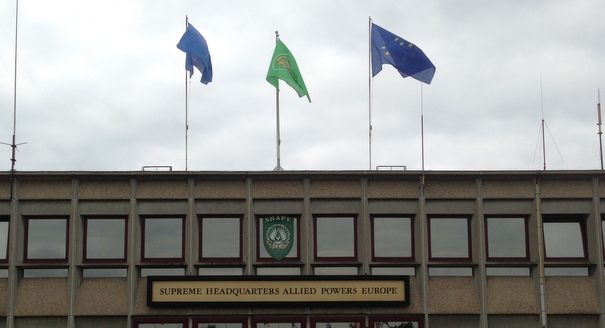
On September 19-20, I took a part in a visit of Russian specialists on Afghanistan to the NATO Headquarters in Brussels, Belgium. Many political and military officers there emphasized the Russian input in the stability in Afghanistan.
According to Ambassador Alexander Vershbow, deputy secretary general of NATO, Russia’s role in Afghanistan is growing. He mentioned the main fields of the Russian participation in the international efforts in Afghanistan: counter-narcotics, transit, and helicopters. He argued that in Afghanistan there is a basis for cooperation between Russia and NATO.
At the same time, there were quite a few issues of disagreement between the Russian and NATO discussants. In 2014 there will be a transformation of the NATO mission in Afghanistan (not a total withdrawal as it is usually described in mass media), Russia would like to see an appropriate resolution adopted by the UN Security Council, which will give a green light to a new NATO mission in Afghanistan. According to a Russian diplomat, such a resolution will help create a framework for further cooperation between Russia and NATO.
Yet there was another view on this issue in Brussels. Director of a local think tank explained that the UN SC resolution is preferable but not necessary, because NATO will stay in Afghanistan by the invitation of its president. So the decision of Hamid Karzai becomes more important than the resolution of the Security Council.
Russian participants of the discussions in Brussels criticized the NATO for the absence of a transparent perspective on its future in Afghanistan. The response from the NATO side uncovered a difficult situation. The Alliance is waiting now for the U.S.-Afghan agreement, which will give a political and legal base for the U.S. presence in Afghanistan. Since the numbers and locations of the U.S. troops in Afghanistan depend on this agreement, other NATO members will finally make the decision concerning their involvement only after it.
The problem is that Hamid Karzai is not ready to sign this agreement. He regards his decision on this issue as an opportunity to demonstrate that he is not “an American puppet.” Thus the NATO planning depends on the U.S. decision, which depends on Hamid Karzai.
It is not a pleasant situation for Russia, which understands that the United States cannot achieve an agreement with Hamid Karzai as it happened in Iraq. This fall, the elections season will start in Afghanistan, which will make the U.S.-Afghan agreement very unlikely. After the election, there will not be much time left before January 1, 2015, when, according to Ambassador Vershbow, Afghanistan will become fully sovereign. Will it be more secured? This is the question.
Former Fellow, Nonproliferation Program, Moscow Center
Topychkanov was a fellow in the Carnegie Moscow Center’s Nonproliferation Program.
Recent Work

James M. Acton, Alexey Arbatov, Vladimir Dvorkin, …
Petr Topychkanov
Carnegie India does not take institutional positions on public policy issues; the views represented herein are those of the author(s) and do not necessarily reflect the views of Carnegie, its staff, or its trustees.

After the chill in ties between 2020 and 2024 that brought India–China relations to their lowest point in several decades, the two countries have engaged each other afresh. This paper argues that there are predominantly four imperatives guiding India’s approach to China, and they exist in an order of priority.

Saheb Singh Chadha

This piece argues that India’s central challenge is not managing a single flashpoint but resolving the underlying tension between expansion and institutional coherency of the BRICS grouping.

Vrinda Sahai

A partnership between India, a country of subcontinental size, and Africa, a continent of fifty-four countries, may seem asymmetric until one notes that both are home to nearly the same number of people—1.4 billion. This essay spells out the existing challenges to the partnership, its optimal potential, and the possible pathways to realize it over the next quarter-century.

Rajiv Bhatia

The India–EU Free Trade Agreement (FTA) is shaping up to be one of the most consequential trade negotiations, both economically and strategically. But, what’s in the agreement, what’s missing, and what will determine its success in the years ahead
Vrinda Sahai, Nicolas Köhler-Suzuki

This piece argues that the present Indian strategy, based on opportunistic diversification and utilization of limited strategic reserves, remains inadequate when confronting supply disruptions. It evaluates India’s options in the short, medium, and long terms.
Vrinda Sahai