

Article
Frederic Wehrey, Charles H. Johnson
{
  "authors": [
    "Frederic Wehrey"
  ],
  "type": "legacyinthemedia",
  "centerAffiliationAll": "dc",
  "centers": [
    "Carnegie Endowment for International Peace",
    "Malcolm H. Kerr Carnegie Middle East Center"
  ],
  "collections": [],
  "englishNewsletterAll": "menaTransitions",
  "nonEnglishNewsletterAll": "",
  "primaryCenter": "Carnegie Endowment for International Peace",
  "programAffiliation": "MEP",
  "programs": [
    "Middle East"
  ],
  "projects": [],
  "regions": [
    "North Africa",
    "Libya",
    "Maghreb"
  ],
  "topics": [
    "Political Reform",
    "Security",
    "Military"
  ]
}
Source: Getty
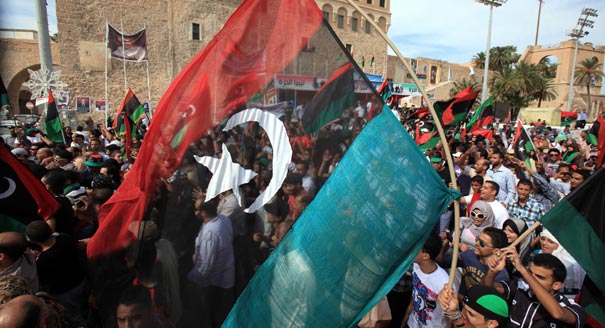
Grievances against Libya’s Zeidan government by the militias are not ideological but rather reflect the government’s inability to deliver services, its lack of transparency, and the way Zeidan governs.
Source: BBC World News America
Speaking on BBC World News America, Carnegie’s Frederic Wehrey discussed recent developments in Libya, including the abduction of the Prime Minister Ali Zeidan and the U.S. raid to capture senior al-Qaeda suspect Anas al-Liby. While there has been a real deterioration in security over the past nine months, Wehrey noted, the situation hasn’t turned into an all-out civil war. After the revolution, the army and police collapsed, allowing militias to have free reign since there was no institutional basis for force in the country. But even so, Wehrey said, “I think there is a sense of unity among Libyans that often gets overlooked and that’s why we haven’t seen the place collapse into something like Somalia or Bosnia yet.”
Although many of the Islamist groups in eastern Libya perhaps share the same world view with al-Qaeda, they are not organizationally linked, Wehrey argued, contending that Libya’s situation should not be read as part of a broader al-Qaeda expansion in North Africa. These Islamist groups in the east have their own local motives that are separate from al-Qaeda’s vision, Wehrey explained. Turning to the abduction of the Prime Minister, Wehrey noted that while the American raid may have been the catalyst, many of the militias are not Islamists and their grievances against the Zeidan government are not ideological but about reflect the inability of the government to deliver services, its lack of transparency, and the way Zeidan governs.
This interview was originally aired on BBC World News America.

Senior Fellow, Middle East Program
Frederic Wehrey is a senior fellow in the Middle East Program at the Carnegie Endowment for International Peace, where his research focuses on governance, conflict, and security in Libya, North Africa, and the Persian Gulf.
Recent Work
Frederic Wehrey, Charles H. Johnson
Frederic Wehrey, Charles H. Johnson
Carnegie India does not take institutional positions on public policy issues; the views represented herein are those of the author(s) and do not necessarily reflect the views of Carnegie, its staff, or its trustees.

In any defense establishment, change is an ongoing process. However, despite the best of intentions, existing bureaucracies, bound by habit and years of socialization, have their limits in implementing transformative change.

Anit Mukherjee

After the chill in ties between 2020 and 2024 that brought India–China relations to their lowest point in several decades, the two countries have engaged each other afresh. This paper argues that there are predominantly four imperatives guiding India’s approach to China, and they exist in an order of priority.

Saheb Singh Chadha

A partnership between India, a country of subcontinental size, and Africa, a continent of fifty-four countries, may seem asymmetric until one notes that both are home to nearly the same number of people—1.4 billion. This essay spells out the existing challenges to the partnership, its optimal potential, and the possible pathways to realize it over the next quarter-century.

Rajiv Bhatia
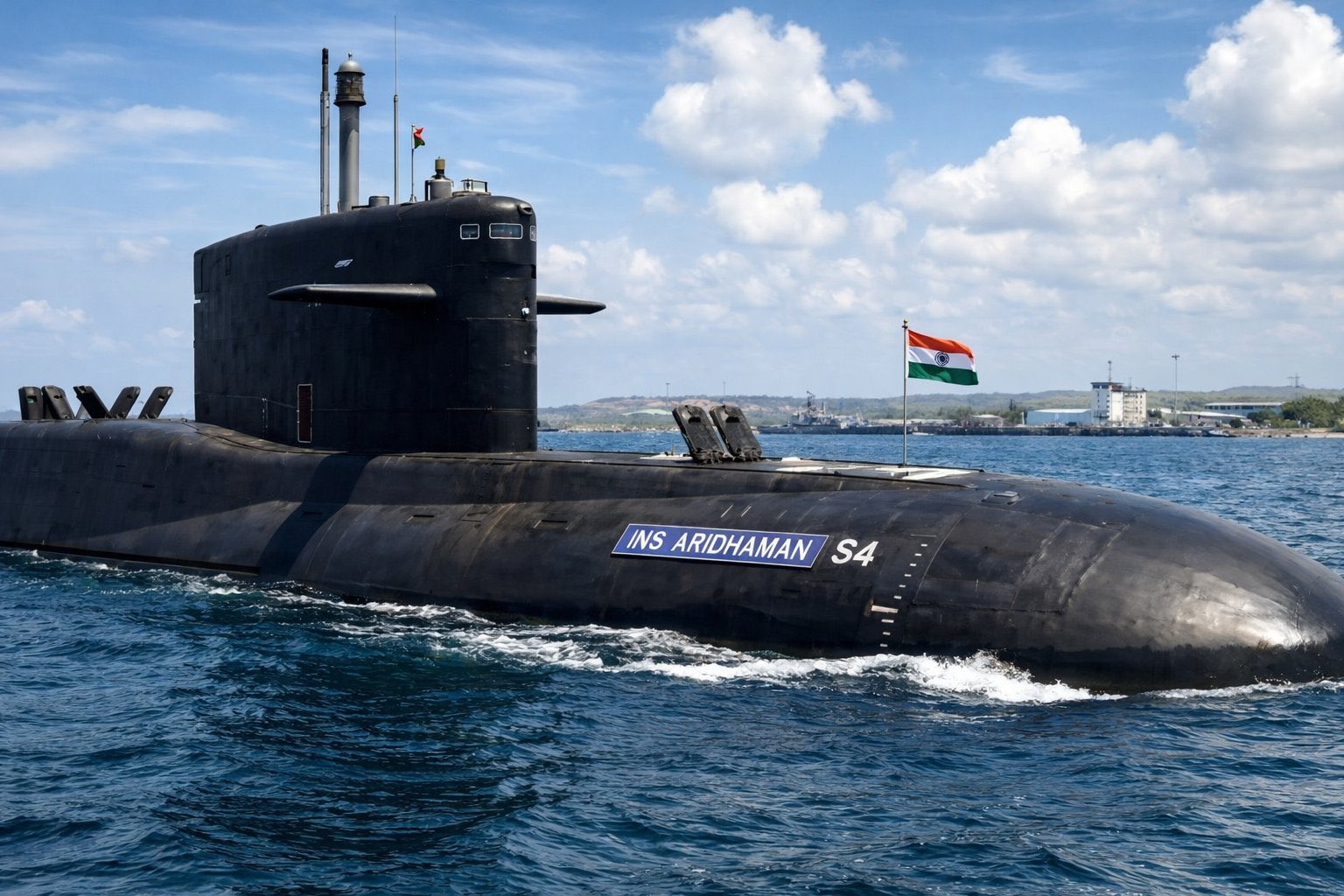
The induction of INS Aridhaman, which features several technological enhancements, now gives India the third nuclear ballistic missile submarine to ensure continuous at-sea deterrent.

Dinakar Peri

This piece argues that the present Indian strategy, based on opportunistic diversification and utilization of limited strategic reserves, remains inadequate when confronting supply disruptions. It evaluates India’s options in the short, medium, and long terms.

Vrinda Sahai