

Article
This piece argues that India’s central challenge is not managing a single flashpoint but resolving the underlying tension between expansion and institutional coherency of the BRICS grouping.
Vrinda Sahai
{
  "authors": [
    "Vladimir Dvorkin"
  ],
  "type": "commentary",
  "centerAffiliationAll": "",
  "centers": [
    "Carnegie Endowment for International Peace",
    "Carnegie Russia Eurasia Center"
  ],
  "collections": [],
  "englishNewsletterAll": "",
  "nonEnglishNewsletterAll": "",
  "primaryCenter": "Carnegie Endowment for International Peace",
  "programAffiliation": "",
  "programs": [],
  "projects": [],
  "regions": [
    "North America",
    "United States",
    "Russia"
  ],
  "topics": [
    "Security",
    "Military",
    "Foreign Policy",
    "Nuclear Policy",
    "Arms Control"
  ]
}
Source: Getty
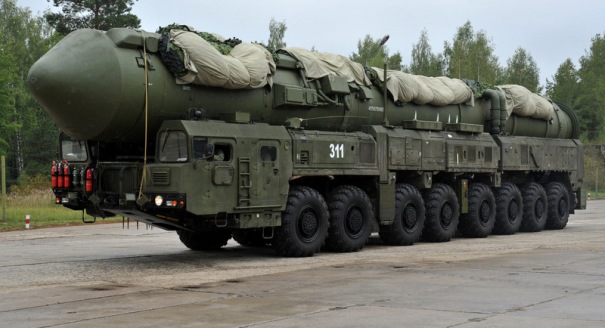
The recent reports in the U.S. media suggest that Russia has violated the INF Treaty seem to echo, at a new stage, previous claims made almost six months ago. At that time, questions arose in connection with the Rubezh missile flight tests and assumptions were made that the Rubezh missiles are actually intermediate-range missiles.
The recent reports in the U.S. media suggest that Russia has violated the INF Treaty seem to echo, at a new stage, previous claims made almost six months ago. At that time, questions arose in connection with the Rubezh missile flight tests and assumptions were made that the Rubezh missiles are actually intermediate-range missiles. The allegations were triggered by a multiple-warhead missile launch from the Kapustin Yar missile base to the Balkhash area at an INF-range distance.
However, a single-warhead missile of this type was launched from Plesetsk to Kura, which is a strategic distance. According to the conclusions in the U.S. Air Force Intelligence Report, as explained by Hans M. Kristensen of the Federation of American Scientists, the missile was tested at intercontinental range. This rebuts the claims that Russia is violating the INF Treaty.
In the same manner, similar allegations can be leveled against any intercontinental ballistic missile (ICBM) the range of which virtually completely overlaps that of the intermediate-range missiles; in fact, ICBM tests to INF range and minimal range have always been conducted.
Vladimir Dvorkin, Major General (Ret.)., is a chief researcher at the Center for International Security at the Russian Academy of Sciences' Institute of World Economy and International Relations.
Vladimir Dvorkin
Major General Dvorkin (retired) is a chief researcher at the Center for International Security at the Institute of World Economy and International Relations.
Carnegie India does not take institutional positions on public policy issues; the views represented herein are those of the author(s) and do not necessarily reflect the views of Carnegie, its staff, or its trustees.

This piece argues that India’s central challenge is not managing a single flashpoint but resolving the underlying tension between expansion and institutional coherency of the BRICS grouping.

Vrinda Sahai

A partnership between India, a country of subcontinental size, and Africa, a continent of fifty-four countries, may seem asymmetric until one notes that both are home to nearly the same number of people—1.4 billion. This essay spells out the existing challenges to the partnership, its optimal potential, and the possible pathways to realize it over the next quarter-century.

Rajiv Bhatia

The U.S.–India semiconductor cooperation story is well-stocked with top-level strategic intent. What remains unresolved, however, are some underlying challenges that will determine whether the cooperation actually functions. Three such friction points stand out.

Shruti Mittal

The India–EU Free Trade Agreement (FTA) is shaping up to be one of the most consequential trade negotiations, both economically and strategically. But, what’s in the agreement, what’s missing, and what will determine its success in the years ahead
Vrinda Sahai, Nicolas Köhler-Suzuki
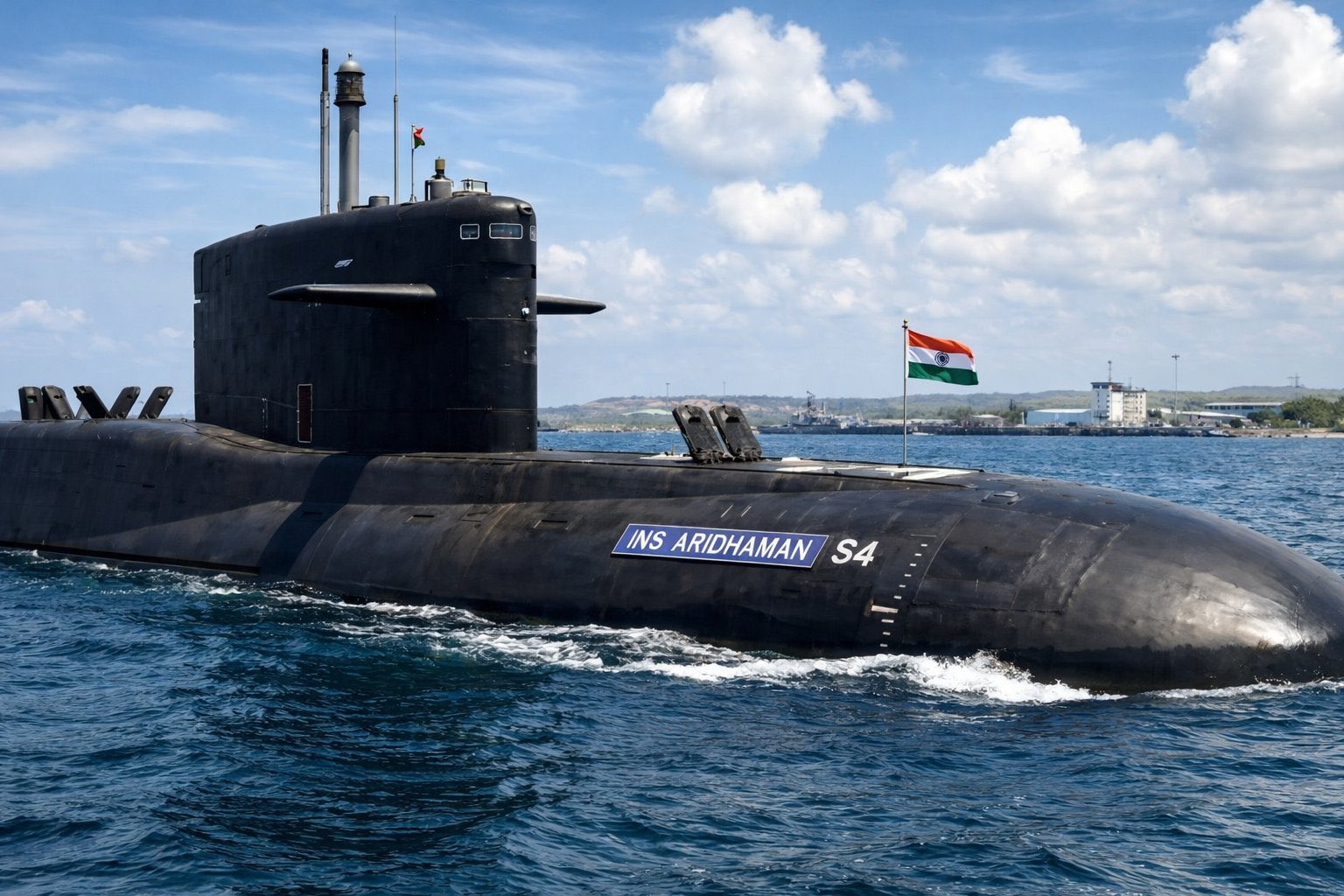
The induction of INS Aridhaman, which features several technological enhancements, now gives India the third nuclear ballistic missile submarine to ensure continuous at-sea deterrent.

Dinakar Peri