

Research
- +10
Rosa Balfour, Frances Z. Brown, Yasmine Farouk, …
{
  "authors": [
    "Moisés Naím"
  ],
  "type": "legacyinthemedia",
  "centerAffiliationAll": "",
  "centers": [
    "Carnegie Endowment for International Peace"
  ],
  "collections": [],
  "englishNewsletterAll": "",
  "nonEnglishNewsletterAll": "",
  "primaryCenter": "Carnegie Endowment for International Peace",
  "programAffiliation": "",
  "programs": [],
  "projects": [],
  "regions": [
    "North America",
    "United States"
  ],
  "topics": [
    "Political Reform",
    "Democracy",
    "Security",
    "Military"
  ]
}
Source: Getty
The revelations that the U.S. government listens to the phone calls of allied heads of state, as well as those of people throughout the world, has stirred a vital international debate.
Source: Atlantic
Let’s pretend you are the head of a government—a president, a prime minister, a chancellor. The director of your intelligence agency is seeking authorization on some potentially problematic operations. Here are two scenarios (as far as I know, they’re just the fictitious musings of one journalist, and have never actually happened). You be the decider.
First scenario: Rome, late 2008. The director of the AISE (the Italian acronym for ‘External Information and Security Agency’) informs you that his agents have penetrated the communication networks of Muammar Qaddafi and his top aides. He wants permission to monitor the lines. “But Libya is our ally!” you say. “Did we not just sign the Treaty on Friendship, Partnership, and Cooperation? And look at us now. Libya has injected more than $40 billion into our shaky economy. They are now the fifth-largest investor in our stock market and have even invested in one of our premier soccer teams, Juventus. Moreover, they have committed to help us control the flow of undocumented immigrants arriving from their shores. How can I authorize this?”The AISE director, a tenacious general, coldly stares at you and hands over a bulky folder. Inside are countless documents that reveal an ample network of brutal militias working for the Libyan government and operating in several African countries, as well as spies active throughout Europe—and even in Italy. “Don’t be surprised,” he says, “You know that Qaddafi is unpredictable. Today he’s our ally, but who knows about tomorrow? We don’t want to open the newspapers one day to learn that our national security is threatened. We’ve got to be as pragmatic as the Spanish. Sure, Morocco is their great ally. Every day, another minister proclaims the bonds of friendship between the two countries. But we know that the Spanish are listening in on top-level conversations. And so do the French.”
You thank the AISE director for the information and tell him that you will soon make your decision. Mull it over. Then decide.
Second scenario: Berlin, 2012. You are Angela Merkel and need to decide whether you should use Germany's taxpayer money to help bail out banks in Cyprus. Without financial assistance, the main banks of this tiny country will crash—and their collapse will not just devastate Cyprus's economy but also send shock waves to its southern European neighbors, deepening their crisis. The decision before you seems obvious: You must prop up these banks and avert a crash. Obvious, that is, until the head of the Bundesnachrichtendienst (BND, the German spy agency) hands over a detailed report with a different picture. It turns out that a large portion of the funds deposited in the Cypriot banks belongs to the Russian mafia. The Russians have parked $26 billion there—a sum larger than the entire economy of this small nation. The BND director explains that several of the accounts belong to Russian criminal organizations, some of which seem to have close ties with the Kremlin. “If you decide to bail out these banks, you might as well write a check to the Russian mafia and its government cronies,” he says. You ask how reliable his information is. “One hundred percent,” he tells you. “We’ve been tracing the links between Russian oligarchs, the mafia, and the Kremlin for years. It’s been a top priority. And now, chancellor, we have the technology to listen in on President Putin's telephone conversations. But we need your authorization to move forward. I know it’s a sensitive question, since you recently declared improved German-Russian relations a national priority. But don’t you agree that knowing what Putin is thinking also constitutes a national priority?” Do you authorize it?
We have yet to witness the full consequences of Edward Snowden’s leaks. But one thing is certain: The revelations that the U.S. government listens to the phone calls of allied heads of state, as well as those of people throughout the world, has stirred a vital international debate. A robust public discussion about privacy and security in the 21st century is necessary. But for this debate to be useful it needs to be realistic.
In his remarks to the House of Commons in 1848, the two-time British Prime Minister Lord Palmerston said: "We have no eternal allies and we have no perpetual enemies. Our interests are perpetual and eternal and those interests it is our duty to follow.”
Lord Palmerston’s words are still relevant. Countries do not have friends; they have interests. It may be an unpleasant truth, but ignoring it will not make it any less real.

Distinguished Fellow
Moisés Naím is a distinguished fellow at the Carnegie Endowment for International Peace, a best-selling author, and an internationally syndicated columnist.
Recent Work



Rosa Balfour, Frances Z. Brown, Yasmine Farouk, …
Moisés Naím
Carnegie India does not take institutional positions on public policy issues; the views represented herein are those of the author(s) and do not necessarily reflect the views of Carnegie, its staff, or its trustees.

In any defense establishment, change is an ongoing process. However, despite the best of intentions, existing bureaucracies, bound by habit and years of socialization, have their limits in implementing transformative change.

Anit Mukherjee

How is AI reshaping space security, creating governance challenges, and where does international diplomacy stand today?


Tejas Bharadwaj, Almudena Azcárate Ortega

After the chill in ties between 2020 and 2024 that brought India–China relations to their lowest point in several decades, the two countries have engaged each other afresh. This paper argues that there are predominantly four imperatives guiding India’s approach to China, and they exist in an order of priority.

Saheb Singh Chadha

The U.S.–India semiconductor cooperation story is well-stocked with top-level strategic intent. What remains unresolved, however, are some underlying challenges that will determine whether the cooperation actually functions. Three such friction points stand out.

Shruti Mittal
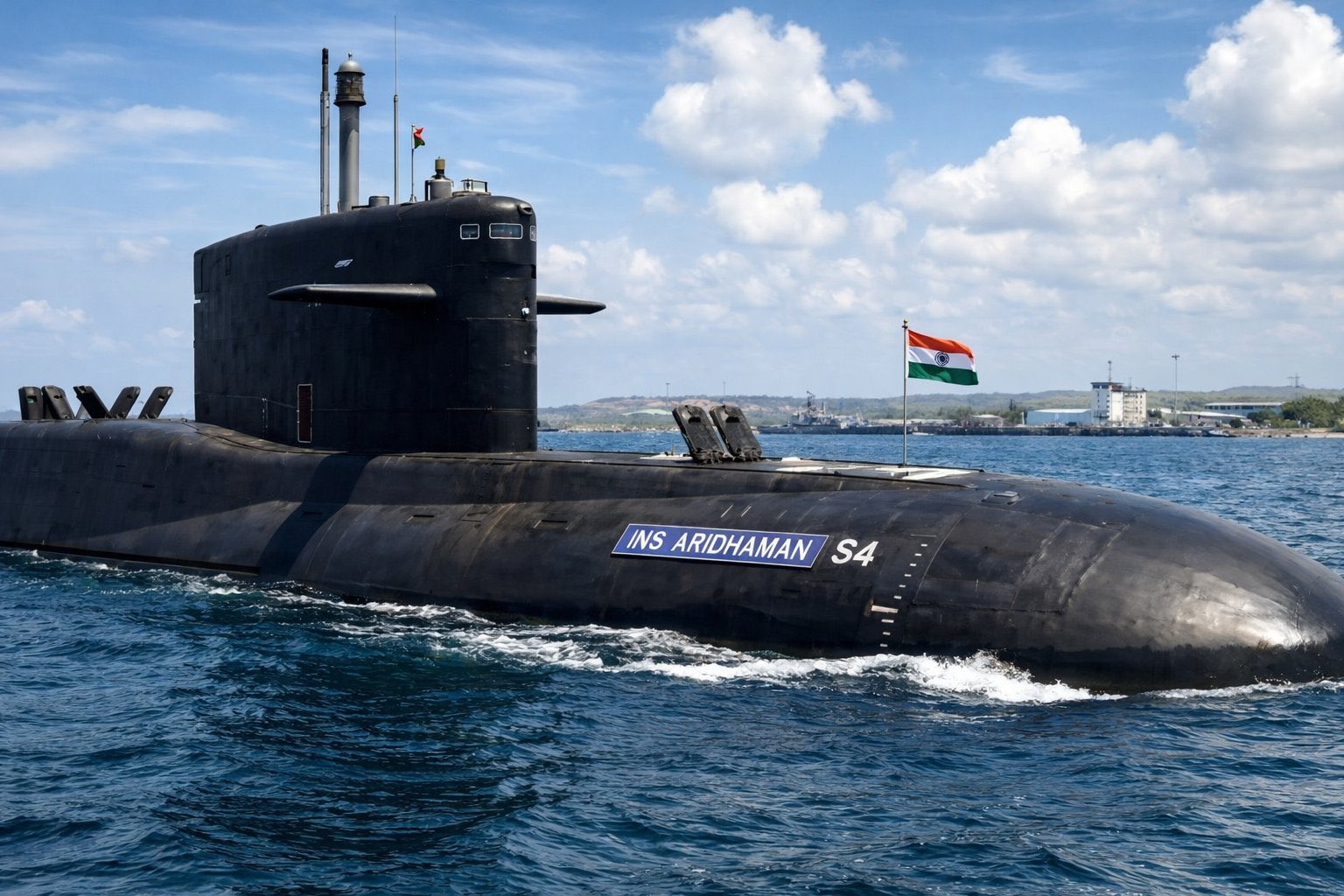
The induction of INS Aridhaman, which features several technological enhancements, now gives India the third nuclear ballistic missile submarine to ensure continuous at-sea deterrent.

Dinakar Peri