

In The Media
David Rothkopf
{
  "authors": [
    "David Rothkopf"
  ],
  "type": "legacyinthemedia",
  "centerAffiliationAll": "",
  "centers": [
    "Carnegie Endowment for International Peace"
  ],
  "collections": [],
  "englishNewsletterAll": "",
  "nonEnglishNewsletterAll": "",
  "primaryCenter": "Carnegie Endowment for International Peace",
  "programAffiliation": "",
  "programs": [],
  "projects": [],
  "regions": [
    "North America",
    "United States"
  ],
  "topics": [
    "Political Reform",
    "Democracy",
    "Security"
  ]
}
Source: Getty
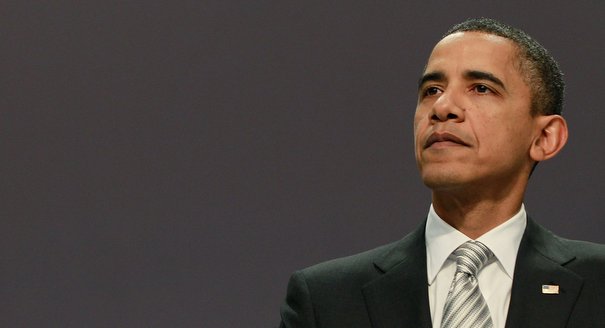
The Obama administration should accelerate its efforts to rein in the NSA as well as its overreaching and damaging international surveillance.
Source: Foreign Policy
This is the text of the Fourth Amendment to the Constitution of the United States: "The right of the people to be secure in their persons, houses, papers, and effects, against unreasonable searches and seizures, shall not be violated, and no Warrants shall issue, but upon probable cause, supported by Oath or affirmation, and particularly describing the place to be searched, and the persons or things to be seized."
It is impossible to read this language and then conclude that the National Security Agency (NSA) has not violated this amendment willfully and wantonly. That U.S. District Judge Richard Leon finally declared that the agency's mass collection of metadata likely violates the Constitution should therefore not be surprising. What should be surprising is that many senior U.S. government officials including the constitutional scholar who is president of the United States could know of this behavior, sanction it, and enable it to go on unchecked.Judge Leon demonstrated outrage, understatement, and a degree of flair in his decision -- which seems likely to be appealed. In his opinion, he asserted that the principal author of the U.S. Constitution and Bill of Rights James Madison would be "aghast" at the sweeping nature of the NSA programs targeting the personal data of U.S. citizens and that it was "indiscriminatory" and "arbitrary." Leon's flair and perhaps unintentional understatement came into play when he described the programs as "almost Orwellian." I would say these programs are Orwellian to the core, not Orwell-lite but Orwell-writ-large, precisely the kind of violations of personal privacy and human dignity that led the author to write 1984. In any event, the reference to Orwell and by extension to "Big Brother" was a welcome one, driving home the nature of society-wide violation of privacy in terms that would resonate far beyond the Beltway.
While the appellate process will take time, the Obama administration should accelerate its efforts to rein in the NSA as well as its overreaching and damaging international surveillance that has also violated the basic rights of not only Americans abroad but of allies and innocents around the planet. It is time for the team in the White House and the NSA to stop defending the indefensible. To restore trust overseas will require more than the soothing murmurs of high-level bilateral meetings and phone calls that the United States has been offering as a weak palliative to its violations around the world.
Internationally and at home, one strong step that the president should take that is long overdue is to remove Gen. Keith Alexander from his position atop the NSA. He is no doubt a good man doing work on behalf of the American people as best he can. But he has lost sight of the line between the threats terrorists may pose to Americans and those posed by an intrusive government. Whether or not he has misled Congress, he has made bad judgment calls and is now a symbol of the surveillance state, the unwitting face of Big Brother come to life. It is also time for the Obama team and the intelligence community to accept the core idea offered Monday by this Bush-appointed federal judge: The jig should be up for those who would argue that the Constitution does not cover metadata or other electronic forms of information it did not anticipate. Don't wait for appeals to make their way through the judiciary to do what is right.
The Fourth Amendment clearly refers to "persons, houses, papers and effects" in order to be comprehensive about all items in an individual's possession to which an intrusive government might seek access. Metadata records information about a person's activities that can actually be more telling (and personal) than other forms of information that might have been reasonably obtained by the government in the past -- with whom they are associating and when, for example. It is precisely the kind of information once contained in "papers." That metadata is being searched wholesale or warehoused so the government might later search it and that the vast majority of such collection is taking place without a warrant is further indictment of the legality of the program.
Leon went on to condemn the NSA's metadata warehousing programs because he had no evidence of their effectiveness at preventing terrorist attacks. While this strengthens his point about the ill-considered nature of these surveillance efforts, it should not be relevant. Even if the information gathered had stopped a major attack, it should not have been gathered absent a warrant "upon probable cause, supported by Oath or affirmation, and particularly describing the place to be searched, and the persons or things to be seized."
There is no justification for the systematic abuses by the NSA or for the defense of those abuses by the president and his team. In America's panicked overreaction to the events of 9/11 and the consequent fear-mongering that became the stock in trade of both our political leaders and the Beltway bandit class who sought to line their pockets with overpriced programs based on absurd risk assumptions, the U.S. government has committed the most grotesque violation of the principles on which it was founded since its acceptance of the mechanisms of racism and sexism of the past century (since full rights were accorded citizens who were themselves overlooked and underserved by the Founders).
In the months and years since the 2001 attacks, we bought into the notion that since a small group of people had inflicted great damage to us that any small group of people or even an individual might do likewise or worse and therefore that all people were potentially enemies against which we must protect ourselves. We went from the bipolar, good vs. evil perceptions and realities of the Cold War to something new and more odious. It was not just us against a much bigger "them" located not just within the Soviet Union or among its allies but potentially everywhere. It was more than that. It was a few "patriots" at the center of our government against potential threats within and without the United States, a few bureaucrats and politicians super-empowered by the fear they engendered in their constituents to set aside our Constitution, international law, and our values.
This is precisely the kind of demagogically driven pernicious power grab that led Madison to push for passage of the Bill of Rights. He understood from firsthand experience the risks and costs of carefully rationalized government over-reach. He wrote of it often. His words uncomfortably resonate with the events of our era.
"If tyranny and oppression come to this land it will be in the guise of fighting a foreign enemy."
"The means of defence against foreign danger have been always the instruments of tyranny at home."
"No nation could preserve its freedom in the midst of continual warfare."
"All men having power ought to be distrusted to a certain degree."
"I believe there are more instances of the abridgement of the freedom of the people by gradual and silent encroachments by those in power than by violent and sudden usurpations."
This last Madison quotation was offered up at an event Foreign Policy held last week honoring our 100 Leading Global Thinkers by one of those on our list, Edward Snowden. His remarks, delivered by another of our leading thinkers, attorney Jesselyn Radack, were a bit self-congratulatory. He took time to acknowledge his own sacrifice in a way that should best have been left to others. He certainly did not address the moral ambiguity of his actions. (It is undeniably true that the means by which he gathered and disseminated the documents he collected from the U.S. government were themselves a violation of the law and of a trust that had been placed in him.)
That said, it is fair to ask if he had not done what he did, whether this week's court judgment would ever have been handed down. The absence of such a case would not, of course, have made the acts of the government any less a violation. Rather, they would have just continued because there is absolutely no evidence that any serious effort was being made by any of our elected advocates and overseers in the legislative, executive, or judicial branches to roll back these invasive, unconstitutional programs prior to Snowden's leaks.
Means aside, he therefore did the United States and the world a great service even as he did damage to others within the intelligence community and to material U.S. national interests. We have to be able to get our brains around both the good and the bad of his acts in order to understand how well-intentioned intelligence efforts made by good men and women can become too caught up in the excesses of an era and do very bad things.
Also disturbing was the outcome of a discussion at the Transformational Trends conference Foreign Policy sponsored last week just hours before the Snowden comments were read; a poll of several hundred attendees were asked what the most likely consequence of the Snowden revelations would be. The leading answer selected by them was that we would grow more accustomed to government programs like those revealed to have been violating our privacy.
It was a shockingly complacent response, perhaps what the average American might fear from a group of Washington insiders. We'll get used to this, the audience suggested. In other words, the Snowden revelations would not be, in their mind, the end of an era of abuses but rather were just a harbinger of things to come.
Judge Leon put a stake in the ground this week for an alternative view. But it is clear that America has yet to come to a decision about these revelations. It is not, however, a choice about whether one is for or against Snowden. Quite the contrary, as Snowden wrote to our group, it is really a choice about whether this generation stands for or against Madison, the Constitution, and the view of the rights of men and women and the limitations that ought to be placed on government power that he and the other Founders risked their lives to advocate.

Former Visiting Scholar
David Rothkopf was a visiting scholar at the Carnegie Endowment as well as the former CEO and editor in chief of the FP Group.
Recent Work
David Rothkopf
David Rothkopf
Carnegie India does not take institutional positions on public policy issues; the views represented herein are those of the author(s) and do not necessarily reflect the views of Carnegie, its staff, or its trustees.

How is AI reshaping space security, creating governance challenges, and where does international diplomacy stand today?


Tejas Bharadwaj, Almudena Azcárate Ortega

After the chill in ties between 2020 and 2024 that brought India–China relations to their lowest point in several decades, the two countries have engaged each other afresh. This paper argues that there are predominantly four imperatives guiding India’s approach to China, and they exist in an order of priority.

Saheb Singh Chadha

The U.S.–India semiconductor cooperation story is well-stocked with top-level strategic intent. What remains unresolved, however, are some underlying challenges that will determine whether the cooperation actually functions. Three such friction points stand out.

Shruti Mittal

This piece argues that the present Indian strategy, based on opportunistic diversification and utilization of limited strategic reserves, remains inadequate when confronting supply disruptions. It evaluates India’s options in the short, medium, and long terms.

Vrinda Sahai

India and the United States are close to concluding a Reciprocal Defense Procurement Agreement (RDPA) that will allow firms from the two countries to sell to each other’s defense establishments more easily. While this may not remedy the specific grievances both sides may have regarding larger bilateral issues, an RDPA could restore some momentum, following the trade deal announcement.

Konark Bhandari