

Commentary
Uri Dadush
{
  "authors": [
    "Uri Dadush"
  ],
  "type": "legacyinthemedia",
  "centerAffiliationAll": "",
  "centers": [
    "Carnegie Endowment for International Peace"
  ],
  "collections": [],
  "englishNewsletterAll": "",
  "nonEnglishNewsletterAll": "",
  "primaryCenter": "Carnegie Endowment for International Peace",
  "programAffiliation": "",
  "programs": [],
  "projects": [],
  "regions": [
    "North America",
    "South America",
    "South Asia",
    "East Asia",
    "China",
    "Southeast Asia",
    "Russia"
  ],
  "topics": [
    "Economy"
  ]
}
Source: Getty
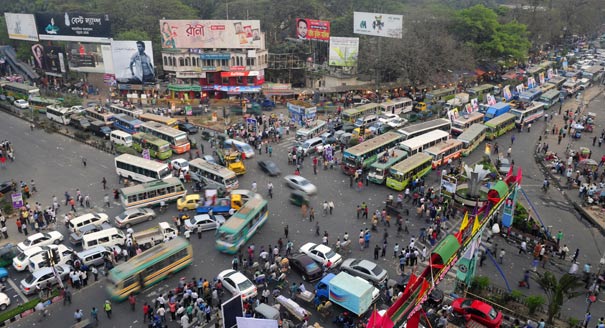
The difficulties of emerging nations are unlikely to become so severe as to endanger the global recovery.
Source: L'Espresso
With emerging economies more prominent than they used to be, and with memories of the great Argentinian default of 2001 and the Asian financial crisis of 1997 still fresh, it is understandable that investors have been spooked by the recent turmoil in emerging markets. But, as in previous episodes, and with one exception, the difficulties of emerging nations are unlikely to become so severe as to endanger the global recovery. The one exception is China, to which I return below.
Investors strike a kind of Faustian bargain with emerging markets: they will accept the widespread political uncertainty, bad governance, economic instability and weak rule of law in exchange for two things; big profits at a bargain-basement price (in the financial jargon, low price/earnings ratios), and the promise of growth.Over the last couple of years, all three elements of the bargain have broken down to an extent. In some big countries such as Turkey, Russia and India the political uncertainty and bad governance have gotten out of hand even by their low standard. In Brazil and many other countries, equity valuations became too rich as international interest rates fell and returns were boosted temporarily by strong currencies. Most importantly, expectations of emerging market growth, which hit 7 percent in some years, became entirely unrealistic, so now – in the eyes of the financial markets - growth at near 5 percent looks like a disaster.
But, of course, 5 percent growth is not a disaster. Nor, as the World Bank has argued recently, are the recent difficulties of emerging markets to be interpreted as the end of their emergence. The conditions for their technological catch-up, their hunger for infrastructure investment and for consumer products, and their young and rapidly growing labor force, did not suddenly disappear when the Fed announced that it was contemplating a less loose monetary stance.
It is, nevertheless, very likely that emerging markets will experience choppy seas in 2014 and, possibly, into 2015 as well. This is only tangentially related to Fed tightening, and has more to do with their domestic policy inadequacies and the almost inevitable growth disappointment of recent years.
Will we see a repeat of the massive and contagious financial crises of the 1990’s? I think not, even though individual countries may go through a very rough episode. There are two main reasons to be confident: with the exception of South Africa and Turkey, current account deficits of large developing countries are within reasonable bounds (especially considering that foreign exchange reserves are more abundant), and countries are much more willing to let their exchange rates slide as part of their day-to-day adjustment to shocks. Flexible exchange rates also reduce the likelihood that companies build up large liabilities in foreign currency. These factors do not make countries invulnerable, by any means, but they do significantly reduce the likelihood of extreme events.
Emerging markets are a very diverse group and given their better defenses, they are unlikely, on their own, to threaten the global recovery. However, their fragile state could combine with other unforeseen shocks in advanced countries to make matters worse.
In all this discussion, China stands apart. It is indeed a large enough force in world trade to trigger a major emerging market and global slowdown were it to run into serious trouble. However, a crisis in China would bear no resemblance to the balance of payments crises so familiar in emerging markets. It is still a country that is more likely to bail out the IMF rather than the other way round. A crisis in China, would be a crisis of domestic imbalances requiring domestic solutions, resembling more that which the United States has recently navigated. Perhaps one can draw some comfort from the fact that the great economic collapse of China has long been the most predicted crisis in history, and continues to be.
This article was originally published in L’Espresso.

Former Senior Associate, International Economics Program
Dadush was a senior associate at the Carnegie Endowment for International Peace. He focuses on trends in the global economy and is currently tracking developments in the eurozone crisis.
Recent Work
Uri Dadush
Uri Dadush
Carnegie India does not take institutional positions on public policy issues; the views represented herein are those of the author(s) and do not necessarily reflect the views of Carnegie, its staff, or its trustees.

After the chill in ties between 2020 and 2024 that brought India–China relations to their lowest point in several decades, the two countries have engaged each other afresh. This paper argues that there are predominantly four imperatives guiding India’s approach to China, and they exist in an order of priority.

Saheb Singh Chadha

This piece argues that India’s central challenge is not managing a single flashpoint but resolving the underlying tension between expansion and institutional coherency of the BRICS grouping.

Vrinda Sahai

On March 10, 2026, India’s Union Cabinet approved amendments to Press Note 3, a regulation that mandated government approval on all foreign direct investment (FDI) from countries sharing a land border with India. This amendment raises questions primarily about whether its stated benefits will materialize and if the risks have been adequately weighed. This piece will address the same.

Konark Bhandari
Trump 2.0 has unsettled India’s external environment—but has not overturned its foreign policy strategy, which continues to rely on diversification, hedging, and calibrated partnerships across a fractured order.



Milan Vaishnav, ed., Sameer Lalwani, Tanvi Madan, …

This piece examines India’s response to U.S. sanctions and tariffs, specifically assessing the immediate market consequences, such as alterations in import costs, and the broader strategic implications for India’s energy security and foreign policy orientation.
Vrinda Sahai