• Research
  • About
  • Experts
Carnegie India logoCarnegie lettermark logo
AI
{
  "authors": [
    "Rajaie Batniji",
    "Lina Khatib",
    "Melani Cammett",
    "Jeffrey Sweet",
    "Sanjay Basu",
    "Amaney Jamal",
    "Paul Wise",
    "Rita Giacaman"
  ],
  "type": "other",
  "centerAffiliationAll": "",
  "centers": [
    "Carnegie Endowment for International Peace",
    "Malcolm H. Kerr Carnegie Middle East Center"
  ],
  "collections": [],
  "englishNewsletterAll": "",
  "nonEnglishNewsletterAll": "",
  "primaryCenter": "Malcolm H. Kerr Carnegie Middle East Center",
  "programAffiliation": "",
  "programs": [],
  "projects": [],
  "regions": [
    "Egypt",
    "Gulf",
    "Levant",
    "Maghreb",
    "Middle East",
    "North Africa"
  ],
  "topics": [
    "Political Reform",
    "Economy"
  ]
}

Source: Getty

Other
Malcolm H. Kerr Carnegie Middle East Center

Governance and Health in the Arab World

Health service delivery is high on the agenda in the Arab world. The international community must focus on increasing government efficacy and improving accountability, which can both lead to reform that will in turn expand and protect opportunities, health, and well-being in the Arab world.

Link Copied
By Rajaie Batniji, Lina Khatib, Melani Cammett, Jeffrey Sweet, Sanjay Basu, Amaney Jamal, Paul Wise, Rita Giacaman
Published on Jan 20, 2014

Source: Lancet

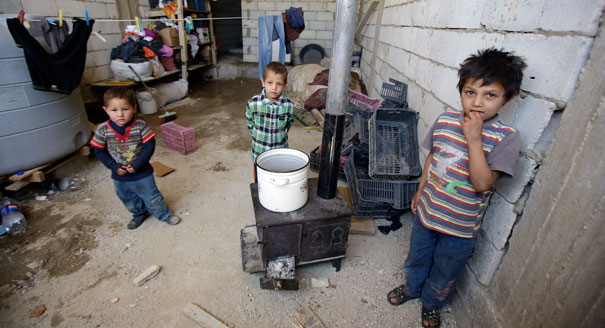
Health service delivery is high on the agenda in the Arab world today, as the situation in Syria demonstrates. Part of a new series on health in the Arab world published by leading medical journal The Lancet, the paper “Governance and Health in the Arab World”—of which Carnegie Middle East Center director Lina Khatib is a co-author—suggests that there is a clear association between more effective government and average reductions in mortality in the region. The paper authors emphasize that the process of health policy reform is as important as the actual content, as for policy reform to be effective, governments need to be accountable in the delivery of services for all extant populations. The paper presents policy recommendations for health reform to international stakeholders, arguing for the inclusion of broader input from and engagement with citizens, civil society, and NGOs (as opposed to only engaging governments or entrenched elites). The paper concludes that the international community must focus on increasing government efficacy and improving accountability, which can both lead to reform that will in turn expand and protect opportunities, health, and well-being in the Arab world.

Read the full text at the Lancet.

About the Authors

Rajaie Batniji

Lina Khatib

Former Director, Middle East Center

Khatib was director of the Carnegie Middle East Center in Beirut. Previously, she was the co-founding head of the Program on Arab Reform and Democracy at Stanford University’s Center on Democracy, Development, and the Rule of Law.

Melani Cammett

Jeffrey Sweet

Sanjay Basu

Amaney Jamal

, Dean of the Princeton School for Public and International Affairs and Professor of Politics and International Affairs, Princeton University

Paul Wise

Rita Giacaman

Authors

Rajaie Batniji
Lina Khatib
Former Director, Middle East Center
Melani Cammett
Jeffrey Sweet
Sanjay Basu
Amaney Jamal

, Dean of the Princeton School for Public and International Affairs and Professor of Politics and International Affairs, Princeton University

Amaney Jamal
Paul Wise
Rita Giacaman
Political ReformEconomyEgyptGulfLevantMaghrebMiddle EastNorth Africa

Carnegie India does not take institutional positions on public policy issues; the views represented herein are those of the author(s) and do not necessarily reflect the views of Carnegie, its staff, or its trustees.

More Work from Carnegie India

  • Commentary
    The Impact of U.S. Sanctions and Tariffs on India’s Russian Oil Imports

    This piece examines India’s response to U.S. sanctions and tariffs, specifically assessing the immediate market consequences, such as alterations in import costs, and the broader strategic implications for India’s energy security and foreign policy orientation.

      Vrinda Sahai

  • Paper
    India-China Economic Ties: Determinants and Possibilities

    This paper examines the evolution of India-China economic ties from 2005 to 2025. It explores the impact of global events, bilateral political ties, and domestic policies on distinct spheres of the economic relationship.

      Santosh Pai

  • Commentary
    TRUST and Tariffs

    The India-U.S. relationship currently appears buffeted between three “Ts”—TRUST, Tariffs, and Trump.

      Arun K. Singh

  • Article
    Can Geopolitical Alignment Seal the India-EU FTA?

    This article argues that the geopolitical circumstances have never been more conducive, not merely for the early conclusion of the free trade agreement (FTA) between India and the EU, but also for crafting a substantive and comprehensive strategic partnership.

      Mohan Kumar

  • Article
    A Path Out of Tunisia’s Economic Crisis

    President Kais Saied has won a second term in office, but his country is facing a host of problems that necessitate urgent reforms, above all preventing the possibility of a financial meltdown. 

      Ishac Diwan, Hachemi Alaya, Hamza Meddeb

Get more news and analysis from
Carnegie India
Carnegie India logo, white
Unit C-4, 5, 6, EdenparkShaheed Jeet Singh MargNew Delhi – 110016, IndiaPhone: 011-40078687
  • Research
  • About
  • Experts
  • Projects
  • Events
  • Contact
  • Careers
  • Privacy
  • For Media
Get more news and analysis from
Carnegie India
© 2026 Carnegie Endowment for International Peace. All rights reserved.