

In The Media
Petr Topychkanov
{
  "authors": [
    "Petr Topychkanov"
  ],
  "type": "commentary",
  "centerAffiliationAll": "",
  "centers": [
    "Carnegie Endowment for International Peace",
    "Carnegie Russia Eurasia Center"
  ],
  "collections": [],
  "englishNewsletterAll": "",
  "nonEnglishNewsletterAll": "",
  "primaryCenter": "Carnegie Russia Eurasia Center",
  "programAffiliation": "",
  "programs": [],
  "projects": [],
  "regions": [
    "South Asia",
    "India",
    "Russia",
    "Eastern Europe",
    "Ukraine"
  ],
  "topics": [
    "Political Reform",
    "Foreign Policy"
  ]
}
Source: Getty
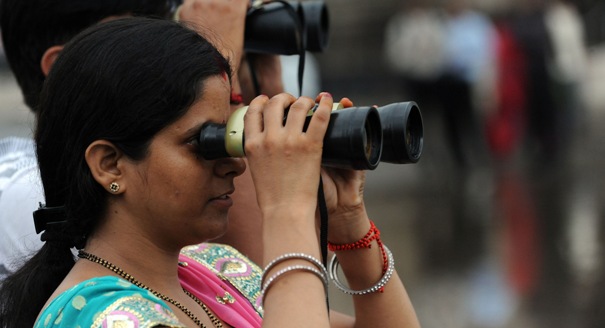
The voices from India in world discussions about Ukraine are of particular importance due to long tradition of non-alignment policy of this country and its good relations with both USSR/Russia and the West.
In the time of crisis there is an urgent need for the correct analysis and prognosis. The Ukrainian events demonstrated the dominance of voices from Russia and the West in world discussions about this country. It’s understandable. Russia has close historical and cultural links with Ukraine. The West has a strong school of expert on the Soviet and Russian history and politics. Yet this dominance shouldn’t let us be deaf to the voices from other countries, because they can help us to clearly see strong and weak sides of the existing ideas on Ukraine as well as to be learned about alternative approaches to this crisis. The voices from India are of particular importance due to long tradition of non-alignment policy of this country and its good relations with both USSR/Russia and the West.
Another explanation, presented in the Business Standard daily, places the responsibility for this crisis on Moscow. According to this view, it is “largely the creation of Mr Putin's transparent desire to establish a sphere of influence that will benefit mostly Russia and a few Ukrainian oligarchs east of the Dnieper River.” Gwynne Dyer, a columnist of the Pioneer daily wrote in this regard: “More importantly, Mr Putin does not want to have a large, prosperous and democratic country with strong EU ties on Russia's own border. Especially if it is another Slavic country that also used to be part of the Soviet Union, and it got its democracy as the result of a largely non-violent revolution carried out in the main square of the capital city. The example would be very dangerous to his regime."
Vinay Shukla believe that the problem for such countries like Ukraine is of self-identity. He argues that “this is easily achieved through hostile policy towards big power next-door than creating a highly successful state to justify partition of people with common history.” He recalls that in August 1992 he supposed that “relations between Ukraine and Russia could develop along the India-Pakistan track, albeit with own specifics.” In that time there were parallels between two “K” (Crimea and Kashmir) in the Russian-Ukrainian and Indian-Pakistani relations.
Depending on the views on Russian and Western role in Ukraine, Indian authors see perspective for this crisis. According to the Business Standard, “much depends on what Mr Putin does next”. The newspaper asks: “Will he cause Ukraine to split along ethnic lines?”
Vinay Shukla doesn’t agree with this. He argues that “further developments depend on the line of action taken by the new authorities in Kiev under the guidance of their Western mentors, who are quietly rejoicing the victory in the battle for Ukraine, which can turn out to be a pyrrhic, sparking territorial disputes in East Europe.” According to him there are signs of the Russian efforts to seek a diplomatic end to the Ukrainian crisis.
Maleeva Rebello, a columnist from DNA India, discuss three cases of Ukraine, Thailand and Venezuela, recently overtaken by the mass violence. According to her opinion, these cases sent “the message to other nations that force may not be the right way to express discontent against the policies of the ruling class.” Her conclusion is worth to be listen in Kiev, Brussels, Moscow, and Washington: “Perhaps the teachings and ways of Nelson Mandela and Mahatma Gandhi who were the greatest preachers and practitioners of non-violence need to be used in these three countries as a means to peacefully fight against anti-people government policies. As protests continue in these countries, the world waits and watches as various other nations try to broker peace.”
Former Fellow, Nonproliferation Program, Moscow Center
Topychkanov was a fellow in the Carnegie Moscow Center’s Nonproliferation Program.
Recent Work
Petr Topychkanov
Petr Topychkanov
Carnegie India does not take institutional positions on public policy issues; the views represented herein are those of the author(s) and do not necessarily reflect the views of Carnegie, its staff, or its trustees.

This piece argues that India’s central challenge is not managing a single flashpoint but resolving the underlying tension between expansion and institutional coherency of the BRICS grouping.

Vrinda Sahai

The ASML MoU with Tata Electronics is an indicator of how far the Indian semiconductor ecosystem has come. This ecosystem has been years in the making and represents real commercial logic.

Konark Bhandari
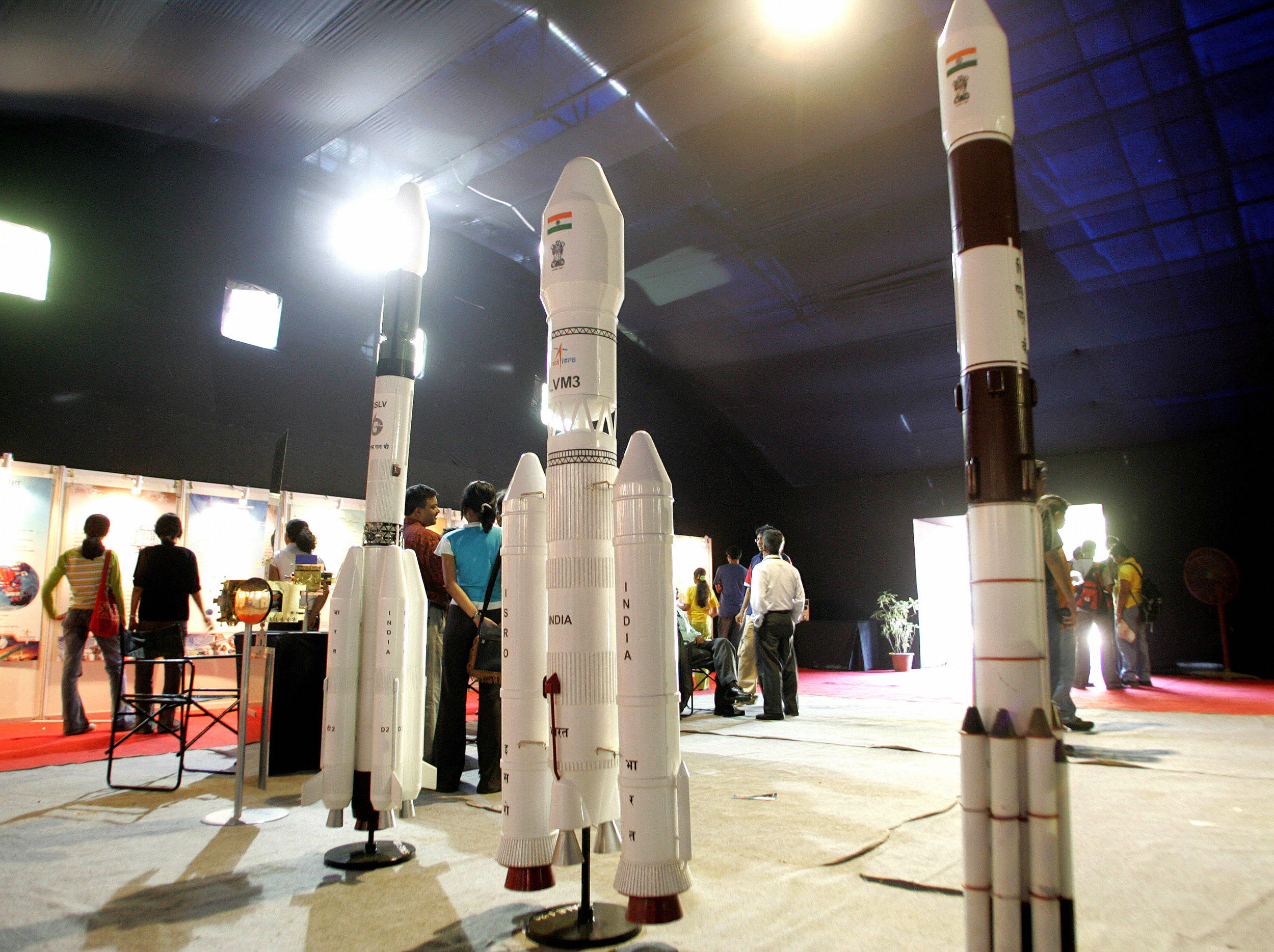
This paper examines the relationship between India’s evolving space policy and the corresponding growth in private space ventures. It analyzes both the enabling factors created by recent regulatory changes and the persistent challenges facing entrepreneurs in this capital-intensive, highly regulated industry.
Harshan Vazhakunnam

A partnership between India, a country of subcontinental size, and Africa, a continent of fifty-four countries, may seem asymmetric until one notes that both are home to nearly the same number of people—1.4 billion. This essay spells out the existing challenges to the partnership, its optimal potential, and the possible pathways to realize it over the next quarter-century.

Rajiv Bhatia

The U.S.–India semiconductor cooperation story is well-stocked with top-level strategic intent. What remains unresolved, however, are some underlying challenges that will determine whether the cooperation actually functions. Three such friction points stand out.

Shruti Mittal