Source: Aravot
- The official Kiev, as well as Western countries and international organizations have estimated the Crimean referendum anti-constitutional. Mrs. Shevtsova, first what did Russia achieve? Does Russia want war with Ukraine? In the context of recent events, can we anticipate political coarsen by Russia in the post-Soviet territory?
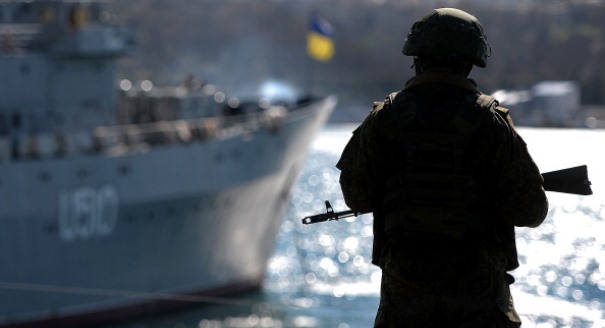
- The referendum was actually anti-constitutional from the viewpoint of Ukrainian Constitution. In addition, conducting referendum under the “gun tube”, in other words, under annexation of Crimea even by “unknown” armed forces, enabled considering the results of the referendum legitimate, about which there is a statement of the Venice Commission. Russia’s further actions in unifying Crimea to Russia are in violation of a number of international treaties, including the 1994 Budapest Treaty and the UN Charter, as well as the Helsinki Agreement and the OSCE Charter. In addition, by irony of fate, the annexation of Crimea by Russia is in contrast to the spirit and norms of Russia’s legislation. Awkwardly, an amendment was made in Russia’s Criminal Code, according to which, even the calls as a result of the decision on Russia’s territorial integrity shall be subjected to punishment with imprisonment. Naturally, the annexation of the Crimea would not be recognized by the international community.
Formally, the Kremlin has not officially declared about the state of war with Ukraine. Ukraine does not resist the Kremlin’s actions. However, Russia’s actions coincide with the signs of the occupation of a part of Ukrainian territory. A precedent is created when Russia may try to “protect the interests of the Russian-speaking population” in other unrecognized states. But, as far as I understand, such a scenario does not threaten Armenia…
- Recently, Garry Kasparov, the world chess champion and Russian opposition, criticized Western politicians in The Washington Post for being indecision in resisting Vladimir Putin, noting that Putin’s actions in Crimea denied the projections that the invasion is contrary to Russia’s interests. “It’s high time to stop listening to the professors with their lectures that Putin would never do, and it’s time to react to what he has been doing unless he has started to do it again… The European countries leaders and the “eight” are in “voluntary paralysis” situation,” wrote Kasparov. Mrs. Shevtsova, will the confrontation between the West and Russia deepen, or the West will display a constructive approach?
- I do not have any counter-argument with which I can counteract Garry Kasparov. I share the conclusion about the West’s “paralysis” situation. It is manifested at least in the fact that the West does not know how to react to the collapse of current world order and the violation of the fundamental principle of inviolability of post-war borders.
With regard to democratic approaches to Russia, currently the attitude will not be cloudless. Can we talk about the inevitable confrontation…? I think it is early to draw such a conclusion. However, the cold autumn between the relations has already reached. It will pass to a cold winter, time will tell. You are asking about the possibility of “constructive approaches” towards Russia by the West. I do not understand how you understand this approach. Should the West recognize the annexation by Russia? Or, Should the West force Russia to come out of Crimea…? Neither one nor the other will happen anytime soon.
- Recently, a telephone conversation between Serzh Sargsyan and Vladimir Putin was held. The presidents had exchanged ideas on the topic of crisis in Ukraine and the ways to come out of it. In this context, the interlocutors referred to the situation established after the Crimean referendum, and recorded that is another example of exercising people’s right to self-determination through expression of free will, at the same time, they stressed the commitment to the principles and norms of the international law, primarily the UN Charter. Mrs. Shevtsova, what is your opinion, could Armenia’s authorities display another approach?
- If the two presidents have really come to this conclusion, which you mention, it means that they have confirmed that they do not accept the international norms. Can we consider the situation happened after occupying the territory of a country by another country a “free” expression of will? Does the President Sargsyan really consider the expression of will in Crimea free? In this case, he is simply misinformed. As to the willingness of the two presidents to abide by international laws and the UN Charter, it is commendable. However, one of them has violated the UN Charter. I find it hard to say whether Armenia’s authorities could have made another approach in this situation, in which Armenia has appeared.
- There are opinions that in the near future Russia would be so busy with Ukraine that it would not apply to active operations in Kazakhstan, Belarus, and especially Armenia. Do you agree?
- No one can predict what direction Russian tentacles would extend. Two factors are important. First, from this time onward, Moscow will force Russia a militaristic and military paradigm, which means expansionism and search for an enemy. Secondly, the states that are in the orbit of Russia (and you can decide for yourself how it is as a state) will have to pay for the economic loyalty and Russian support. Not so comfortable conditions for survival.
This interview originally appeared in Aravot.