

Article
Thomas de Waal
{
  "authors": [
    "Thomas de Waal"
  ],
  "type": "commentary",
  "centerAffiliationAll": "",
  "centers": [
    "Carnegie Endowment for International Peace",
    "Carnegie Europe",
    "Carnegie Russia Eurasia Center"
  ],
  "collections": [],
  "englishNewsletterAll": "",
  "nonEnglishNewsletterAll": "",
  "primaryCenter": "Carnegie Europe",
  "programAffiliation": "",
  "programs": [],
  "projects": [],
  "regions": [
    "Caucasus",
    "Russia",
    "Azerbaijan",
    "Armenia"
  ],
  "topics": [
    "Political Reform",
    "Democracy",
    "Civil Society"
  ]
}
Source: Getty
The paranoia, intolerance of dissent, spy-mania, and anti-Western mood in Azerbaijan are all painfully reminiscent of Putin’s Russia.
The Azerbaijani government is crossing a red line. After a number of detentions in recent months, it has now moved against a couple who between them represent peaceful outreach to Armenians and human rights protection.
On Monday security officials detained Arif and Leyla Yunus at Baku airport as they were about to fly to Doha. Fearing for their safety, they had been accompanied up until passport control by the French ambassador and the deputy head of the U.S. embassy. The couple were questioned throughout the night, their passports were seized, their apartment and office was searched and their bank account frozen. Arif Yunus was committed to hospital suffering from stress and a heart complaint.
The casual cruelty, the paranoia, intolerance of dissent, spy-mania, and anti-Western mood are all painfully reminiscent of Putin's Russia.
In the later 1990s President Heidar Aliev's government actively supported Western-funded non-governmental contacts with Armenians. Local leaders on either side of the ceasefire line met. Journalists went back and forth between Armenia and Azerbaijan.
In recent years these initiatives have diminished significantly. One of the few remaining projects, in which both Mirkadirov and Yunus were involved, was a cross-border civil society project called Public Dialogues, supported by the British and Polish governments.
This project now stands accused—absurdly—of being a cover for Armenian state espionage. In fact, as in Baku, the Armenian participants in the project are pro-democracy activists who are a thorn in the side of their own government.
Over the past quarter of a century, Arif and Leyla Yunus have been a dynamic democratic duo, a one-couple phenomenon in Azerbaijan. (I have known them for 14 years and Arif has been a close collaborator in my work on the Karabakh conflict.)
In 1990, when Soviet troops rolled into Baku, Leyla wrote an article "The Measure of Responsibility of a Politician" which inspired the anti-Soviet independence movement. She subsequently became deputy defense minister in the Popular Front government during the war of Karabakh. More recently, she was the country's best-known human rights defender. One of her colleagues once proudly showed me a letter from the Azerbaijani provinces which was addressed simply "Leyla Yunus, Human Rights Center, Baku," but had found its way to her.
Her husband Arif Yunus is the best Azerbaijani expert on the Karabakh conflict and on Islam. He worked extensively with Azerbaijan's refugees from Soviet Armenia, when they were the country's forgotten people. Over the years he is one of only a dozen or so Azerbaijanis who has continued to visit Armenia. In him, Armenians always met an informed interlocutor who posed them a real intellectual challenge.
Why are these two eminent people being persecuted now?
There are various explanations. One is that a more pro-Russian group has taken charge in the presidential administration and wants to copy Putin—and certainly this is a depressing moment for the group inside the government which wants to move their country toward the West.
The other is that, in the wake of the Russian offensive against Ukraine and visits by officials such as U.K. Foreign Secretary William Hague, the Baku government has come to believe that Azerbaijan is an indispensable energy supplier and therefore immune to Western criticism.
The assault on peace-building activists like Mirkadirov and Arif Yunus may also reflect a fear that Russia's tightening grip on Armenia has frozen the Karabakh dispute, giving Azerbaijan even fewer options—although of course arresting peace activists will only achieve the opposite result.
No charges have been laid against the couple as yet, so there is a small chance the government will step back from the brink. But there is not much reason to be hopeful.
Several Azerbaijanis noted on Facebook that April 28, the day of their detention, was the Day of Sovietization of Azerbaijan, formerly the Soviet-era holiday that marked the Bolshevik capture of Baku in 1920. Currently, that looks like a bad omen.

Senior Fellow, Carnegie Europe
Thomas de Waal is a senior fellow at Carnegie Europe, specializing in Eastern Europe and the Caucasus.
Recent Work
Thomas de Waal
Thomas de Waal
Carnegie India does not take institutional positions on public policy issues; the views represented herein are those of the author(s) and do not necessarily reflect the views of Carnegie, its staff, or its trustees.

This piece argues that India’s central challenge is not managing a single flashpoint but resolving the underlying tension between expansion and institutional coherency of the BRICS grouping.

Vrinda Sahai

Experts weigh in on whether the United States is too hostile toward China.

Stephen Wertheim, Evan S. Medeiros, Vijay Gokhale
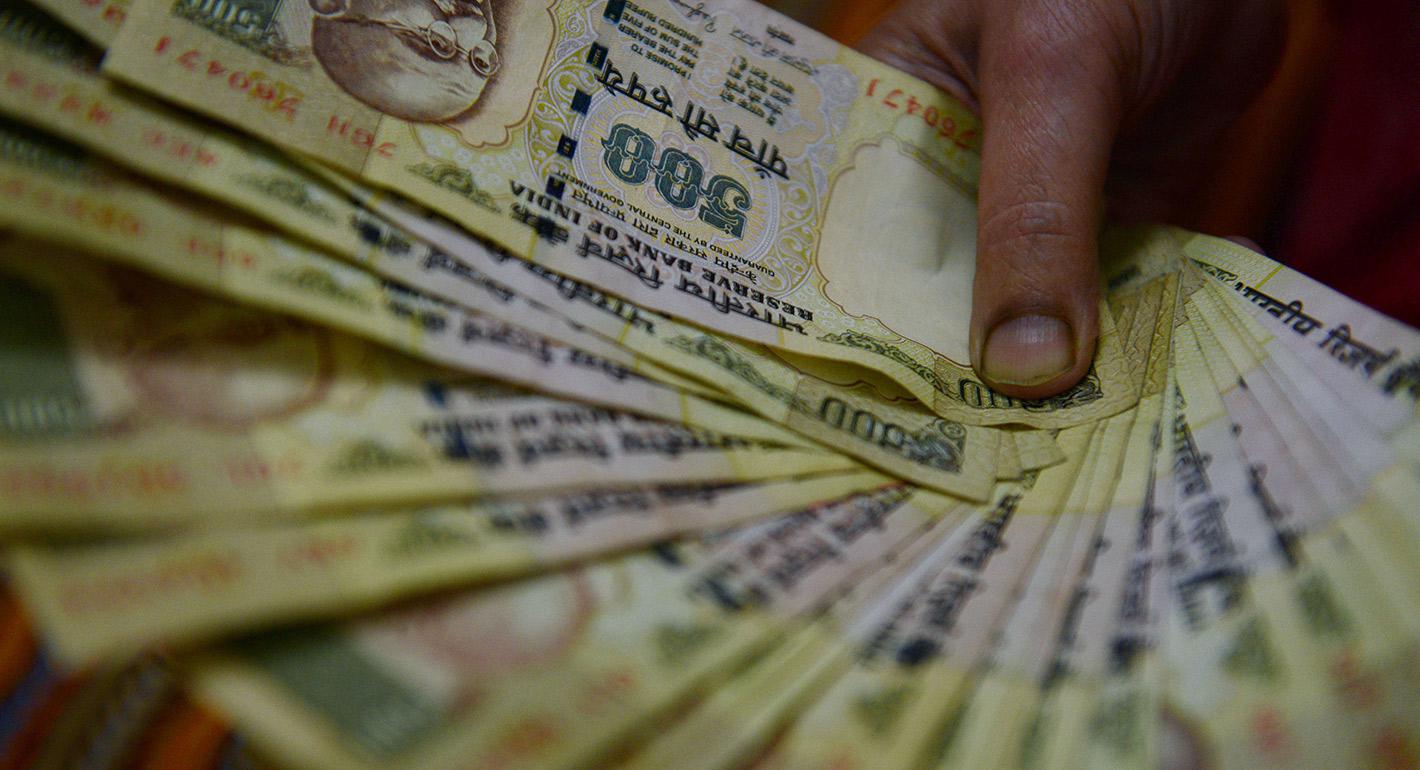
As India’s economy recovers from the coronavirus pandemic, Indian businesses need efficient financial structures to regain their ground. Key reforms to India’s Insolvency and Bankruptcy Code could fill these gaps.
Anirudh Burman

Access to cross-border data is an integral piece of the law enforcement puzzle. India is well placed to lead the discussions on international data agreements subject to undertaking necessary surveillance reforms.
Smriti Parsheera, Prateek Jha
After the coronavirus pandemic wanes, how will China’s reorientation of the Belt and Road Initiative to address global health concerns influence its relationships with South Asian countries?
Deep Pal, Rahul Bhatia