

In The Media
Lina Khatib
{
  "authors": [
    "Lina Khatib"
  ],
  "type": "legacyinthemedia",
  "centerAffiliationAll": "dc",
  "centers": [
    "Carnegie Endowment for International Peace",
    "Malcolm H. Kerr Carnegie Middle East Center"
  ],
  "collections": [],
  "englishNewsletterAll": "menaTransitions",
  "nonEnglishNewsletterAll": "",
  "primaryCenter": "Malcolm H. Kerr Carnegie Middle East Center",
  "programAffiliation": "MEP",
  "programs": [
    "Middle East"
  ],
  "projects": [],
  "regions": [
    "Egypt",
    "Levant",
    "Palestine",
    "Middle East",
    "Israel",
    "North Africa"
  ],
  "topics": [
    "Political Reform",
    "Security",
    "Foreign Policy"
  ]
}
Source: Getty
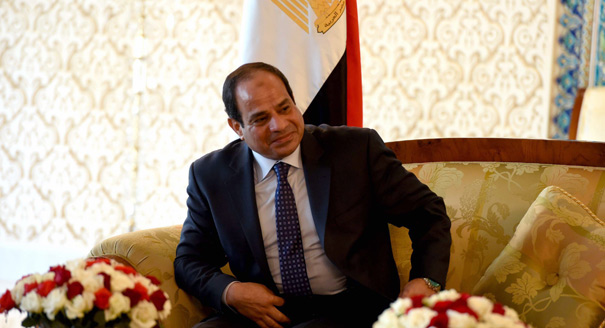
Egypt has presented an initiative to broker a deal between Hamas and Israel to end the current violence. President Abdel Fattah El-Sisi cannot afford to see it fail.
Source: Al Arabiya
As the Israeli attack on Gaza continues, Egypt has presented an initiative to broker a deal between Hamas and Israel to end the current violence. President Abdel Fattah El-Sisi simply cannot let this initiative collapse and will do everything in his ability to see it through.
The Egypt deal comes at a critical time for Sisi, with the Gaza crisis taking place only two months after his ascension to the presidency following a campaign that promised to resurrect Egypt’s leading role in the Middle East. The Egyptian president needs to demonstrate to his own people that he is indeed a leader with clout. He also wishes to assert himself in the international arena.
This is not Sisi’s first such attempt: In June 2014, before the Israeli attack on Gaza, Sisi had discussed with US foreign secretary John Kerry the regional threat presented by Islamist extremists in Syria, which was an indirect appeal for counterterrorism cooperation as well as a hint at a desired role for Egypt in the Syrian conflict. The current crisis presents an easier opportunity than the complex Syria crisis for Sisi to construct an active regional role for Egypt. After all, Egypt has traditionally often played a mediating role between Palestinians and Israelis, such as the mediation that took place after the outbreak of violence between Hamas and Israel in 2012. Sisi can capitalize on existing channels of communication to push for a deal.The deal also comes at a somewhat optimal time for Sisi: Qatar, which had previously taken advantage of the relative decline of the mediation roles of Saudi Arabia and Egypt to present itself as the new key mediator in the region, is now on the backburner after much Saudi pressure. This leaves the space open for Sisi to present Egypt as a deal broker in the Gaza crisis. Although Hamas is aligned with the Muslim Brotherhood, which is being witch-hunted by the current Egypt government, Saudi pressure on Qatar is likely to lead to Hamas’ consenting to the Egyptian deal.
International signs also seem positive. Sisi’s initiative has already gotten the endorsement of the United States, and now French Foreign Minister Laurent Fabius has also spoken out in support of the deal. The West’s stance in this case can be attributed partly to its search for a new broker in the region following the recent retreat of Qatar as a result of Saudi pressure, and partly to the need to keep an open channel with the new Egyptian administration.
For Sisi, in addition to strengthening his position within Egypt and confirming the narrative of a “strong Egypt” externally, the initiative would give him the upper hand vis-à-vis Hamas. Further down the line, this would give Egypt greater control over its border with Gaza as well as increase the legitimacy of its measures against Islamist groups within Egypt, particularly Hamas’ ally the Muslim Brotherhood.
The success of the Gaza initiative would also grant Sisi a platform to engage in brokering other deals in the future, such as in context of the Syria and Iraq crises, that would continue to affirm Egypt’s reclamation of its regional leadership. As such, Sisi is heavily invested in the Hamas-Israel deal and cannot afford to see it fail.
Former Director, Middle East Center
Khatib was director of the Carnegie Middle East Center in Beirut. Previously, she was the co-founding head of the Program on Arab Reform and Democracy at Stanford University’s Center on Democracy, Development, and the Rule of Law.
Recent Work
Lina Khatib
Lina Khatib
Carnegie India does not take institutional positions on public policy issues; the views represented herein are those of the author(s) and do not necessarily reflect the views of Carnegie, its staff, or its trustees.

This piece examines India’s response to U.S. sanctions and tariffs, specifically assessing the immediate market consequences, such as alterations in import costs, and the broader strategic implications for India’s energy security and foreign policy orientation.
Vrinda Sahai

The India-Pakistan conflict that played out between May 6 and May 10, 2025, offers several military lessons. This article presents key takeaways from Operation Sindoor and breaks down how India’s preparations shaped the outcome and what more is needed to strengthen future readiness.

Dinakar Peri
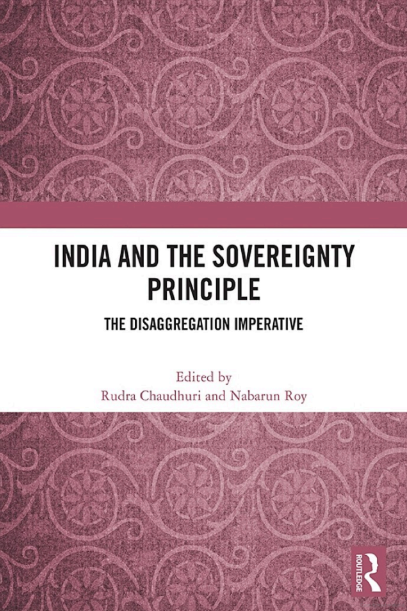
This book offers a comprehensive analysis of India's evolving relationship with sovereignty in a complex global order. Moving beyond conventional narratives, it examines how the sovereignty principle shapes India's behavior across four critical domains—from traditional military power to contemporary data governance.

Rudra Chaudhuri, Nabarun Roy

On July 30, 2025, the United States announced 25 percent tariffs on Indian goods. While diplomatic tensions simmered on the trade front, a cosmic calm prevailed at the Sriharikota launch range. Officials from NASA and ISRO were preparing to launch an engineering marvel into space—the NASA-ISRO Synthetic Aperture Radar (NISAR), marking a significant milestone in the India-U.S. bilateral partnership.

Tejas Bharadwaj
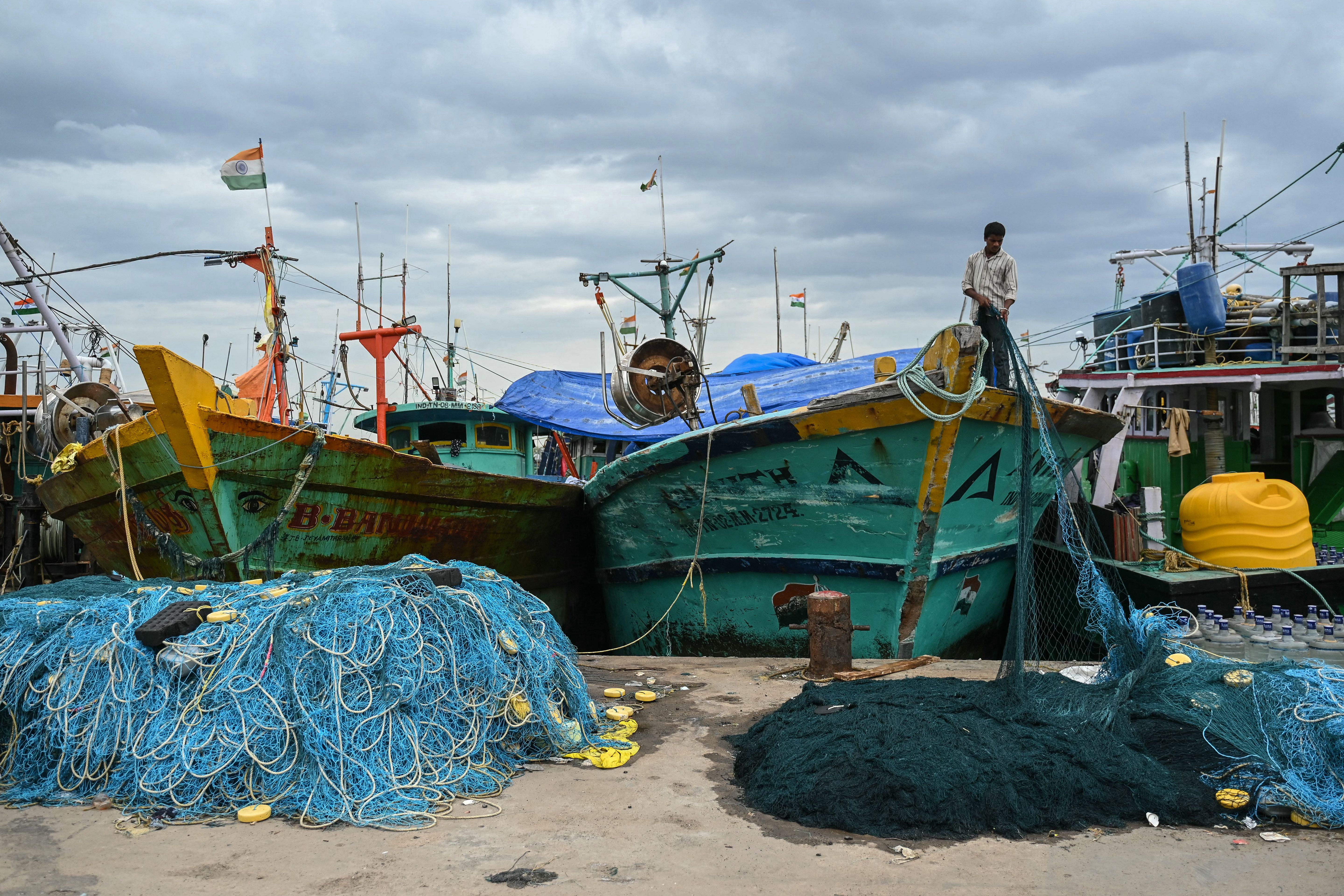
This article examines the scale and impact of Chinese IUU fishing operations globally and identifies the nature of the challenge posed by IUU fishing in the Indian Ocean Region (IOR). It also investigates why existing maritime law and international frameworks have struggled to address this growing threat.


Ajay Kumar, Charukeshi Bhatt