

Article
C. Raja Mohan, Darshana M. Baruah
{
  "authors": [
    "C. Raja Mohan"
  ],
  "type": "legacyinthemedia",
  "centerAffiliationAll": "dc",
  "centers": [
    "Carnegie Endowment for International Peace",
    "Carnegie China",
    "Carnegie India"
  ],
  "collections": [
    "China’s Foreign Relations",
    "China and the Developing World"
  ],
  "englishNewsletterAll": "ctw",
  "nonEnglishNewsletterAll": "",
  "primaryCenter": "Carnegie India",
  "programAffiliation": "SAP",
  "programs": [
    "South Asia"
  ],
  "projects": [],
  "regions": [
    "South Asia",
    "India",
    "East Asia",
    "China"
  ],
  "topics": [
    "Foreign Policy"
  ]
}
Source: Getty
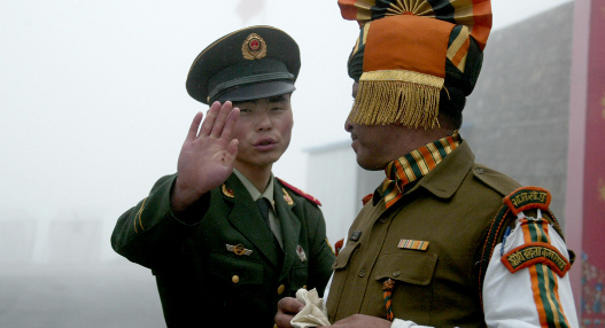
Prime Minister Narendra Modi has much greater political space at home than his predecessor Manmohan Singh in making more confident moves towards China.
Source: Indian Express
Prime Minister Narendra Modi has much greater political space at home than his predecessor Manmohan Singh in making more confident moves towards China. If Singh was hobbled by the Congress party’s ambivalence towards China, the BJP has been far less inhibited. BJP leaders, hawkish in opposition towards China, tended to be pragmatic in their approach to Beijing when in power.
In democracies, rightwing parties that talk tough on national security don’t have to look over their shoulder in making bold foreign policy moves. They can also count on the support of left and liberal sections when they reach out to presumed national adversaries. If Modi generates new warmth in relations with China, many of his critics at home will find it hard not to clap.
Congress leader Rajiv Gandhi certainly gets much credit for putting ties with China back on track in 1988, after they were derailed nearly three decades earlier under the first prime minister, Jawaharlal Nehru. Conventional wisdom, however, glosses over the fact that it was the BJP’s Atal Bihari Vajpayee, who served as India’s foreign minister in the Janata government led by Morarji Desai, who first extended the hand of friendship to China after Nehru. Vajpayee travelled to Beijing nearly a decade before Gandhi did. When he became prime minister, Vajpayee surprised Beijing by citing the threat from China as the principal justification for his decision to conduct five nuclear tests in May 1998, less than two months after he was sworn in. But Vajpayee moved quickly to repair relations with China.Vajpayee took the initiative to resolve the dispute with China over Sikkim. During his visit to China in 2003, Vajpayee persuaded Chinese leaders to begin a new political effort to settle the boundary question. The fruits from this endeavour fell into the UPA government’s lap two years later in the summer of 2005, in the form of an agreement on the guiding principles for the resolution of the boundary dispute.
The Congress leadership did not have the political will to push forward on the China relationship. The Congress always talked about friendship with China in grandiose terms. But it did not have the stomach to take the hard decisions on key issues in India’s China policy: settling the boundary dispute, deepening economic cooperation and competing vigorously with Beijing for strategic influence in Asia. The Congress leadership seemed paralysed by the fear of offending China and drew red lines for itself on the engagement with other nations, especially the United States and Japan. Modi appears to be turning this failed policy on its head.
Despite the deep resentment in the BJP against Washington’s decade-long denial of a visa to Modi, the PM has decided that the US must remain central to India’s foreign policy and signalled warmth towards Washington. Modi has also drawn close to Japan’s premier, Shinzo Abe, amidst deteriorating relations between Beijing and Tokyo.
Modi made bold to refer to China’s “expansionism” from Japanese soil. All this does not make Modi “anti-China” in any sense. Modi has made it quite clear that he will go a lot further than the Congress government in inviting Chinese investments into India. He might also be more open than the UPA government to various Chinese proposals to develop new silk roads — overland and maritime — between China and India. At the same time, Modi is determined to accelerate India’s military modernisation and strengthen its defences on the contested frontier along the Great Himalayas.
Modi’s sweet and sour policy towards China has not constrained his engagement with Beijing. His hardball diplomacy might actually have improved his standing with Chinese President Xi Jinping.
If Modi is a strong leader who is bringing greater purposefulness to India’s China policy, Xi is even more powerful at home. He has conveyed a strong interest in transforming relations with New Delhi and is willing to explore opportunities with Modi.
Sceptics would dismiss such talk by pointing to the multiple challenges facing the bilateral relationship, from the boundary dispute to the trade deficit. They also point to the growing nationalism in both countries and the intensification of regional competition as real obstacles to substantive bilateral cooperation.
The engagement between Modi and Xi, then, is about the tension between the objective limitations and subjective possibilities in the India-China relationship. But political will, historians tell us, can often generate surprising outcomes.
This article was originally published in the Indian Express.
Former Nonresident Senior Fellow, Carnegie India
A leading analyst of India’s foreign policy, Mohan is also an expert on South Asian security, great-power relations in Asia, and arms control.
Recent Work

C. Raja Mohan, Darshana M. Baruah


Alexander Gabuev, Paul Haenle, C. Raja Mohan, …
Carnegie India does not take institutional positions on public policy issues; the views represented herein are those of the author(s) and do not necessarily reflect the views of Carnegie, its staff, or its trustees.

In any defense establishment, change is an ongoing process. However, despite the best of intentions, existing bureaucracies, bound by habit and years of socialization, have their limits in implementing transformative change.

Anit Mukherjee

As AI grows more sophisticated, as the supply chains that power it become more contested, and as access to frontier models becomes geopolitically charged, India must begin to ask a different set of questions. Not what applications it can build on someone else’s infrastructure but what the world needs.

Konark Bhandari

The Indian Ocean Region hosts one of the densest concentrations of subsea cables in the world. Yet, despite accounting for a significant share of global internet traffic, India’s participation remains limited.

Charukeshi Bhatt

How is AI reshaping space security, creating governance challenges, and where does international diplomacy stand today?


Tejas Bharadwaj, Almudena Azcárate Ortega

After the chill in ties between 2020 and 2024 that brought India–China relations to their lowest point in several decades, the two countries have engaged each other afresh. This paper argues that there are predominantly four imperatives guiding India’s approach to China, and they exist in an order of priority.

Saheb Singh Chadha