

Report
- +3
James M. Acton, Alexey Arbatov, Vladimir Dvorkin, …
{
  "authors": [
    "Petr Topychkanov"
  ],
  "type": "commentary",
  "centerAffiliationAll": "",
  "centers": [
    "Carnegie Endowment for International Peace",
    "Carnegie Russia Eurasia Center"
  ],
  "collections": [],
  "englishNewsletterAll": "",
  "nonEnglishNewsletterAll": "",
  "primaryCenter": "Carnegie Russia Eurasia Center",
  "programAffiliation": "",
  "programs": [],
  "projects": [],
  "regions": [
    "South Asia",
    "India",
    "Russia"
  ],
  "topics": [
    "Foreign Policy"
  ]
}
Source: Getty
Russia and India should initiate the creation of a roadmap for developing Russian-Indian relations. Without a binding roadmap, the “strategic partnership” will remain nothing but pretty window dressing that conceals the absence of strategy.
The closer we come to President Vladimir Putin’s anticipated visit to India, the higher the frequency of statements by Russian officials on Russian-Indian relations. Yet the more they talk, the greater the number of contradictions in their rhetoric. For instance, Russian Ambassador to India Alexander Kadakin said in February that “relations between Russia and India are at the peak of their development”; while in November the president’s official spokesman Dmitri Peskov promised that his boss’s upcoming visit “will allow bringing bilateral relations between Russia and India to a new level.”
Contradictions such as these testify to the absence of a unified Russian strategy toward India. It appears that several power centers have an effect on the policy: the Presidential Administration, the Foreign Ministry, the Defense Ministry, the military industrial complex, Rosatom, and others. Sometimes they act in unison, but more often they create dissonance as each voice tries to drown out the others.
The most scandalous illustration of this lack of coordination came in the form of a letter sent to two Indian ministries by an executive of a large Russian company facing some problems in India. The letter stated that “… failure to resolve this case could threaten India’s broader diplomatic interests with Russia and standing in the global business community.”
In others words, the executive threatened the Indian authorities with consequences across all spheres of cooperation between the two countries. In theory, this company could have influenced other Russian actors to take punitive measure to harm India’s national interests. Fortunately, the conflict did not escalate to such a degree.
It is suspected that the Indian policy toward Russia suffers from similar dissonance as well.
A unified Russian strategy vis-à-vis India is not likely to emerge on the eve of the Russian president’s visit to New Delhi. The power centers that affect the Kremlin’s Indian policy may sing in unison for a time, but this cannot replace a consolidated strategic outlook.
In developing this outlook, it may be useful to remember a number of Russian-Indian agreements such as the Declaration on Strategic Partnership Between the Republic of India and the Russian Federation that was formulated in 2000. These documents fulfilled their purpose by setting general objectives for Russian-Indian cooperation.
In keeping with these objectives, the two parties should come to an understanding regarding what is it that they seek to gain from their bilateral relationship, and try to create national strategies with respect to each other. Subsequently, they would be able to draw a joint roadmap for the short-term, mid-term, and long-term perspectives.
Had this work been completed earlier, it could have helped to avoid the contradictions in the countries’ respective policies toward each other; the predicaments mentioned earlier—and plenty of others—might not have occurred. It would also have made possible the formulation and implementation of realistic scenarios and helped to discover mutually advantageous areas of cooperation between Russia and India.
In this respect, it would be beneficial to create a permanent working group consisting of experts representing government, commercial, academic, educational, media, and public institutions in Russia and India. The group’s work would be more effective if it were open to the public and if its co-chairmen had access to the Russian and Indian leadership.
There remains hope that Russia and India will recognize the necessity of such a strategy and that the two will initiate the creation of a roadmap for developing Russian-Indian relations. Without a binding roadmap, the “strategic partnership” will remain nothing but pretty window dressing that conceals the absence of strategy.
Former Fellow, Nonproliferation Program, Moscow Center
Topychkanov was a fellow in the Carnegie Moscow Center’s Nonproliferation Program.
Recent Work


James M. Acton, Alexey Arbatov, Vladimir Dvorkin, …
Petr Topychkanov
Carnegie India does not take institutional positions on public policy issues; the views represented herein are those of the author(s) and do not necessarily reflect the views of Carnegie, its staff, or its trustees.

The Indian Ocean Region hosts one of the densest concentrations of subsea cables in the world. Yet, despite accounting for a significant share of global internet traffic, India’s participation remains limited.

Charukeshi Bhatt

How is AI reshaping space security, creating governance challenges, and where does international diplomacy stand today?


Tejas Bharadwaj, Almudena Azcárate Ortega

After the chill in ties between 2020 and 2024 that brought India–China relations to their lowest point in several decades, the two countries have engaged each other afresh. This paper argues that there are predominantly four imperatives guiding India’s approach to China, and they exist in an order of priority.

Saheb Singh Chadha

This piece argues that India’s central challenge is not managing a single flashpoint but resolving the underlying tension between expansion and institutional coherency of the BRICS grouping.

Vrinda Sahai
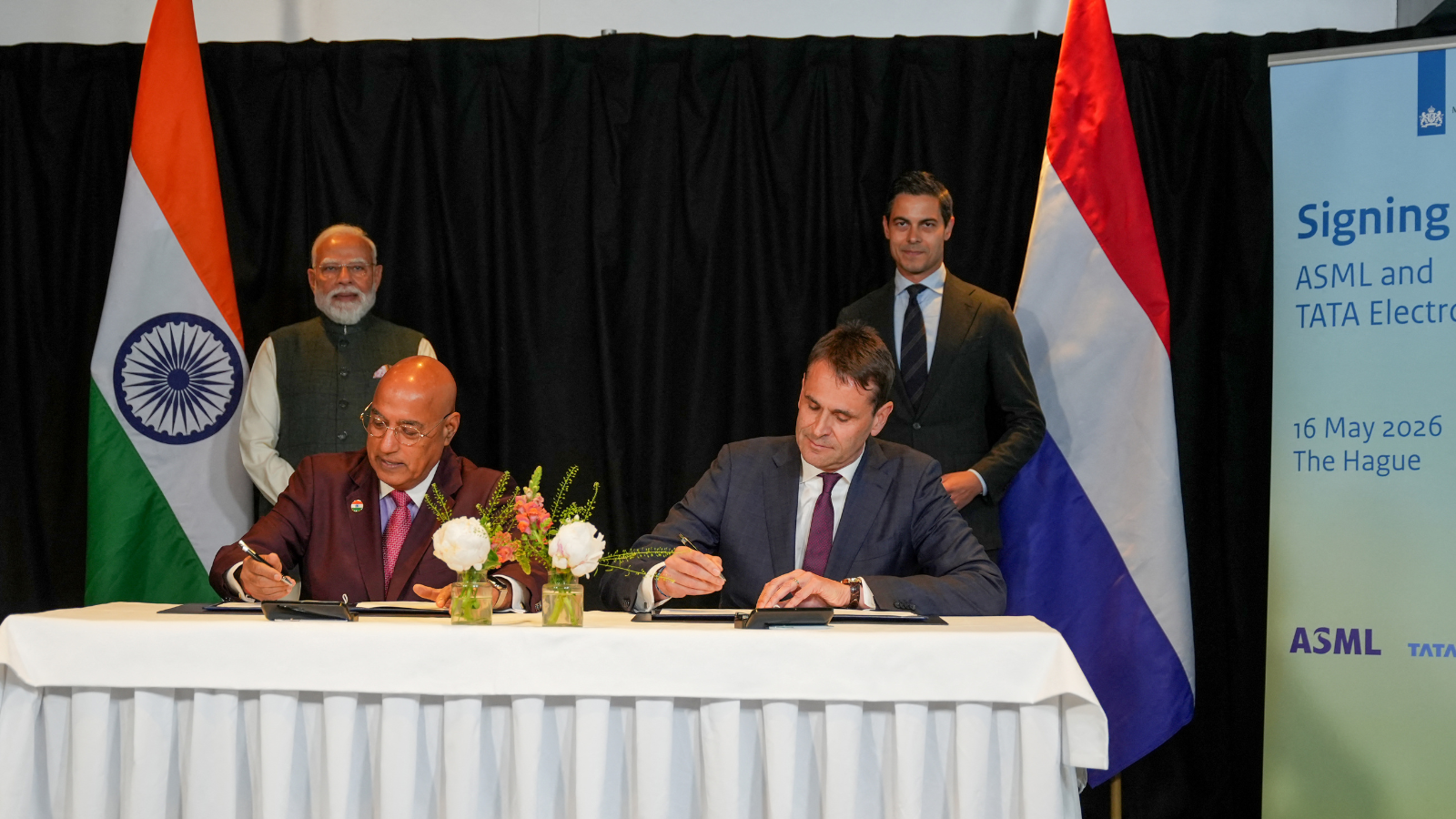
The ASML MoU with Tata Electronics is an indicator of how far the Indian semiconductor ecosystem has come. This ecosystem has been years in the making and represents real commercial logic.

Konark Bhandari