

Commentary
Richard Youngs
{
  "authors": [
    "Richard Youngs"
  ],
  "type": "other",
  "centerAffiliationAll": "dc",
  "centers": [
    "Carnegie Endowment for International Peace",
    "Carnegie Europe",
    "Malcolm H. Kerr Carnegie Middle East Center"
  ],
  "collections": [
    "Europe’s Southern Neighborhood",
    "Democracy and Governance"
  ],
  "englishNewsletterAll": "democracy",
  "nonEnglishNewsletterAll": "",
  "primaryCenter": "Carnegie Europe",
  "programAffiliation": "DCG",
  "programs": [
    "Democracy, Conflict, and Governance",
    "Europe"
  ],
  "projects": [],
  "regions": [
    "Middle East",
    "Europe",
    "Egypt",
    "Gulf",
    "Levant",
    "Maghreb",
    "North Africa",
    "Western Europe",
    "Iran"
  ],
  "topics": [
    "Security",
    "Democracy",
    "Political Reform"
  ]
}
Source: Getty
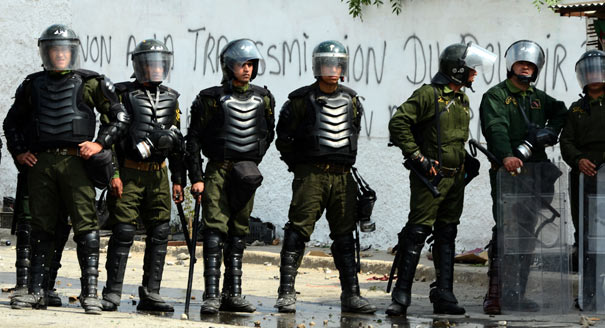
Without a stable political environment, democracy will not take root in the Middle East and North Africa. But thinking only about security is not a long-term solution either.
Source: Bertelsmann Transformation Index Blog
Question: Richard Youngs, democracy indices such as the Bertelsmann Stiftung’s Transformation Index (BTI) have recorded a noticeable general decline in the quality of democracy in the past decade. Does this finding surprise you?
Richard Youngs: The trends are very sobering. Most people today realize that expectation were probably too high a decade ago but many are surprised how difficult progress on democracy has proven. At the same time when one looks at these very general macro figures one has to remember that trends differ between countries and regions. There are countries that have made progress towards better quality democracy in a relatively unspectacular fashion that perhaps hasn’t captured the headlines so much, for instance Indonesia, Ghana, and Chile. It’s not the case that there haven’t been any positive developments at all. But democratization is not a constant process of improvements; there can be reversals and backsliding.Question: Despite the Arab Spring, and with the notable exception of Tunisia, the Middle East and North Africa remain the world’s democratic underachievers. What are the main challenges in this region?
Richard Youngs: It’s probably not helpful to think of the Arab spring as if it were a monolithic whole. Since 2011 the countries in the Middle East and North Africa are moving in very different directions. It’s indeed probably only Tunisia that clearly making positive progress. There are other countries like Morocco were a modest group of reforms has been implemented, yet nothing close to full-scale democratization. Then there are other countries like Egypt where the state has proven strong to resist democratic opening or where politics has become very polarized with authoritarian dynamics.
Question: Why did democratization processes work in Tunisia better than elsewhere?
Richard Youngs: Before the Arab spring Tunisia was one of the region’s most repressive states. It wasn’t necessarily a country predicted to be in the vanguard of democratic change in the Middle East. It’s a relatively small, homogenous society; more so than some other Arab states. The economy and the private sector were reasonably well developed. The crucial thing was that there was more of a tradition of coalition building; different actors realized they needed to sit and negotiate the basic rules of the political game – in a way it didn’t happen in Egypt, for example. The army in Tunisia wasn’t nearly as powerful and politicized as in other countries. However, there do remain serious challenges in Tunisia. The country needs to do progress particularly on the economic side to underpin the political transition.
Question: What are the prospects for democracy development in the Middle East and North Africa?
Richard Youngs: It will be a very bumpy road ahead. A lot will depend on whether the security situation improves enough to give the dynamics of political change a chance. In Egypt, for example, things have become so polarized and unstable that people long for a period of stability. But that doesn’t meant that they are entirely happy with the way the country is being run. One would think that the kind of outpouring in social frustration and protest that we saw in 2011 isn’t easily reversed. Today people are clearly more willing and able to organize and show their frustration. At the same time governments have become so ruthless in pushing back against democratic opening.
Question: Countering IS terrorism is currently a main focus of Western foreign policy in the Middle East and North Africa. How could this affect democracy promotion?
Richard Youngs: The focus on the security situation is not surprising and has a certain logic and justification. If you don’t have a stable political environment, democracy is not going to take root anyway. At the same time thinking only about security is probably not a long term solution. Western countries need to be careful that the way they are trying to assist in the security situation doesn’t load the dice against political reform. They should keep their eyes on the longer term objective of establishing more transparent government. Many international organizations and governments are still working in the area of democracy support, probably at a relatively low profile. It may help to keep up the spirit of open civil society activity and pro-democratic debate which may be useful later on when more opportunities arise.
Question: What’s the role of the Europeans and the European Union (EU) for democracy promotion in the region?
Richard Youngs: Initially in 2011 the EU institutions and member state governments introduced quite useful and reasonably generously funded initiatives designed to help democratic reform. Europe tried to strike a balance between effective support and not being too intrusive. Many in the region didn’t want to be part of a European project in the way reformers in Eastern Europe wanted to after the fall of the Iron Curtain. In the past year or two, however, things have become much more difficult as many Arab regimes have started pushing back against these kind of outside policies. It made it much more difficult for the EU to play a positive role and to support those who are interested in a more democracy.
Question: Could a unified EU foreign policy make a difference?
Richard Youngs: The majority opinion among the EU member states at the moment is rather skeptical of democracy promotion and takes a more geopolitical focus. Unity in itself is not necessarily the same thing as a more effective pro-democracy policy. Even if we had a perfectly united European foreign policy that was in support of human rights and democratic change there are still limits to what it could achieve. But I don’t think any individual outside actors can make a decisive difference. There is a lot of money coming in to North Africa from the Gulf States; China is increasing its presence. There are many competing influences in the region.
Question: The EU has long been viewed as one of the strongest international forces promoting democracy. Does this view still hold true?
Richard Youngs: Most other international actors are probably less committed to promoting political change. But it all will depend on whether the EU and its member states have enough leverage to make any decisive impact. The political will alone to support reform isn’t enough. The EU needs to support different types of civil society organizations; it should be leveraging much more effectively the relationship between economic reforms and political change. It should have a much broader engagement with Islamist parties. I think some of that began after 2011 but recently it lost a lot of its momentum. Problems of corruption need to be dealt with much more systematically. The EU promised freer trade and more open migration facilitation, but hasn’t yet fully delivered on those promises. That further undermines its leverage in the region. In all these areas European governments and the EU could be doing more.
This interview was originally published in the Bertelsmann Transformation Index Blog.

Senior Fellow, Democracy, Conflict, and Governance Program
Richard Youngs is a senior fellow in the Democracy, Conflict, and Governance Program, based at Carnegie Europe. He works on EU foreign policy and on issues of international democracy.
Recent Work
Richard Youngs
Richard Youngs
Carnegie India does not take institutional positions on public policy issues; the views represented herein are those of the author(s) and do not necessarily reflect the views of Carnegie, its staff, or its trustees.

In any defense establishment, change is an ongoing process. However, despite the best of intentions, existing bureaucracies, bound by habit and years of socialization, have their limits in implementing transformative change.

Anit Mukherjee

After the chill in ties between 2020 and 2024 that brought India–China relations to their lowest point in several decades, the two countries have engaged each other afresh. This paper argues that there are predominantly four imperatives guiding India’s approach to China, and they exist in an order of priority.

Saheb Singh Chadha
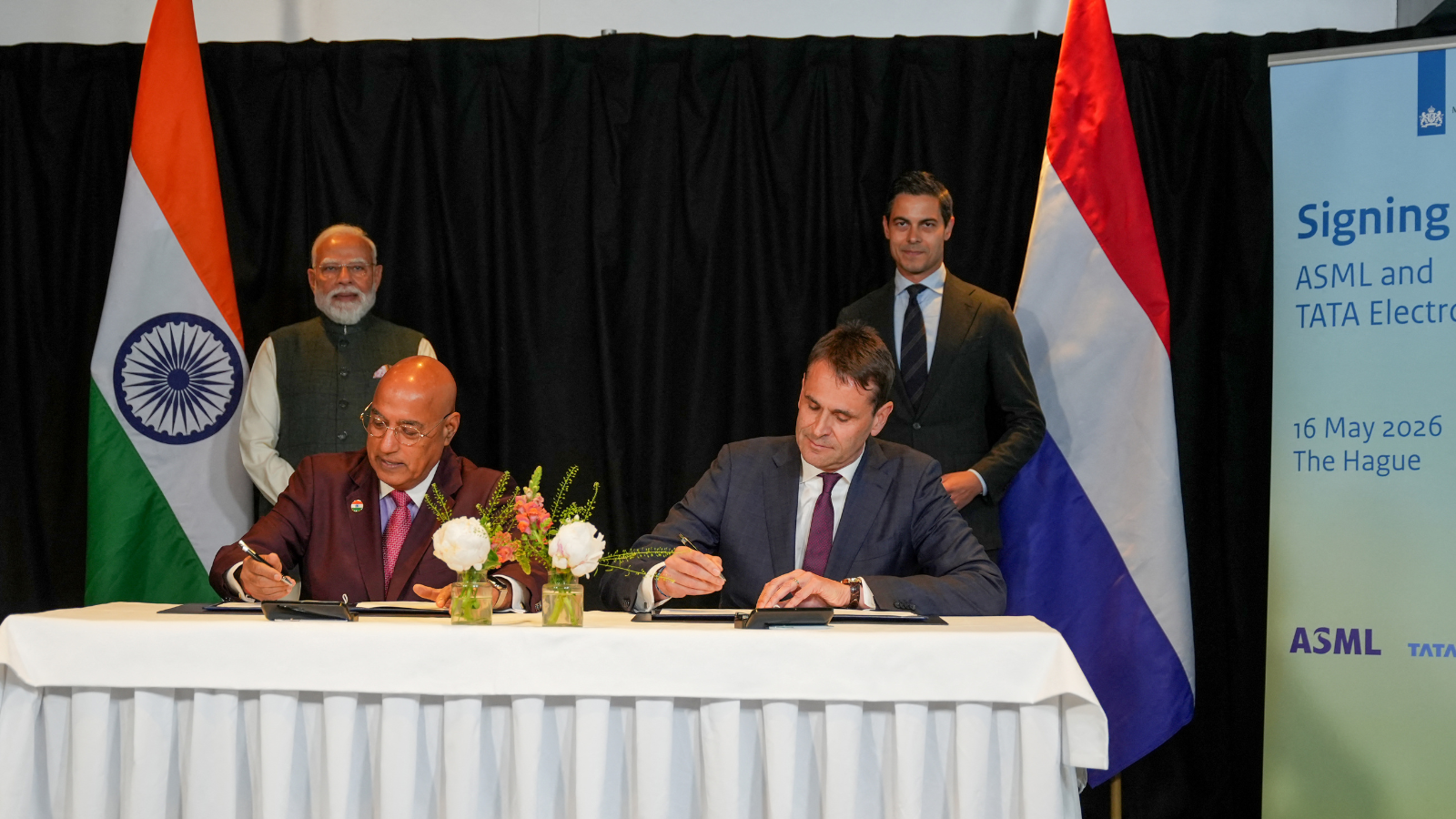
The ASML MoU with Tata Electronics is an indicator of how far the Indian semiconductor ecosystem has come. This ecosystem has been years in the making and represents real commercial logic.

Konark Bhandari

A partnership between India, a country of subcontinental size, and Africa, a continent of fifty-four countries, may seem asymmetric until one notes that both are home to nearly the same number of people—1.4 billion. This essay spells out the existing challenges to the partnership, its optimal potential, and the possible pathways to realize it over the next quarter-century.

Rajiv Bhatia

The India–EU Free Trade Agreement (FTA) is shaping up to be one of the most consequential trade negotiations, both economically and strategically. But, what’s in the agreement, what’s missing, and what will determine its success in the years ahead

Vrinda Sahai, Nicolas Köhler-Suzuki