

Article
C. Raja Mohan, Darshana M. Baruah
{
  "authors": [
    "C. Raja Mohan"
  ],
  "type": "legacyinthemedia",
  "centerAffiliationAll": "dc",
  "centers": [
    "Carnegie Endowment for International Peace",
    "Carnegie India"
  ],
  "collections": [],
  "englishNewsletterAll": "ctw",
  "nonEnglishNewsletterAll": "",
  "primaryCenter": "Carnegie India",
  "programAffiliation": "SAP",
  "programs": [
    "South Asia"
  ],
  "projects": [],
  "regions": [
    "Asia",
    "South Asia",
    "India",
    "East Asia",
    "China"
  ],
  "topics": [
    "Foreign Policy",
    "Security"
  ]
}
Source: Getty
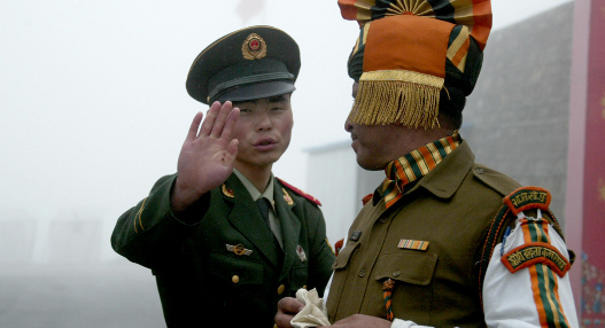
The first round of boundary talks with China under the Narendra Modi government is an opportunity for New Delhi to explore the territorial compromises necessary to resolve the longstanding dispute.
Source: Indian Express
The first round of boundary talks with China under the Narendra Modi government, taking place this week, is an opportunity for New Delhi to explore the territorial compromises necessary to resolve the longstanding dispute. With strong leaders at the helm in Delhi and Beijing, there are rising expectations that the two special representatives — Ajit Doval and Yang Jiechi — will be able to find an early breakthrough on the boundary dispute. By their very nature, territorial compromises are not easy, despite the strong political will in Delhi and Beijing. Even the simplest of solutions to the boundary dispute — turning the status quo into a legitimate border — involves a notional exchange of territories and changing the way the two countries have long drawn their maps.
Given the difficulties of finding a final settlement, the two sides have focused, in the last few rounds, on ensuring peace and tranquility on the border. Repeated incursions by both sides across the claimed boundary line have raised tensions on the border in recent years and cast a political shadow over bilateral ties. Further, the lack of agreement on where the Line of Actual Control (LAC) is has complicated the effective implementation of many confidence-building measures for border stability that the two sides had negotiated in recent years. So, the clarification of the LAC has become an immediate political need for both countries.
Both these approaches — maintaining a peaceful border and clarifying the LAC — look beneath the boundary dispute by disaggregating the problem. But the greatest opportunity for the two governments today lies in looking beyond the boundary dispute and altering the broader context in which it plays out.The Chinese have often said expanded bilateral cooperation across the board will set the stage, over the longer term, for addressing the intractable territorial problem left over by history. That long term might be too far down the road for India’s political comfort. A more productive approach would be to focus on promoting cooperation across the shared but disputed frontiers. This cooperation must necessarily be pursued in tandem with efforts to maintain peace on the border and purposeful negotiations to resolve the dispute.
There are three levels at which India and China can develop trans-frontier engagement. One is to promote trade and people-to-people contact across their borders. Tentative efforts in recent decades have not got real traction, thanks to the Indian focus on limited local trade. It is about time Delhi initiated comprehensive MFN trade across the borders. The Nathula Pass between Sikkim and Tibet is a good place to start. Inadequate infrastructure on the Indian side is often trotted out as an excuse in Delhi to avoid substantive trade on the Indo-Tibetan frontier. Modi should turn this policy on its head. He could use the decision to deepen trade ties on the Tibetan frontier as a trigger for rapid modernisation of transport infrastructure across the southern Himalayas.
The promotion of tourism, including spiritual pilgrimage, has been a central theme of Modi’s regional policy. This approach has unlimited possibilities with China. Delhi and Beijing must now launch a joint initiative to develop religious and cultural tourism across the Indo-Gangetic plains and bordering regions in Tibet, Yunnan and Xinjiang.
Second, Delhi can build on China’s Silk Road initiatives, which call for trilateral and quadrilateral transport and industrial corridors between western China on the one hand, and northern and eastern India on the other. Beijing has been pressing Delhi to cooperate in the development of the BCIM corridor (running through the Yunnan province of China, Myanmar, Bangladesh and India) in the east. It has also suggested a trans-Himalayan corridor between Tibet, Nepal and India. More recently, the Chinese ambassador to India, Le Yucheng, put out an intriguing idea — of extending the China-Pakistan economic corridor to India.
China is investing massively in the development of a corridor running from Kashgar in Xinjiang to Gwadar and Karachi on Pakistan’s Arabian coast. China has plans to connect this corridor to Afghanistan through new road and rail links. Speaking last week in Amritsar, Ambassador Ye saw all-round benefits in connecting the two Punjabs and linking them to the new Silk Road. Restoring economic cooperation between the two Punjabs through the Wagah-Attari border between Amritsar and Lahore has been a major goal of India’s effort to normalise trade relations with Pakistan.
Until now, India has viewed China’s Silk Road projects through a limiting geopolitical perspective. If it leavens its thinking with a bit of economic sense, Delhi might find that these initiatives are rooted in China’s massive accumulation of hard currency reserves and excess industrial capacity. If Beijing has a genuine domestic economic imperative to promote regional cooperation with India, Delhi should try and benefit from it, rather than finding clever ways to duck China’s Silk Road initiatives.
Finally, there is a new opportunity for unprecedented cooperation between Delhi and Beijing on regional issues, especially on the future of Pakistan and Afghanistan. If Delhi has had reason to see China’s ties with Pakistan as an enduring threat in the past, there is a case to view them today as a possible opportunity. As America ends its combat role in Afghanistan and religious extremism rises in Pakistan, China is deeply concerned about the impact on the restive Xinjiang province. If Beijing appears to be redoing its geopolitical sums on India’s northwest, Delhi too must suspend, at least for the moment, some of its certitudes on the China-Pak partnership.
As they prepare for Modi’s visit to China in May, Doval and Yang might find that expanding economic cooperation across their frontiers and launching political consultations on the vulnerable region they share might, in fact, create better conditions for stabilising their own disputed border and exploring a practical territorial settlement in the near term.
This article was originally published in the Indian Express.
Former Nonresident Senior Fellow, Carnegie India
A leading analyst of India’s foreign policy, Mohan is also an expert on South Asian security, great-power relations in Asia, and arms control.
Recent Work

C. Raja Mohan, Darshana M. Baruah


Alexander Gabuev, Paul Haenle, C. Raja Mohan, …
Carnegie India does not take institutional positions on public policy issues; the views represented herein are those of the author(s) and do not necessarily reflect the views of Carnegie, its staff, or its trustees.

In any defense establishment, change is an ongoing process. However, despite the best of intentions, existing bureaucracies, bound by habit and years of socialization, have their limits in implementing transformative change.

Anit Mukherjee
As AI grows more sophisticated, as the supply chains that power it become more contested, and as access to frontier models becomes geopolitically charged, India must begin to ask a different set of questions. Not what applications it can build on someone else’s infrastructure but what the world needs.

Konark Bhandari

The Indian Ocean Region hosts one of the densest concentrations of subsea cables in the world. Yet, despite accounting for a significant share of global internet traffic, India’s participation remains limited.

Charukeshi Bhatt

How is AI reshaping space security, creating governance challenges, and where does international diplomacy stand today?


Tejas Bharadwaj, Almudena Azcárate Ortega

After the chill in ties between 2020 and 2024 that brought India–China relations to their lowest point in several decades, the two countries have engaged each other afresh. This paper argues that there are predominantly four imperatives guiding India’s approach to China, and they exist in an order of priority.

Saheb Singh Chadha