

Research
- +8
William J. Burns, Michael Chertoff, Catherine Ashton, …
{
  "authors": [
    "William J. Burns"
  ],
  "type": "other",
  "centerAffiliationAll": "",
  "centers": [
    "Carnegie Endowment for International Peace"
  ],
  "collections": [
    "Iranian Proliferation"
  ],
  "englishNewsletterAll": "",
  "nonEnglishNewsletterAll": "",
  "primaryCenter": "Carnegie Endowment for International Peace",
  "programAffiliation": "",
  "programs": [],
  "projects": [],
  "regions": [
    "United States",
    "Middle East",
    "Iran",
    "South Asia",
    "India",
    "Pakistan"
  ],
  "topics": [
    "Security",
    "Military",
    "Foreign Policy",
    "Nuclear Policy",
    "Nuclear Energy"
  ]
}
Source: Getty
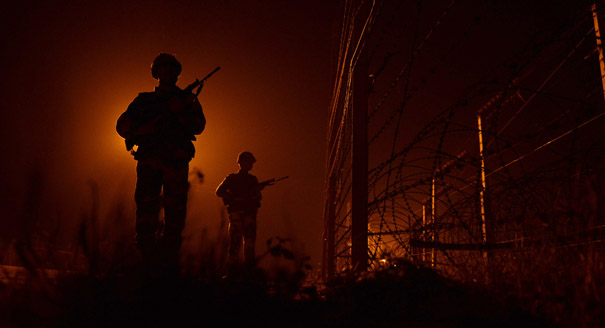
The geopolitical chessboard is rarely as neat as strategists like to portray it.
Source: Hindustan Times
William J Burns retired as the deputy secretary of state in 2014, and is currently the president of Carnegie Endowment for International Peace, among the most influential think tanks in Washington DC. He has worked extensively on relations with India as well as Russia, Iran, and the Middle East. In an interview with Hindustan Times, Burns spoke on issues ranging from US government's foreign policy to P5+1-Iran framework agreement.
As our relationship matures, it will be difficult to replicate dramatic bilateral initiatives like the civil nuclear deal. A real strategic partnership between major powers is not just about one-off major initiatives but also about the practical application of the partnership across the wide array of issues where our interests increasingly converge – from building order and prosperity in the Asia-Pacific to countering WMD proliferation and combating violent extremism and terrorism which threaten our liberal democratic societies. While we should not define our relationship purely around dramatic bilateral initiatives, we should still continue to think ambitiously, especially about issues like sustainable development, climate change, defense cooperation, and trade.
The geopolitical chessboard is rarely as neat as strategists like to portray it. While there is no question that we have strong views about the emerging order in the Asia-Pacific and that our Indian counterparts broadly share those views, it is neither the purpose nor intention of US policy to use the strategic partnership with India to contain China. In fact, we strongly believe that a thriving China is good for China, good for the United States, and good for India. The 21st century Asia-Pacific we seek is one in which India, the United States, China and all the states of this region and beyond enjoy good relations. Rather than seeking to divide Asia, we have consistently pursued policies that aim to unite and connect the region – strategically and economically. Prime Minister Modi’s visit to Beijing is a good opportunity to deepen those connections and to find ways to strengthen cooperation and manage areas of competition.
I have long believed that terrorism, festering tensions between India and Pakistan, and the risk of conflict between these two nuclear powers is one of the most underappreciated threats to regional and indeed global security. The objective of the Obama Administration’s diplomatic approach to Islamabad was to support a gradual reorientation of Islamabad’s policy that would not only reduce the threat posed by terrorist groups to its neighbours but also to its own society – which has suffered enormous cost in blood and treasure over the years. I wish there was a quick and neat way to achieve more dramatic and durable gains, but it is going to take continued engagement and sustained efforts over many years.
The understanding announced in Lausanne on April 2 is an important step forward in what has been a long and complicated diplomatic road. It builds on the November 2013 interim agreement, which emerged out of the quiet backchannel talks we conducted with Iran, after 35 years without sustained diplomatic contact. The parameters detailed in the Lausanne joint statement outline a solid comprehensive agreement that would verifiably close off Iran’s pathways to a nuclear weapon. Much has been made of the parties’ divergent public interpretations, but what actually matters is the fine print of a comprehensive agreement.
The parties are now engaged in the difficult, painstaking work of negotiating the details of the agreement – from the verification and enforcement provisions to the choreography of sanctions relief. They are more focused on getting this right than getting it done quickly, which I think is absolutely the right instinct.
American foreign policy is at its best when it rests on a strong bipartisan foundation. Our partnership with India is a very good example of what bipartisan consensus looks like and what it can achieve. If we are to successfully tackle the challenges we face across a very complicated international landscape, we will need to renew and revitalize this consensus. The hard truth is that it is very hard for us to build coalitions abroad in support of our values and interests if we fail to build them at home.
Congress plays an important role in shaping US foreign policy. Congressional sanctions against Iran helped build the leverage necessary for diplomatic progress and helped make possible the historic opportunity we have to complete a comprehensive agreement. I remain optimistic that Congress will vote in favor of a strong, verifiable, comprehensive nuclear agreement.
While I hope over the long-term for an easing of Iran’s regional behaviour and an opening up of a very young Iranian population to the rest of the world, I do not assume that progress on the nuclear issue will lead anytime soon to relaxation of tensions with Tehran on other regional problems, or to normalization of United States-Iranian relations. Nor do I assume that the Iranian leadership will make an overnight transformation from a revolutionary, regionally disruptive force to a more “normal” role as another ambitious regional power.
That means we must work to reassure our partners in the region, whose concerns about both Iranian threats and the impact of a nuclear deal are palpable. We should urgently pursue new forms of security assurances and cooperation. Taking a firm stance against threatening Iranian actions in the region, from Syria to Yemen, not only shores up anxious longtime friends. It also is the best way to produce Iranian restraint, much as a firm stance on sanctions helped persuade Iran to reassess its nuclear strategy.
Former Carnegie President (2015-2021)
A former career diplomat, William J. Burns served as director of the CIA, deputy secretary of State, and ambassador to Russia and Jordan. Burns was also president of the Carnegie Endowment for International Peace from 2015 to 2021.
Recent Work
William J. Burns, Michael Chertoff, Catherine Ashton, …
William J. Burns
Carnegie India does not take institutional positions on public policy issues; the views represented herein are those of the author(s) and do not necessarily reflect the views of Carnegie, its staff, or its trustees.

In any defense establishment, change is an ongoing process. However, despite the best of intentions, existing bureaucracies, bound by habit and years of socialization, have their limits in implementing transformative change.

Anit Mukherjee
As AI grows more sophisticated, as the supply chains that power it become more contested, and as access to frontier models becomes geopolitically charged, India must begin to ask a different set of questions. Not what applications it can build on someone else’s infrastructure but what the world needs.

Konark Bhandari

The Indian Ocean Region hosts one of the densest concentrations of subsea cables in the world. Yet, despite accounting for a significant share of global internet traffic, India’s participation remains limited.

Charukeshi Bhatt

How is AI reshaping space security, creating governance challenges, and where does international diplomacy stand today?


Tejas Bharadwaj, Almudena Azcárate Ortega

After the chill in ties between 2020 and 2024 that brought India–China relations to their lowest point in several decades, the two countries have engaged each other afresh. This paper argues that there are predominantly four imperatives guiding India’s approach to China, and they exist in an order of priority.

Saheb Singh Chadha