

Report
- +3
James M. Acton, Alexey Arbatov, Vladimir Dvorkin, …
{
  "authors": [
    "Petr Topychkanov"
  ],
  "type": "legacyinthemedia",
  "centerAffiliationAll": "",
  "centers": [
    "Carnegie Endowment for International Peace",
    "Carnegie Russia Eurasia Center"
  ],
  "collections": [],
  "englishNewsletterAll": "",
  "nonEnglishNewsletterAll": "",
  "primaryCenter": "Carnegie Russia Eurasia Center",
  "programAffiliation": "",
  "programs": [],
  "projects": [
    "Eurasia in Transition"
  ],
  "regions": [
    "South Asia",
    "Afghanistan",
    "Pakistan",
    "East Asia",
    "China"
  ],
  "topics": [
    "Security",
    "Foreign Policy"
  ]
}
Source: Getty
The success of the Urumqi meeting between the representatives of the Afghan government and the Taliban, also attended by Chinese and Pakistanis, is doubtful. The role of Pakistan in the organization of the meeting is the most controversial issue.
Source: Russia & India Report
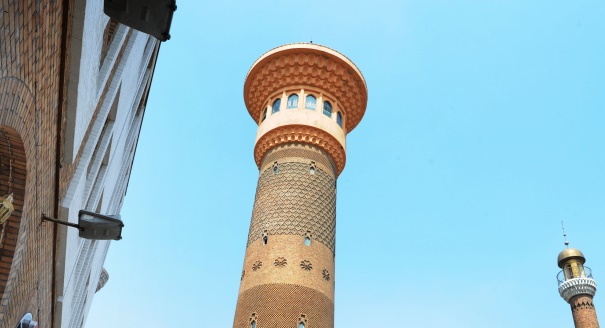
Representatives from the government of Afghanistan and the Taliban secretly met on May 19-20 in Urumqi, the capital of Chinese Xinjiang’s Uygur Autonomous Region. The meeting was also attended by Chinese and Pakistanis.
Reports about the meeting first appeared in the American newspaper Wall Street Journal (WSJ) earlier this week, giving a positive assessment of the meeting. The article underlined three crucial features of the meeting.
The meeting was reportedly not a negotiation, but preliminary consultations about the beginning of negotiations. The fact that several years after negotiations started between the Afghan government and the Taliban, they decided to restart negotiations from scratch indicates the failure of the previous efforts and casts doubt on the prospects of future ones.
The choice of head of the Afghan delegation at the meeting is quite intriguing. If these were no more than preliminary consultations, why would such a senior politician participate in them? Perhaps the Afghan authorities expected a more conclusive outcome from the meeting, which Taliban representatives did not accept?
The Taliban who arrived in Urumqi were not of the same level of seniority as Stanekzai. While Mullah Abdul Jalil (Head of the Taliban’s Committee on Internal Affairs), Mullah Mohammad Hassan Rahmani (former head of Kandahar Province) and Mullah Abdul Razak (former interior minister) occupy prominent positions in the Taliban hierarchy, unlike Stanekzai, they do not have the authority to represent all of the Taliban.
These Taliban representatives were chosen to come to Urumqi because of their contacts with Pakistan's ISI, the writers said, raising questions about their dependence and links with Pakistan’s intelligence service.
The role of Pakistan in the organization of the meeting between the Afghan authorities and the Taliban is the most controversial issue.
The WSJ article portrays it as evidence of Pakistan's constructive approach to the Afghan problem. Such an assessment may be both correct and incorrect. It is not, however, the main reason for the active role of Pakistan in the meeting.
The primary reason why Pakistan and China chose to host the secret negotiations is that it enabled Islamabad to increase its influence over the political processes in Afghanistan. In earlier years, Pakistani felt that its participation in Afghan affairs was deliberately limited by other countries, demonstrated by NATO's decision not to invite Pakistan to the Lisbon summit in 2010. Pakistan had felt its influence curtailed during the tenure of Hamid Karzai as President of Afghanistan.
The strengthening of Pakistan's influence, evident from the Taliban's list of participants of the meeting, will not necessarily create the best conditions for successful negotiations between the Afghan government and the Taliban. Pakistan's vision for Afghanistan’s future is not shared by everyone, not only in Kabul but also in the Taliban itself.
What is China’s interest in this controversial initiative? Despite providing support for the new format of talks in Beijing, China is hardly ready to settle for being a “broker” in the negotiation process between the government of Afghanistan and the Taliban, as media reports in 2014 suggested.
China's involvement in the Afghan theatre is growing. Beijing is involved in all major dialogue formats related to Afghanistan, including at the United Nations, the Shanghai Cooperation Organisation, the Istanbul dialogue, the ‘China-Afghanistan-Pakistan’ dialogue and the ‘Russia-India-China’ format, not to mention the active bilateral Sino-Afghan contacts.
In the summer of 2014, the Chinese Foreign Ministry introduced a position of special envoy to Afghanistan and Pakistan, and named Sun Yuxi, a former ambassador to Afghanistan in 2002-2005, to the post.
If the Urumqi meeting leads to full-fledged negotiations between Kabul and the Taliban, it will be a political outcome supported by Beijing to achieve a certain goal. In case contacts between the Afghan authorities and the Taliban go forward, China’s goal is not only to achieve a political solution to the Afghan problem through peaceful negotiations.
It would also give China an opportunity to establish stable channels of communication with the Taliban, while getting a better understanding of the capabilities and limitations of Pakistan in Afghanistan.
Former Fellow, Nonproliferation Program, Moscow Center
Topychkanov was a fellow in the Carnegie Moscow Center’s Nonproliferation Program.
Recent Work


James M. Acton, Alexey Arbatov, Vladimir Dvorkin, …
Petr Topychkanov
Carnegie India does not take institutional positions on public policy issues; the views represented herein are those of the author(s) and do not necessarily reflect the views of Carnegie, its staff, or its trustees.

In any defense establishment, change is an ongoing process. However, despite the best of intentions, existing bureaucracies, bound by habit and years of socialization, have their limits in implementing transformative change.

Anit Mukherjee

After the chill in ties between 2020 and 2024 that brought India–China relations to their lowest point in several decades, the two countries have engaged each other afresh. This paper argues that there are predominantly four imperatives guiding India’s approach to China, and they exist in an order of priority.

Saheb Singh Chadha

This piece argues that India’s central challenge is not managing a single flashpoint but resolving the underlying tension between expansion and institutional coherency of the BRICS grouping.

Vrinda Sahai

A partnership between India, a country of subcontinental size, and Africa, a continent of fifty-four countries, may seem asymmetric until one notes that both are home to nearly the same number of people—1.4 billion. This essay spells out the existing challenges to the partnership, its optimal potential, and the possible pathways to realize it over the next quarter-century.

Rajiv Bhatia

The India–EU Free Trade Agreement (FTA) is shaping up to be one of the most consequential trade negotiations, both economically and strategically. But, what’s in the agreement, what’s missing, and what will determine its success in the years ahead
Vrinda Sahai, Nicolas Köhler-Suzuki