


• Research
  • About
  • Experts
Carnegie India logoCarnegie lettermark logo
AI
{
  "authors": [
    "Rachel Kleinfeld",
    "Stephen J. J. Hadley"
  ],
  "type": "other",
  "centerAffiliationAll": "dc",
  "centers": [
    "Carnegie Endowment for International Peace"
  ],
  "collections": [
    "Violence and Conflict"
  ],
  "englishNewsletterAll": "democracy",
  "nonEnglishNewsletterAll": "",
  "primaryCenter": "Carnegie Endowment for International Peace",
  "programAffiliation": "DCG",
  "programs": [
    "Democracy, Conflict, and Governance"
  ],
  "projects": [],
  "regions": [
    "North America",
    "United States",
    "South America",
    "Middle East",
    "North Africa",
    "Eastern Europe"
  ],
  "topics": [
    "Political Reform",
    "Security",
    "Foreign Policy"
  ]
}

Source: Getty

Other

Fostering a State-Society Compact

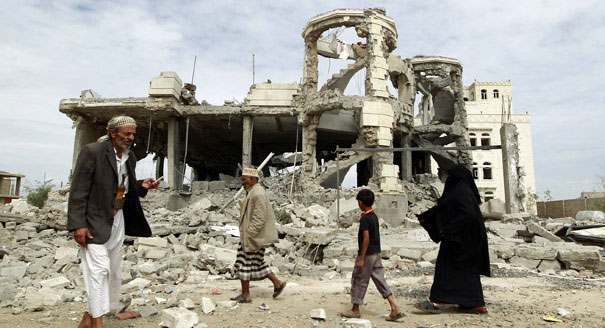
The United States has tended to focus on rebuilding state structures through outside assistance. But in the absence of an inclusive state-society compact, post-conflict states are extremely likely to return to conflict.

Link Copied
By Rachel Kleinfeld and Stephen J. J. Hadley
Published on Nov 14, 2016

Source: Fragility Study Group Policy Brief

Since the end of the Cold War, every President has been forced – sometimes proactively, sometimes reluctantly – to conduct war in a fragile state. Each time, the U.S. has tried a different strategy in an attempt to learn from past mistakes. Yet regardless of the particulars—composition of forces, leadership, and international engagement—in each case the states remained fragile or failed and required ongoing international intervention for years to come. After a quarter century, it appears to many that, in the fragile states where the U.S. has committed the most money, blood, and effort, there are no solutions. 

Why are these countries not able to rebuild, as Germany and Japan were able to after World War II? Why have none of our largest interventions in the post-Cold War era seemed to work?  

In fact, as James Dobbins and Laurel Miller of RAND have found, international post-conflict efforts have been on the whole far more successful than is generally acknowledged.1 But recent high-profile U.S. failures have been particularly costly to the idea of U.S. leadership and effectiveness.2 The reality is that the U.S. has tended to focus on rebuilding state structures through outside assistance. But in the absence of an inclusive state-society compact, post-conflict states are extremely likely to return to conflict.3 It’s time to shift our focus from outside state-building to helping societies rebuild themselves from the inside.

Read the full brief

About the Authors

Rachel Kleinfeld

Senior Fellow, Democracy, Conflict, and Governance Program

Rachel Kleinfeld is a senior fellow in Carnegie’s Democracy, Conflict, and Governance Program, where she focuses on issues of rule of law, security, and governance in democracies experiencing polarization, violence, and other governance problems.

Stephen J. J. Hadley

is a principal of Rice, Hadley, Gates & Manuel LLC, an international strategic consulting firm founded with Condoleezza Rice, Robert Gates, and Anja Manuel. Mr. Hadley served for four years as the Assistant to the President for National Security Affairs from 2005 to 2009. From 2001 to 2005, Mr. Hadley was the Assistant to the President and Deputy National Security Advisor, serving under then National Security Advisor Condoleezza Rice.

Authors

Rachel Kleinfeld
Senior Fellow, Democracy, Conflict, and Governance Program
Rachel Kleinfeld
Stephen J. J. Hadley

is a principal of Rice, Hadley, Gates & Manuel LLC, an international strategic consulting firm founded with Condoleezza Rice, Robert Gates, and Anja Manuel. Mr. Hadley served for four years as the Assistant to the President for National Security Affairs from 2005 to 2009. From 2001 to 2005, Mr. Hadley was the Assistant to the President and Deputy National Security Advisor, serving under then National Security Advisor Condoleezza Rice.

Stephen J. J. Hadley
Political ReformSecurityForeign PolicyNorth AmericaUnited StatesSouth AmericaMiddle EastNorth AfricaEastern Europe

Carnegie India does not take institutional positions on public policy issues; the views represented herein are those of the author(s) and do not necessarily reflect the views of Carnegie, its staff, or its trustees.

More Work from Carnegie India

  • Article
    India’s Oil Security Strategy: Structural Vulnerabilities and Strategic Choices

    This piece argues that the present Indian strategy, based on opportunistic diversification and utilization of limited strategic reserves, remains inadequate when confronting supply disruptions. It evaluates India’s options in the short, medium, and long terms.

      Vrinda Sahai

  • Article
    What Could a Reciprocal Defense Procurement Agreement Do for U.S.-India Ties?

    India and the United States are close to concluding a Reciprocal Defense Procurement Agreement (RDPA) that will allow firms from the two countries to sell to each other’s defense establishments more easily. While this may not remedy the specific grievances both sides may have regarding larger bilateral issues, an RDPA could restore some momentum, following the trade deal announcement.

      Konark Bhandari

  • Commentary
    India Signs the Pax Silica—A Counter to Pax Sinica?

    On the last day of the India AI Impact Summit, India signed Pax Silica, a U.S.-led declaration seemingly focused on semiconductors. While India’s accession to the same was not entirely unforeseen, becoming a signatory nation this quickly was not on the cards either.

      Konark Bhandari

  • Commentary
    The Impact of U.S. Sanctions and Tariffs on India’s Russian Oil Imports

    This piece examines India’s response to U.S. sanctions and tariffs, specifically assessing the immediate market consequences, such as alterations in import costs, and the broader strategic implications for India’s energy security and foreign policy orientation.

      Vrinda Sahai

  • Article
    Military Lessons from Operation Sindoor

    The India-Pakistan conflict that played out between May 6 and May 10, 2025, offers several military lessons. This article presents key takeaways from Operation Sindoor and breaks down how India’s preparations shaped the outcome and what more is needed to strengthen future readiness.

      Dinakar Peri

Get more news and analysis from
Carnegie India
Carnegie India logo, white
Unit C-4, 5, 6, EdenparkShaheed Jeet Singh MargNew Delhi – 110016, IndiaPhone: 011-40078687
  • Research
  • About
  • Experts
  • Projects
  • Events
  • Contact
  • Careers
  • Privacy
  • For Media
Get more news and analysis from
Carnegie India
© 2026 Carnegie Endowment for International Peace. All rights reserved.






