

Research
- +6
Yasmine Farouk, Nathan J. Brown, Maysaa Shuja Al-Deen, …
{
  "authors": [
    "Anouar Boukhars"
  ],
  "type": "other",
  "centerAffiliationAll": "dc",
  "centers": [
    "Carnegie Endowment for International Peace"
  ],
  "collections": [],
  "englishNewsletterAll": "menaTransitions",
  "nonEnglishNewsletterAll": "",
  "primaryCenter": "Carnegie Endowment for International Peace",
  "programAffiliation": "MEP",
  "programs": [
    "Middle East"
  ],
  "projects": [],
  "regions": [
    "North Africa"
  ],
  "topics": [
    "Political Reform",
    "Security"
  ]
}
Source: Getty
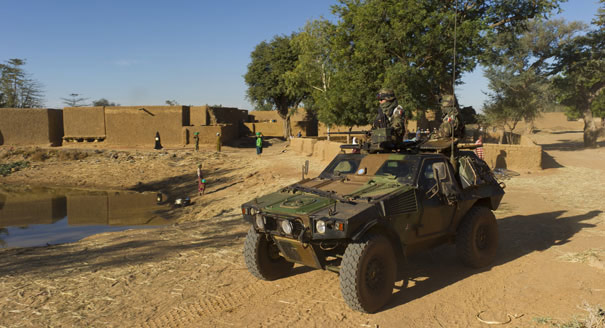
Al-Qaeda in the Islamic Maghreb and its allies have escalated the race to expand their regional footprint into West Africa’s economic hubs and coastal areas that have hitherto been spared from terrorist violence.
Source: World Politics Review
The deadly terrorist attacks in Burkina Faso and Cote d’Ivoire in January and March, respectively, show the deep reach of militants affiliated with al-Qaida in the Islamic Maghreb (AQIM), and their ability to bounce back from the military drubbing they received as a result of France’s intervention in the Sahel, which began in 2013. The spectacular attacks are part of a long pattern illustrating the enduring resilience of AQIM and its ability to regenerate itself by adjusting strategy and tactics to mounting pressure from both counterterrorism operations and rising jihadi competition in the Sahel and West African region.
As alliances and rival coalitions reorder themselves in an increasingly chaotic militant landscape, AQIM and its allies have escalated the race to expand their regional footprint into West Africa’s economic hubs and coastal areas that have hitherto been spared from terrorist violence. The expansion and execution of successful terrorist attacks helps AQIM-led groups rebuild their resources and broaden their recruitment base, reaching areas riven by long-simmering communal distrust, festering local conflicts and distrust of state institutions, particularly in marginalized peripheries and rural communities. ...
Former Nonresident Fellow, Middle East Program
Boukhars was a nonresident fellow in Carnegie’s Middle East Program. He is a professor of countering violent extremism and counter-terrorism at the Africa Center for Strategic Studies, National Defense University.
Recent Work



Yasmine Farouk, Nathan J. Brown, Maysaa Shuja Al-Deen, …

Frederic Wehrey, Nathan J. Brown, Bader Al-Saif, …
Carnegie India does not take institutional positions on public policy issues; the views represented herein are those of the author(s) and do not necessarily reflect the views of Carnegie, its staff, or its trustees.

In any defense establishment, change is an ongoing process. However, despite the best of intentions, existing bureaucracies, bound by habit and years of socialization, have their limits in implementing transformative change.

Anit Mukherjee

After the chill in ties between 2020 and 2024 that brought India–China relations to their lowest point in several decades, the two countries have engaged each other afresh. This paper argues that there are predominantly four imperatives guiding India’s approach to China, and they exist in an order of priority.

Saheb Singh Chadha

A partnership between India, a country of subcontinental size, and Africa, a continent of fifty-four countries, may seem asymmetric until one notes that both are home to nearly the same number of people—1.4 billion. This essay spells out the existing challenges to the partnership, its optimal potential, and the possible pathways to realize it over the next quarter-century.

Rajiv Bhatia

This piece argues that the present Indian strategy, based on opportunistic diversification and utilization of limited strategic reserves, remains inadequate when confronting supply disruptions. It evaluates India’s options in the short, medium, and long terms.

Vrinda Sahai

This piece examines India’s response to U.S. sanctions and tariffs, specifically assessing the immediate market consequences, such as alterations in import costs, and the broader strategic implications for India’s energy security and foreign policy orientation.
Vrinda Sahai