

Commentary
Kheder Khaddour
{
  "authors": [
    "Kheder Khaddour"
  ],
  "type": "legacyinthemedia",
  "centerAffiliationAll": "dc",
  "centers": [
    "Carnegie Endowment for International Peace",
    "Malcolm H. Kerr Carnegie Middle East Center"
  ],
  "collections": [],
  "englishNewsletterAll": "menaTransitions",
  "nonEnglishNewsletterAll": "",
  "primaryCenter": "Malcolm H. Kerr Carnegie Middle East Center",
  "programAffiliation": "MEP",
  "programs": [
    "Middle East"
  ],
  "projects": [],
  "regions": [
    "Middle East"
  ],
  "topics": [
    "Political Reform"
  ]
}
Source: Getty
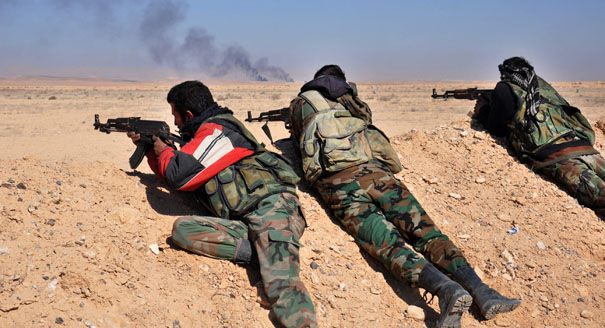
The Syrian army remains a fundamental factor for the survival of the Syrian regime.
Source: The Syrian Observer
The first part of the interview was published here.
The scope of local militia autonomy has largely remained constrained by the means of their own creation. Commanders can establish and finance local militias through their relations with the president or other elite members of the regime, but continue to remain dependent on these relations. Militia commanders are otherwise connected by family ties. For instance, Saqer Rustom was able to become the head of National Defence Forces (NDF) in Homs because he was the nephew of Bassam al-Hassan, the Republican Guard officer who created the entire NDF corps. Similarly, Fadi Saqer was able to become head of the NDF in Damascus through both being an Alawite and having deep ties with regime figures in the capital.
Militias have decision-making leeway in tactical matters related to the fighting in their area, however overall strategic decision-making still rests in Damascus – tactical issues are de-centralised strategic matters remain highly centralised. Thus, in relation to the militias, the regime is in a sense both weak and strong – it would struggle to exert direct command and control even if it tried, while at the same time the regime remains a necessary component of the militias continued ability to function.
This has allowed the militias a free hand regarding things such as looting or criminal activity. There is a very clear line at political activity however. It is generally accepted by everyone that if a militia attempted to act politically independent from the regime, the regime and its allies, namely Russia and Iran, would crush them.
All of Iran’s efforts are geared towards the militias rather than the formal army structures. Iran provides funding to large militias such as the NDF, or additional manpower, in the form of Iraqi and Afghan militias, of which the regime is in desperate need.
The foreign militias are ultimately loyal to Iran, and the degree to which the regime has managed to maintain influence over them varies considerably, depending on their dependence on the Syrian army’s security and logistics support. The foreign militias are effectively guests of the regime and would find it very difficult to operate in Syria if they did not maintain at least a functional relationship with the Syrian army and prominent regime figures.
The example of Louay Mualla is an interesting example of the dynamics at play here. Mualla was one of the Syrian army officers best connected to the Iranians. Through his relations with the Iranians he quickly acquired influence and became the head of a failaq (corps) even though he was below the legal age when he held that position.
Then he became head of the security committee in Homs, a very prominent position and he created a brigade completely affiliated to the Iranians. However, last year when two bombs exploded in regime-held areas of Homs and demonstrations erupted against the security committee, Bashar al-Assad felt forced to dismiss Louay Moualla. His strong relations with the Iranians and his perceived autonomy relative to Damascus were not enough to protect him.

Nonresident Scholar, Malcolm H. Kerr Carnegie Middle East Center
Kheder Khaddour is a nonresident scholar at the Malcolm H. Kerr Carnegie Middle East Center in Beirut. His research focuses on tribal structures in the Levant, civil-military relations in Syria, and the role of borders in shaping local and national identities across the Middle East.
Recent Work
Kheder Khaddour
Kheder Khaddour
Carnegie India does not take institutional positions on public policy issues; the views represented herein are those of the author(s) and do not necessarily reflect the views of Carnegie, its staff, or its trustees.
An Israeli response to Iran’s October 1 attack is imminent. The key question is of its intensity and potential fallout, both within Iran, in terms of nuclear security policy changes, and across the broader region. The coming days are likely to reshape West Asia irreversibly.
Gaddam Dharmendra
As India’s economy recovers from the coronavirus pandemic, Indian businesses need efficient financial structures to regain their ground. Key reforms to India’s Insolvency and Bankruptcy Code could fill these gaps.

Anirudh Burman

Access to cross-border data is an integral piece of the law enforcement puzzle. India is well placed to lead the discussions on international data agreements subject to undertaking necessary surveillance reforms.
Smriti Parsheera, Prateek Jha
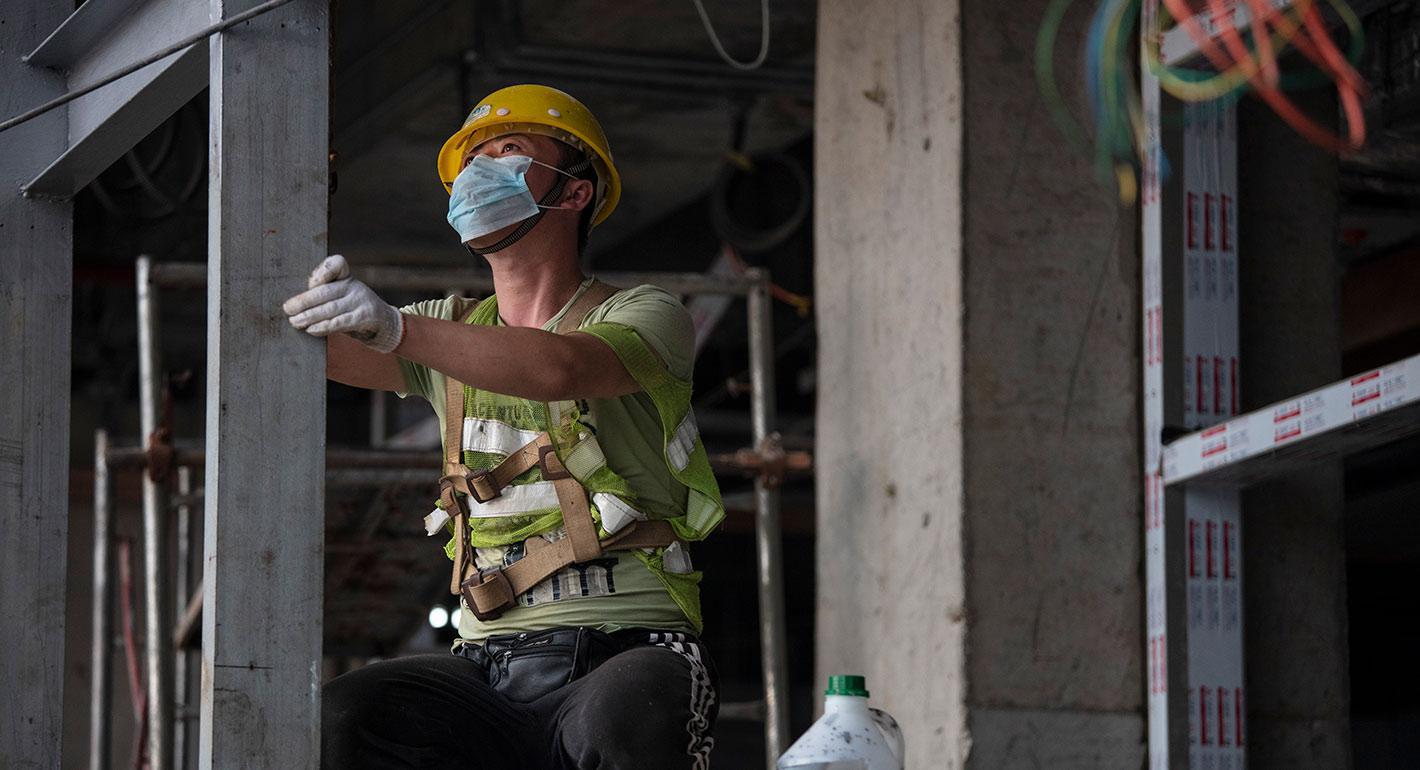
After the coronavirus pandemic wanes, how will China’s reorientation of the Belt and Road Initiative to address global health concerns influence its relationships with South Asian countries?
Deep Pal, Rahul Bhatia
Early in the outbreak, government researchers forecast several high-risk scenarios that were downplayed or ignored in public messaging.
Gautam I. Menon