

Commentary
How is AI reshaping space security, creating governance challenges, and where does international diplomacy stand today?
Tejas Bharadwaj, Almudena Azcárate Ortega
{
  "authors": [
    "Thomas Carothers",
    "Richard Youngs"
  ],
  "type": "legacyinthemedia",
  "centerAffiliationAll": "dc",
  "centers": [
    "Carnegie Endowment for International Peace",
    "Carnegie Europe"
  ],
  "collections": [
    "Transatlantic Cooperation",
    "EU Integration and Enlargement",
    "Democracy and Governance"
  ],
  "englishNewsletterAll": "democracy",
  "nonEnglishNewsletterAll": "",
  "primaryCenter": "Carnegie Endowment for International Peace",
  "programAffiliation": "DCG",
  "programs": [
    "Democracy, Conflict, and Governance",
    "Europe"
  ],
  "projects": [],
  "regions": [
    "North America",
    "United States",
    "South America",
    "Middle East",
    "Southern, Eastern, and Western Africa",
    "South Asia",
    "East Asia",
    "Southeast Asia",
    "Western Europe",
    "Asia",
    "Europe",
    "Iran"
  ],
  "topics": [
    "Democracy",
    "EU"
  ]
}
Source: Getty
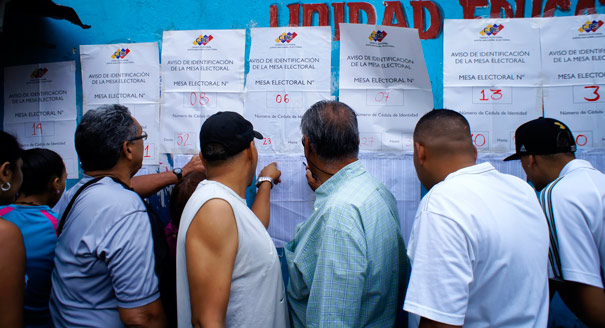
The state of democracy around the world is very troubled, but it is not uniformly dire, especially outside the West.
Source: Foreign Affairs
In the West, it is difficult to escape the pessimism that pervades current discussions of global affairs. From Russia’s invasion of Crimea and the never-ending crises of the European Union, to the Syrian catastrophe and the rise of the Islamic State (also known as ISIS), the world appears to be tearing at the seams. Meanwhile, democracy itself appears to be unraveling—helped along by resurgent authoritarianism, weakened liberal democratic values, rising populism, and contagious illiberalism.
Democracy has unquestionably lost its global momentum. According to Freedom House, there are only a handful more electoral democracies in the world today than there were at the start of this century.[1] Dozens of newer democracies in the developing world are struggling to put down roots, and many older democracies—including, of course, the United States—are troubled. The theory that democratic transitions naturally move in a positive direction and that established democracies don’t tumble backward no longer holds water.
The gloom has become so thick, however, that it obscures reality. A number of politicians, journalists, and analysts are overstating or oversimplifying negative trends and overlooking positive developments. They too easily cast U.S. President Donald Trump’s rise, the Brexit vote, and the mainstreaming of populism in many parts of Europe as part of an all-embracing, global counterrevolution against liberal norms. Although the state of democracy around the world is indeed very troubled, it is not uniformly dire, especially outside the West.
Today’s intensifying apprehension is infused with nostalgia for the 1990s and early 2000s as a period of strong global commitment to liberal norms. Yet even then, illiberal forces were asserting themselves. In 1997, for example, the political commentator Fareed Zakaria famously warned in Foreign Affairs of the “rise of illiberal democracy,” arguing that “half of the ‘democratizing’ countries in the world today are illiberal democracies.” Earlier that year, also in Foreign Affairs, one of the authors of this article (Thomas Carothers) gave a sober assessment of the state of global democracy, noting that “there is still sometimes good news on the democracy front . . . but a counter-movement of stagnation and retrenchment is evident.”
And even at the height of democracy’s third wave at the end of the 1990s, the Middle East remained almost entirely a democracy-free zone, the former Soviet Union was headed much more toward authoritarianism than democracy, and Africa’s widely celebrated “new leaders,” including Rwanda’s Paul Kagame and Uganda’s Yoweri Museveni, were antidemocratic strongmen. East Asia also had many well-entrenched dictatorial systems. This is not to deny that serious new challenges to democracy have arisen in recent years. But the current shift away from a supposedly idyllic “liberal moment” in the immediate post–Cold War era is a matter of degree, not kind.
Those who despair the future of democracy tend to focus on a select set of highly visible negative developments—especially the searing failure of the Arab Spring and the rise of illiberal populism in Europe and the United States. Yet in other important regions the picture is different. The Economist Intelligence Unit’s Democracy Index scores for Asia and Africa show a modest improvement over the last decade. Indeed, the quality of democracy has improved in places such as Burkina Faso, Gambia, Ghana, Guatemala, the Ivory Coast, Sri Lanka, Tunisia, and Ukraine in spite of the serious problems they have faced. In Latin America, the illiberal populist wave in the early 2000s is receding. Colombia and Nepal have both brokered peace accords with rebel movements, ending decades of civil war, and have seen record numbers of citizens commit to democratic institutions and norms.
The scholars Roberto Foa and Yascha Mounk have usefully warned that “democratic deconsolidation” may be occurring in Western democracies as a result of declines in adherence to core democratic values. But as Harvard University’s Pippa Norris has noted, some opinion surveys based on broader data sets reveal that this is not a consistent pattern across Western democracies. Moreover, the current decline is not widely found outside of the West. In Africa and Latin America, public support for core democratic values has remained high and steady over the last decade. The Afrobarometer, for example, shows that over 70 percent of Africans reject nondemocratic forms of democracy. And despite the dispiriting results of the Arab Spring, the World Values Survey shows that support for democracy in the Middle East is on a gradual, upward trajectory.
After Brexit and the U.S. presidential election, some observers, such as Alfred McCoy writing in The Nation, associated Trump with a number of very different actors who present widely divergent degrees of democratic threat—such as Russian President Vladimir Putin, Dutch politician Geert Wilders, Indian Prime Minister Narendra Modi, Turkish Prime Minister Recep Tayyip Erdogan, and Indonesian former presidential candidate Prabowo Subianto. But not all political parties or persons considered populist harbor equally illiberal or authoritarian tendencies. Nor are all current authoritarian trends necessarily rooted in populism.
Some authoritarian leaders who are labeled as populist may use populist flourishes, such as casting themselves as “men of the people,” but they are at most skin-deep populists—meaning they do not represent alternatives to traditional power who gain influence by mobilizing disadvantaged constituencies. Putin, for example, is often referred to by Western journalists as a populist leader. Yet he is a product of Russia’s long-standing repressive state apparatus and is profoundly wary of popular mobilization. Similarly, Egyptian President Fattah el-Sisi may employ what The New York Times referred to in 2014 as the speaking style of “a charismatic populist,” but he comes straight out of Egypt’s traditional power establishment.
That populism has a global reach is yet another exaggeration. The recent talk of a “global populist movement” sheds more heat than light on democracy’s travails. After all, populism has not made notable gains in Africa, the Middle East, or Latin America in recent years. Asia, of course, does have Philippine President Rodrigo Duterte, a very clear illiberal populist, as well as India’s Modi, whose appeals to Hindu “majoritarianism” have a distinct populist tinge. But on the whole, there is no overarching populist trend in Asia. The “global populist wave” narrative implies that the world is going through a time of dizzying and uncertain change. Yet the most common problem in countries struggling to make democracy work is the entrenchment of corrupt elites who block any substantial change, resulting in the gradual atrophy of democratic norms and institutions.
Further adding to the pessimistic outlook is the tendency to interpret the rise and spread of protests as another sign of a populist epidemic. As the thinking goes, protesters are angry at their politicians, and populism feeds on such anger. In this telling, the spread of protests means the spread of populism. Writing in December 2016, for example, Sam Kim described the Korean protests against President Park Geun-hye as part of the populist wave that produced Brexit and Trump’s victory.
Large-scale protests are indeed on the rise around the world. But what is striking about them is that they have mostly sought to toss out corrupt leaders, not anoint populist demagogues. South Korea’s recent protests were about better governance and resulted in political parties from across the ideological spectrum coming together to impeach a corrupt president. The most significant protests in Guatemala’s recent history led to the ouster of a corrupt president and the start of some serious institutional reforms. The protest movements that have gathered steam in Romania over the past few years have succeeded in making anticorruption a central issue in Romanian politics.
Of course, populist leaders often turn to the streets when their backs are against the wall. During the coup attempt in Turkey last July, for example, Erdogan relied on popular mobilization to help him retain his power. Yet on the whole, the wave of protests around the world is mostly about demands for government accountability. Power holders in many countries are pushing hard against independent civil society, often trying to limit its scope. Negative though this trend is, it is a sign of the wide spread of citizen empowerment as both an idea and an organizing principle.
It is certainly true that various authoritarian governments have become more audacious in geopolitical pursuits outside their borders. This includes Russia’s invasion of Ukraine, involvement in Syria, and political meddling in the United States and Europe. Other examples include China’s sharper edge in the South China Sea, Iran’s heightened role in Iraq, Syria, and Yemen, and Saudi Arabia’s military involvement in Yemen and Syria. Greater assertiveness by authoritarian powers has many negative implications for the future of global democracy. This does not mean, however, that authoritarianism, as a type of political regime, is succeeding.
Most authoritarian regimes struggle with profound internal challenges and weaknesses. In fact, it is precisely the difficulties authoritarian systems have in delivering goods to their citizens that often spur them to become more assertive outside their borders. Foreign adventurism can help authoritarian leaders distract their own people from their domestic failings. Putin’s inability to carry out effective economic and anticorruption reforms, combined with the devastating effect of falling oil prices on the Russian economy, has pushed him to find other ways to maintain his domestic legitimacy. Provocative actions abroad are a natural choice. Although China has sustained its economic miracle, its visible corruption and slower economic growth in recent years have forced President Xi Jinping to nurture other sources of legitimacy—a tougher foreign policy is one result.
In short, although liberal democracy is facing greater cross-border challenges from authoritarian powers, the central threat is not authoritarianism’s success as a political system but rather the instability that such regimes produce.
Undoubtedly, there is much ground for discouragement. The overall state of democracy in the world is much less healthy than predicted during the early years of democracy’s third wave. Yet a sense of perspective is needed: the past was not as bright as many seem to remember, democracy is holding steady in some regions, populism is not as global a trend as is often portrayed, and most people are more interested in accountability than illiberalism. The tendency to view global developments through the lens of antidemocratic counterrevolution provides a distorted picture. A more nuanced perspective might not dispel the gloom, but it may help prevent a lapse into disabling pessimism and, consequently, the mistake of giving up on supporting democracy as part of Western foreign policy.

Harvey V. Fineberg Chair for Democracy Studies; Senior Fellow, Democracy, Conflict, and Governance Program
Thomas Carothers, a senior fellow in the Carnegie Endowment for International Peace’s Democracy, Conflict, and Governance Program, is a leading expert on comparative democratization and international support for democracy.

Senior Fellow, Democracy, Conflict, and Governance Program
Richard Youngs is a senior fellow in the Democracy, Conflict, and Governance Program, based at Carnegie Europe. He works on EU foreign policy and on issues of international democracy.
Carnegie India does not take institutional positions on public policy issues; the views represented herein are those of the author(s) and do not necessarily reflect the views of Carnegie, its staff, or its trustees.

How is AI reshaping space security, creating governance challenges, and where does international diplomacy stand today?


Tejas Bharadwaj, Almudena Azcárate Ortega
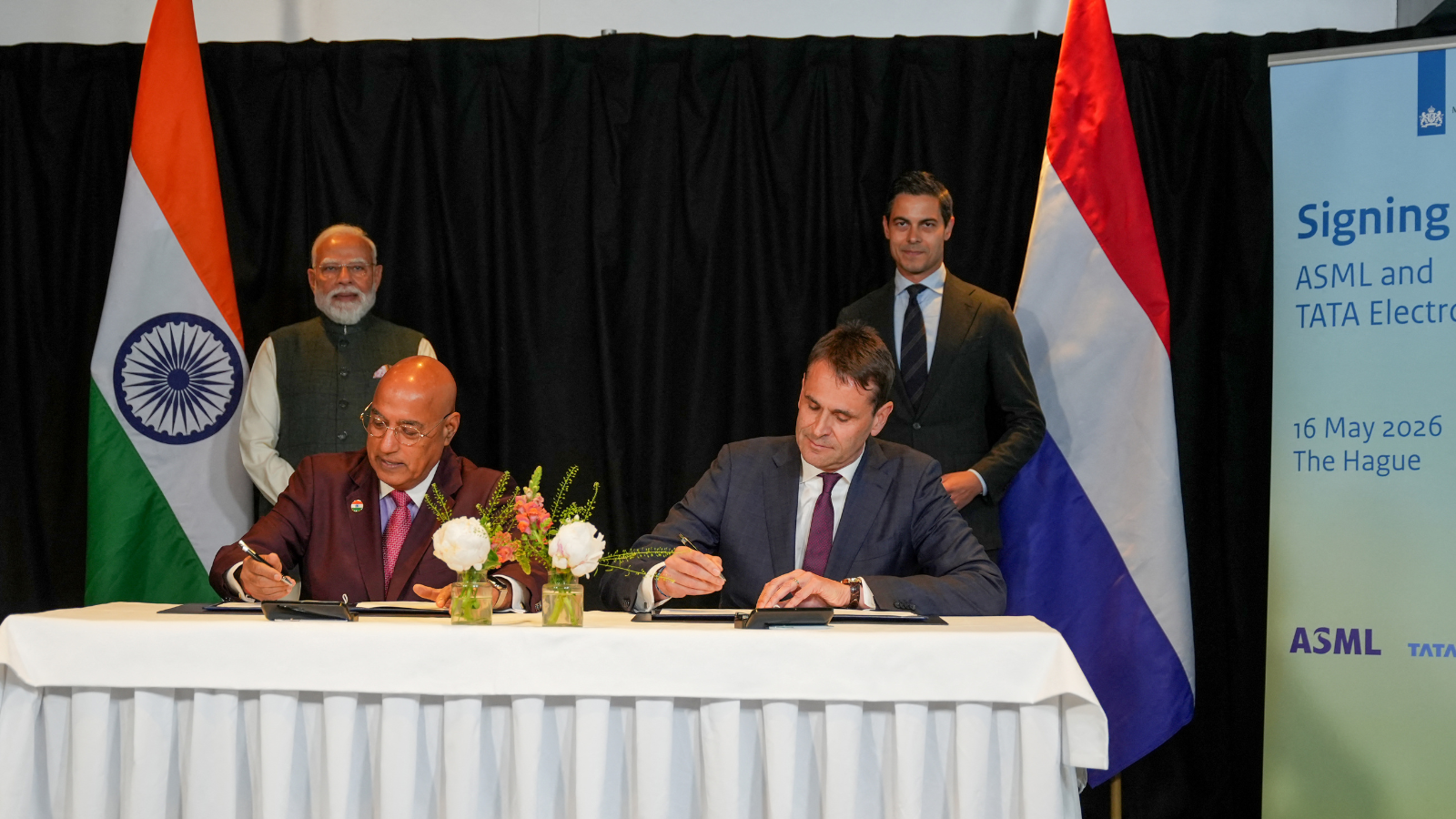
The ASML MoU with Tata Electronics is an indicator of how far the Indian semiconductor ecosystem has come. This ecosystem has been years in the making and represents real commercial logic.

Konark Bhandari

A partnership between India, a country of subcontinental size, and Africa, a continent of fifty-four countries, may seem asymmetric until one notes that both are home to nearly the same number of people—1.4 billion. This essay spells out the existing challenges to the partnership, its optimal potential, and the possible pathways to realize it over the next quarter-century.

Rajiv Bhatia

The U.S.–India semiconductor cooperation story is well-stocked with top-level strategic intent. What remains unresolved, however, are some underlying challenges that will determine whether the cooperation actually functions. Three such friction points stand out.

Shruti Mittal

The India–EU Free Trade Agreement (FTA) is shaping up to be one of the most consequential trade negotiations, both economically and strategically. But, what’s in the agreement, what’s missing, and what will determine its success in the years ahead

Vrinda Sahai, Nicolas Köhler-Suzuki