

Article
C. Raja Mohan, Darshana M. Baruah
{
  "authors": [
    "C. Raja Mohan"
  ],
  "type": "legacyinthemedia",
  "centerAffiliationAll": "dc",
  "centers": [
    "Carnegie Endowment for International Peace",
    "Carnegie India"
  ],
  "collections": [],
  "englishNewsletterAll": "ctw",
  "nonEnglishNewsletterAll": "",
  "primaryCenter": "Carnegie India",
  "programAffiliation": "SAP",
  "programs": [
    "South Asia"
  ],
  "projects": [],
  "regions": [
    "South Asia",
    "India"
  ],
  "topics": [
    "Foreign Policy"
  ]
}
Source: Getty
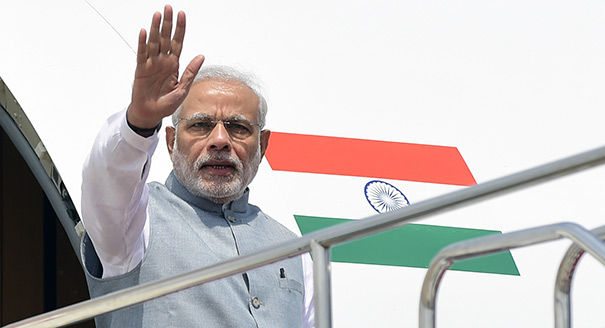
Prime Minister Narendra Modi can rebuild India’s relationship with Sri Lanka by reclaiming their shared spiritual heritage and acknowledging the country’s leadership role in Asia and the Indian Ocean.
Source: Indian Express
Prime Minister Narendra Modi’s second visit to Sri Lanka in two years would hopefully launch a productive new phase in bilateral relations. In his first visit during March 2015, Modi promised to end India’s prolonged neglect of the very special relationship with Sri Lanka. Many reasons, including narrow domestic political considerations of previous governments, led to Delhi’s monumental errors in dealing with Colombo.
This had huge costs — in terms of generating a trust deficit and entrenched negative perceptions of India as a regional bully, insensitive to Lankan nationalism and sovereignty. Since the first visit, there has been an intensification of sustained high-level political engagement with Lanka. The Modi government also put new emphasis on expanding economic engagement with Sri Lanka.
Delhi’s new commercial possibilities in Lanka were highlighted by the expansive MoU on economic cooperation that was signed during Prime Minister Ranil Wickremesinghe’s visit to Delhi last month. The MoU identified many major projects, including infrastructure projects relating to ports and the energy and transportation sectors. Delhi is trying to change the perception that India does not have the will or the capability to undertake and implement large projects in the neighbourhood.
To be sure, there is some political backlash in Lanka against India’s new economic activism. Delhi can only overcome this resistance, part-genuine and part-simulated, through patience and sustained engagement. Above all, Delhi must address the deep sense of nationalist hurt in Colombo that has arisen from India’s intervention in Sri Lanka’s internal affairs over recent decades. Delhi now appreciates the importance of being seen as a well-wisher helping to promote reconciliation after a brutal civil war in Lanka, and not an external demandeur on its internal political arrangements.
Modi has also sought to restore the deeper cultural connect between the two nations as part of his effort to go past the divisive discourse of the last few decades and rebuild mutual trust between Delhi and Colombo. That, precisely, is where an important dimension of Modi’s second visit to Colombo comes — the bonds of Buddhism that bind India and Lanka.
Although Buddhism was an important part of Indian diplomacy in the 1950s, it is only over the last decade that efforts have been made to revitalise it. What was started by the UPA government at the turn of this decade has been given an unprecedented personal push by Modi. During the last three years, Modi has pushed consistently for rebuilding India’s Buddhist bridge to the world.
Some have seen this as part of India’s competition with China for regional influence. That, however, is too narrow a construction. Modi had, in fact, put Buddhism at the centre of his initial outreach to China’s President Xi Jinping. Modi sees Buddhism as integral to India’s international engagement. That the PM has been invited as the chief guest at Sri Lanka’s special international celebration of the Vaishakhi Day underlines Colombo’s recognition of Modi’s special attachment to Buddhism. On his part, Modi is acknowledging that Buddhism is a defining element of Sri Lankan national identity and is eager to build on the long-neglected spiritual links between the two nations.
Vaishakhi Day is a very special date for Buddhists around the world, for it marks the birth, enlightenment and death of Gautama Buddha. Thanks to the efforts of the late foreign minister of Lanka, Lakshman Kadirgamar, the United Nations General Assembly in 1999 called for the international commemoration of Buddha Purnima to acknowledge the rich contributions of the ancient faith to human civilisation. Although it was a Lankan diplomatic initiative, this is the first time Vaishakhi Day is being celebrated in Lanka.
As he joins the celebrations, Modi has an opportunity to applaud Sri Lanka’s special role in preserving Buddhist heritage through the centuries and playing a leading role in its revival in the 20th century. The PM must acknowledge the special role of the Sri Lankan scholar, Gunapala Piyasena Malalasekera, who convened the World Fellowship of Buddhists in 1950 in Colombo. Malalasekera, then president of the All Ceylon Buddhist Congress, dreamt of promoting exchanges between different sects of Buddhism around the world and building a global Buddhist organisation.
Modi must also recall the special role of Sri Lanka in the evolution of contemporary Indian Buddhism. It was a Sri Lankan monk, Anagarika Dharmapala, who set up the Mahabodhi Society in 1891. Shocked by the sorry state of these sites during a visit to Bodh Gaya in 1891, Dharmapala led a life-long campaign to restore them. The Mahabodhi Society moved its offices to Calcutta in 1892 and worked to revive the Subcontinent’s Buddhist heritage. Dharmapala’s address to the 1983 World Parliament of Religions at Chicago contributed in a big way to the global interest in Buddhism in the modern era.
Modi’s second visit to Lanka, focused on the Buddha Purnima celebrations, can lay a very different basis for India’s engagement with Sri Lanka. For too long, Delhi has viewed Sri Lanka as a part of India’s problems — domestic or foreign. Colombo was seen either as an adjunct to Delhi’s management of Tamil Nadu politics or a location in the grand contestation with China — a pearl on a long string across the Indian Ocean. It is time we moved beyond that awful and constricting frame in bilateral relations.
In reclaiming the shared spiritual heritage with Lanka, recognising its special position in the sacred geography of Buddhism, and acknowledging Colombo’s leadership role in Asia and the Indian Ocean, Modi can help rebuild the special relationship with Lanka based on sovereign equality, mutual trust and common benefit. That could generate a more helpful environment for the resolution of long-standing problems and the expansion of all-round bilateral cooperation.
This article was originally published in the Indian Express.
Former Nonresident Senior Fellow, Carnegie India
A leading analyst of India’s foreign policy, Mohan is also an expert on South Asian security, great-power relations in Asia, and arms control.
Recent Work

C. Raja Mohan, Darshana M. Baruah


Alexander Gabuev, Paul Haenle, C. Raja Mohan, …
Carnegie India does not take institutional positions on public policy issues; the views represented herein are those of the author(s) and do not necessarily reflect the views of Carnegie, its staff, or its trustees.

In any defense establishment, change is an ongoing process. However, despite the best of intentions, existing bureaucracies, bound by habit and years of socialization, have their limits in implementing transformative change.

Anit Mukherjee

As AI grows more sophisticated, as the supply chains that power it become more contested, and as access to frontier models becomes geopolitically charged, India must begin to ask a different set of questions. Not what applications it can build on someone else’s infrastructure but what the world needs.

Konark Bhandari

The Indian Ocean Region hosts one of the densest concentrations of subsea cables in the world. Yet, despite accounting for a significant share of global internet traffic, India’s participation remains limited.

Charukeshi Bhatt

How is AI reshaping space security, creating governance challenges, and where does international diplomacy stand today?


Tejas Bharadwaj, Almudena Azcárate Ortega

After the chill in ties between 2020 and 2024 that brought India–China relations to their lowest point in several decades, the two countries have engaged each other afresh. This paper argues that there are predominantly four imperatives guiding India’s approach to China, and they exist in an order of priority.

Saheb Singh Chadha