

Research
- +10
Jarrett Blanc, Thomas de Waal, Karim Sadjadpour, …
{
  "authors": [
    "Jarrett Blanc"
  ],
  "type": "legacyinthemedia",
  "centerAffiliationAll": "dc",
  "centers": [
    "Carnegie Endowment for International Peace",
    "Malcolm H. Kerr Carnegie Middle East Center"
  ],
  "collections": [
    "Iranian Proliferation"
  ],
  "englishNewsletterAll": "americanStatecraft",
  "nonEnglishNewsletterAll": "",
  "primaryCenter": "Carnegie Endowment for International Peace",
  "programAffiliation": "ASP",
  "programs": [
    "American Statecraft"
  ],
  "projects": [],
  "regions": [
    "Middle East",
    "Iran"
  ],
  "topics": [
    "Political Reform",
    "Security",
    "Military",
    "Nuclear Policy"
  ]
}
Source: Getty
Concern over ballistic missiles should not be the impetus for withdrawing from the Iran nuclear deal. Ballistic missiles were intentionally left out of the deal because of the lack of international consensus.
Source: Hill
Iran’s increasingly sophisticated ballistic missile arsenal worries its neighbors and the United States. The Joint Comprehensive Plan of Action (JCPOA) is a deal on Iran’s nuclear program, not its ballistic missiles, but somehow the missiles weigh heavily as the Trump administration decides whether to certify Iran’s compliance with the deal in October or to allow Congress to re-impose the U.S. sanctions lifted by the deal.
Judging the JCPOA on ballistic missiles, a problem it was not intended to solve, is dangerous and self-defeating. Withdrawing from the deal would make a peaceful settlement of Iran’s missile problem less likely in the long term while making the missiles — and Iran in general — a more dire and immediate threat by opening a path to nuclear weapons development. For anyone serious about addressing Iran’s ballistic missile threat, the JCPOA offers important guideposts to the art — and limits — of the possible.
The JCPOA did not address ballistic missile for a simple reason. The U.S. and its allies were not positioned to get a good deal on missiles and wisely chose not to forfeit the achievable nuclear solution.
There is an international consensus that an Iranian nuclear weapons program would pose an international threat. Leaning on that consensus, the U.S. built a coalition to impose strangulating economic sanctions. Major oil importers cut back on their purchases from Iran, contracting Iran’s economy despite high oil prices.
The U.S. encouraged these cut backs in various ways, including with threats that uncooperative countries would themselves face U.S. sanctions. To get cooperation, through, U.S. partners also needed to believe that there was a real threat to international peace and security and that sanctions were part of a plausible negotiating strategy.
There is no such consensus about ballistic missiles. Most world powers do not see missiles as radically changing Iran’s ability to project force or the balance of power in the region. This attitude extends past Iran — the broad scope and nearly universal membership of the Nuclear Nonproliferation Treaty reflects a strong international norm opposed to nuclear weapons.
Agreements limiting ballistic missiles are much narrower. Bluntly put, Iran’s main customers in Asia and Europe were willing to suffer economic dislocation in order to build leverage to solve the nuclear problem. They were not — and are not — willing to do the same for ballistic missiles.
On the other side of the negotiating table, ballistic missiles play a central role in Iranian strategic thinking, while nuclear weapons do not. Iranian reliance on ballistic missiles was born of the brutal Iran-Iraq war. Iran concluded that it would need over-the-horizon weapons in future conflicts. Missiles are cheaper and easier than an air force — especially in the teeth of U.S.-led arms embargoes — so Iran committed heavily to its ballistic missile program.
Nuclear weapons do not have the same place as missiles in Iranian thinking. According to public U.S. intelligence assessments, Iran has not conducted nuclear weaponization work since 2003.
Iran would not have paused a weapons program central to its security planning.
Tehran eventually became unwilling to stomach terrible economic costs to defend an inactive nuclear weapons program, so the U.S. got a favorable deal to restrain Iran’s nuclear program. The relationship on ballistic missiles is reversed. The U.S. has vastly less support from international partners and so is able to impose vastly lower economic costs on Iran. Iran, on the other hand, has much greater perceived need for ballistic missiles.
If the U.S. cannot get the deal it wants on ballistic missiles right now, it must instead focus on minimizing the threat. Regional missile defense and other military deployments can make Iran’s missiles less valuable conventional military tools.
At the same time, the international community can slow the progress and raise the costs of Iran’s missile program using intelligence and law enforcement to prevent sales, interdict shipments, and block financial transfers. Negotiations with Iran could lead to modest limitations on their program, such as restrictions on test ranges.
Eventually, a more comprehensive diplomatic resolution to Iran’s ballistic missile program may be possible. A deal would not be JCPOA II, offering Iran mainly economic benefits. Rather, it would need to address the real regional security concerns that Iran is trying to manage with ballistic missiles. The Middle East does not look like fertile ground for such diplomacy today, but it will look much worse if the JCPOA fails, leaving the U.S. isolated and Iran free to pursue nuclear weapons.
Reality must intervene. Iran and its missiles are less dangerous because of the JCPOA. That accomplishment cannot be sacrificed for an unrealistic effort to pressure Iran on ballistic missiles.

Former Senior Fellow, Geoeconomics and Strategy Program
Jarrett Blanc was a senior fellow in the Geoeconomics and Strategy Program at the Carnegie Endowment for International Peace.
Recent Work


Jarrett Blanc, Thomas de Waal, Karim Sadjadpour, …


Dan Baer, Rosa Balfour, Jarrett Blanc, …
Carnegie India does not take institutional positions on public policy issues; the views represented herein are those of the author(s) and do not necessarily reflect the views of Carnegie, its staff, or its trustees.

In any defense establishment, change is an ongoing process. However, despite the best of intentions, existing bureaucracies, bound by habit and years of socialization, have their limits in implementing transformative change.

Anit Mukherjee

After the chill in ties between 2020 and 2024 that brought India–China relations to their lowest point in several decades, the two countries have engaged each other afresh. This paper argues that there are predominantly four imperatives guiding India’s approach to China, and they exist in an order of priority.

Saheb Singh Chadha
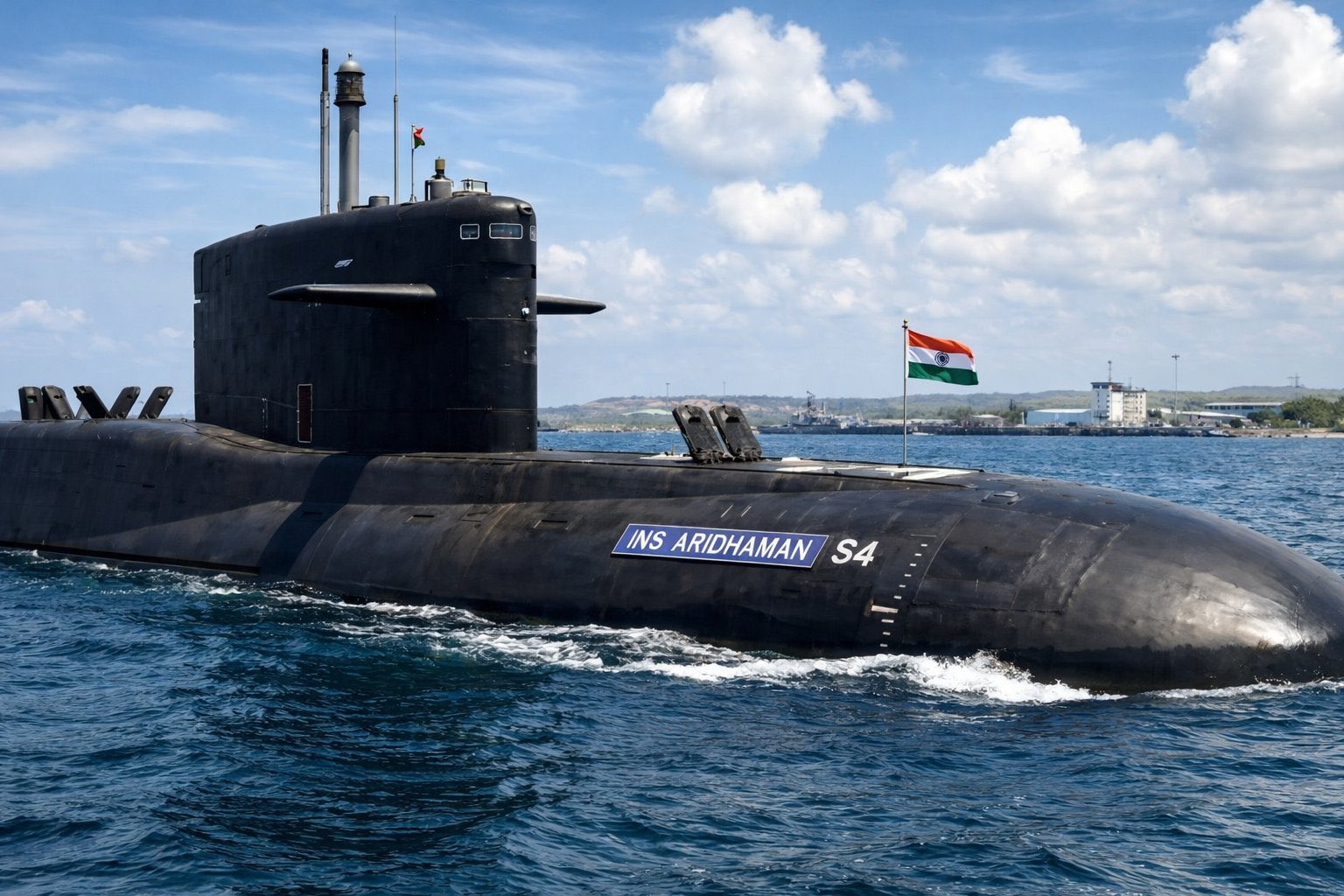
The induction of INS Aridhaman, which features several technological enhancements, now gives India the third nuclear ballistic missile submarine to ensure continuous at-sea deterrent.

Dinakar Peri

This piece argues that the present Indian strategy, based on opportunistic diversification and utilization of limited strategic reserves, remains inadequate when confronting supply disruptions. It evaluates India’s options in the short, medium, and long terms.

Vrinda Sahai

This piece examines India’s response to U.S. sanctions and tariffs, specifically assessing the immediate market consequences, such as alterations in import costs, and the broader strategic implications for India’s energy security and foreign policy orientation.
Vrinda Sahai