

Q&A
Darshana M. Baruah, Satyendra Prasad, Denghua Zhang
{
  "authors": [
    "Darshana M. Baruah"
  ],
  "type": "legacyinthemedia",
  "centerAffiliationAll": "dc",
  "centers": [
    "Carnegie Endowment for International Peace",
    "Carnegie India"
  ],
  "collections": [
    "Bay of Bengal Initiative"
  ],
  "englishNewsletterAll": "ctw",
  "nonEnglishNewsletterAll": "",
  "primaryCenter": "Carnegie India",
  "programAffiliation": "SAP",
  "programs": [
    "South Asia"
  ],
  "projects": [],
  "regions": [
    "South Asia",
    "India"
  ],
  "topics": [
    "Economy",
    "Foreign Policy"
  ]
}
Source: Getty
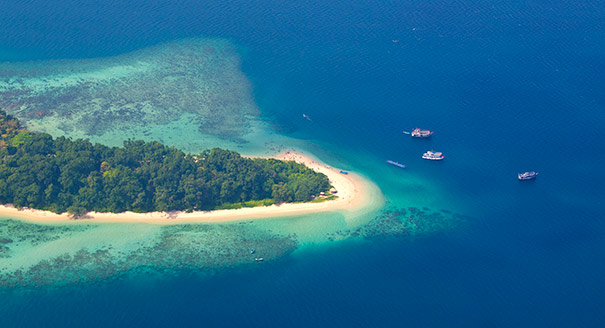
Having drawn up the intent and will to develop the Andamans, New Delhi will now have to build its smart islands with cooperation from its maritime partners. The strategic development of these islands is no longer an option but a necessity.
Source: Economic Times
India’s new Defence Minister, Nirmala Sitharaman, is set to celebrate Diwali in Port Blair – the only tri-services command in India. Her visit to the Andaman and Nicobar Islands (ANI) is yet another confirmation that the current government is willing to increase the strategic profile of ANI. A series of surprising and positive announcements from the government in the past two weeks is poised to transform the islands from a neglected military outpost to a vital strategic asset.
For decades, Delhi has debated the costs and benefits of developing the islands and its utility. The financial costs are significantly high with serious environmental constraints. The presence of indigenous tribes and concerns for their welfare has been a key factor challenging island development. However, the security environment in India’s maritime domain has changed drastically. After years of neglect, the Modi government is finally making a push to develop the ANI. The need to develop these islands, their strategic importance, and their potential as a tourism hotspot has long been known and argued for. Despite various attempts by previous government to undertake feasibility studies and develop the islands, not much had materialised.
One of the first projects sanctioned under this government has been the submarine optic fibre cable running between Chennai and Port Blair. This project will allow the islands to have considerable bandwith for telecom and internet services both for e-government initiatives and tourism. The islands currently have poor digital connectivity adding to the remote and secluded characteristic of the ANI. The project is slated to be completed by December 2018 and will reportedly cost 1102.38 crore. Along with digital connectivity, the state of physical connectivity, especially between the islands, is particularly pitiful. There is a significant amount of work still required to develop the islands in areas as basic as electricity and water to elevate the conditions of these islands.
The NITI Aayog has been tasked with the planning and management of sustainable developments of five islands, Smith, Ross, Aves, Long and Little Andaman. An important step towards undertaking a holistic approach in developing the islands has been the establishment of the “Island Development Agency” in 2017 chaired by Home Minister, Rajnath Singh, with Admiral D.K. Joshi, former Chief of the Indian Navy, as the Vice Chairman. The fact that Admiral Joshi was appointed as the Lieutenant Governor of the islands just two months later signals the existence of a greater strategic thinking in developing the islands.
Given their close proximity to the Malacca Straits and Southeast Asia, the Andaman and Nicobar islands have always been strategically important . Busy shipping routes such as the Ten Degree Channel are remarkably close to the islands. India’s presence in these islands therefore expands the Indian Navy’s reach into Southeast Asia, consolidates its presence over the Malacca straits, and provides potential to further expand into the Southern Indian Ocean. Despite its advantages, the islands have unfortunately been sidelined in India’s maritime strategic role. One of the key factors challenging the use of these islands for strategic purposes has been the lack of a strategic maritime vision.
Today, India faces a drastically altered maritime security environment. China’s expansion into the Indian Ocean, a military base in Djibouti and routine deployment of submarines to the region is changing the existing security architecture. Delhi cannot afford to keep debating the development of the islands. The emerging Sino-Indian competition in the Indian Ocean only accentuates this necessity. The Indian Navy desperately requires to elevate the conditions of the islands to advance its own maritime ambitions and goals. There is a need to upgrade military facilities in the islands such as extension of runways, increased harbours size and depth and appropriate infrastructure to base larger assets. There is also a need to upgrade the Port Blair base to a full-fledged forward operating base. These developments not only require military infrastructure but also civilian to support staff and their families, including access to water, electricity, housing and schools.
The Indian government has taken some active steps to improve connectivity within the islands with the announcement of a number of highway and shipping projects in October 2017. These projects aim to provide seamless connectivity between North, Middle and South Andaman and improve existing infrastructure. Although this is a very positive development, much more is required to truly realise the commercial and strategic potential of these islands. Given its budgetary restrictions, it is not necessary that Delhi has to undertake the development on its own. India can explore a collaborative approach with its friends and partners in the region, synergising existing initiatives to develop these islands.
The 2016 India-Japan joint statement mentioned the bilateral cooperation to “develop smart islands”. Although details on such an initiative are yet to emerge fully, collaboration is most certainly aimed at the sustainable development of the Andaman and Nicobar Islands, borrowing from the concept of a smart city. Delhi and Tokyo are doing a number of projects on infrastructure development and this collaboration must be extended to the islands without doubt. India must also discuss such collaborations with France on upgrading energy facilities and environment conservations on the Andaman’s, and learn from Paris’s experience in developing the Reunion Islands.
India has thus far kept the islands in solitude and limited interaction with its international partners. Having drawn up the intent and will to develop the Andaman’s, Delhi will now have to build its smart islands with cooperation from its maritime partners. The strategic development of these islands is no longer an option but a necessity.
This article was originally published in the Economic Times.

Former Nonresident Scholar, South Asia Program
Darshana M. Baruah was a nonresident scholar with the South Asia Program at the Carnegie Endowment for International Peace where she directs the Indian Ocean Initiative.
Recent Work

Darshana M. Baruah, Satyendra Prasad, Denghua Zhang
Darshana M. Baruah
Carnegie India does not take institutional positions on public policy issues; the views represented herein are those of the author(s) and do not necessarily reflect the views of Carnegie, its staff, or its trustees.

In any defense establishment, change is an ongoing process. However, despite the best of intentions, existing bureaucracies, bound by habit and years of socialization, have their limits in implementing transformative change.

Anit Mukherjee

As AI grows more sophisticated, as the supply chains that power it become more contested, and as access to frontier models becomes geopolitically charged, India must begin to ask a different set of questions. Not what applications it can build on someone else’s infrastructure but what the world needs.

Konark Bhandari

The Indian Ocean Region hosts one of the densest concentrations of subsea cables in the world. Yet, despite accounting for a significant share of global internet traffic, India’s participation remains limited.

Charukeshi Bhatt

How is AI reshaping space security, creating governance challenges, and where does international diplomacy stand today?


Tejas Bharadwaj, Almudena Azcárate Ortega

After the chill in ties between 2020 and 2024 that brought India–China relations to their lowest point in several decades, the two countries have engaged each other afresh. This paper argues that there are predominantly four imperatives guiding India’s approach to China, and they exist in an order of priority.

Saheb Singh Chadha