

Research
- +10
Rosa Balfour, Frances Z. Brown, Yasmine Farouk, …
{
  "authors": [
    "Moisés Naím"
  ],
  "type": "legacyinthemedia",
  "centerAffiliationAll": "",
  "centers": [
    "Carnegie Endowment for International Peace"
  ],
  "collections": [],
  "englishNewsletterAll": "",
  "nonEnglishNewsletterAll": "",
  "primaryCenter": "Carnegie Endowment for International Peace",
  "programAffiliation": "",
  "programs": [],
  "projects": [],
  "regions": [
    "North America",
    "United States"
  ],
  "topics": [
    "Political Reform"
  ]
}
Source: Getty
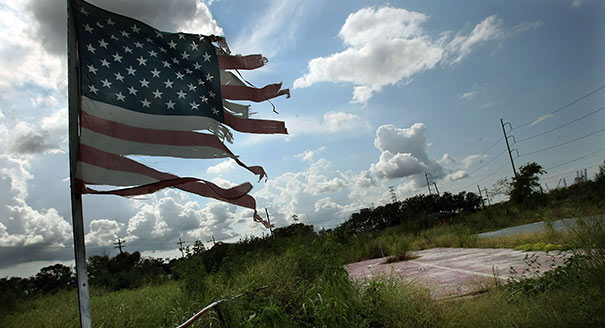
The implicit purpose of many dystopian novels is to illustrate today’s world through the description of the future.
Source: El País
The Second Civil War that will erupt in America will be more devastating than the one that began in 1861. In that first conflict more Americans died than in all the wars that country has fought since then.
But the Second Civil War that will occur at the end of this century will be much worse. The nation will be roughly divided between the “red” states of the south and the “blue” states of the north. Climate change will have drastically altered borders and daily life. The State of Florida, for example, will no longer exist; instead boats navigate in what will then be called the Florida Sea. A terrorist attack will have spread a new biological agent that triggers a pandemic that lasts a decade and kills more than 110 million people.
These are not the forecasts of a futurist, but of a novelist. Thirty-five-year-old Omar El Akkad was born in Egypt, grew up in Qatar, and worked as a journalist in Canada. He has covered the war in Afghanistan, Guantanamo prison, the Arab Spring, and racial strife in Ferguson, Missouri. These and other events serve as inspiration for his disquieting first novel, American War.
Lately, dystopian novels – stories that depict a frightening future – have proliferated, and this one, certainly, can be included in this category.
The American War of this book occurs between 2074 and 2095 and, although the war’s immediate trigger is the assassination of the president of the United States at the hands of a suicide bomber, the context that nurtures it is a society deeply divided in its values, lifestyles, and political preferences. This extreme polarization boils over after Congress passes a bill banning the use of fossil fuels. Mississippi, Alabama, Georgia, South Carolina, and Texas reject the law and declare their independence, thus starting the Second Civil War.
El Akkad develops the plot from the perspective of the Chestnuts, a “typical” family in this future. Part of being “typical” is that, unlike most Americans today, the war reaches them and they end up living for long years in a refugee camp that is named, with cruel irony, Camp Patience. The author obviously knows well the refugee camps of the Middle East and uses what he has seen to vividly convey the terrible conditions of these precarious temporary cities that almost always end up being permanent.
The circumstances of the Chestnut family are constantly shaken by political conflicts that are nourished by ancestral hatreds, and that are powered by climate change and new technologies. The central character is one of the daughters, Sara T. Chestnut, whom everyone calls Sarat. Dana, her twin sister, dies when her bus is attacked with missiles shot by an unmanned drone. In this story, drones are a constant presence. As is terrorism. At Camp Patience, the young Sarat is recruited and radicalized by an older man who happens to be an agent of the Bouazizi Empire. This unexpected empire has emerged after multiple revolutions in the Middle East and regions of Central Asia have allowed a host of countries to unify into a single nation, headquartered in Cairo. China and the Bouazizi Empire have the most prosperous economies on the planet, and, after the collapse of the European Union, millions of Europeans emigrate to North Africa in search of jobs that they can no longer find in their own countries. The name of this new empire is loaded with meaning: Mohamed Bouazizi was the young Tunisian man whose immolation in 2010 provoked the popular revolts that ended up overthrowing the dictator of that country and fueling protests in other countries, the Arab Spring. In the novel, the Bouazizi Empire does what it can to foment conflicts and divisions in the United States and prevent this potential rival from recovering. One of its victories occurs when Sarat, working as its agent, manages to infiltrate the ceremony that marks the reunification of the United States and releases a biological agent that triggers the devastating pandemic that will cripple the country for long years to come.
The implicit purpose of many dystopian novels is to illustrate today’s world through the description of the future. And El Akkad accomplishes this very well. He has said that when he began writing the book, three years ago, his purpose was to bring his readers closer to the horrors of sectarian violence and show them how the desire for revenge is universal. He also acknowledges that he had not anticipated that his very speculative premise (that a foreign power intervenes in US politics to widen the existing fissures) would, in fact, become the reality that now dominates the national conversation.
But perhaps the single greatest achievement of this novel is that it makes us feel that ominous extreme situations that now seem implausible to us may not be as improbable and remote as we think. And that everything depends on us – and on what we do now.

Distinguished Fellow
Moisés Naím is a distinguished fellow at the Carnegie Endowment for International Peace, a best-selling author, and an internationally syndicated columnist.
Recent Work



Rosa Balfour, Frances Z. Brown, Yasmine Farouk, …
Moisés Naím
Carnegie India does not take institutional positions on public policy issues; the views represented herein are those of the author(s) and do not necessarily reflect the views of Carnegie, its staff, or its trustees.

How is AI reshaping space security, creating governance challenges, and where does international diplomacy stand today?


Tejas Bharadwaj, Almudena Azcárate Ortega

The U.S.–India semiconductor cooperation story is well-stocked with top-level strategic intent. What remains unresolved, however, are some underlying challenges that will determine whether the cooperation actually functions. Three such friction points stand out.

Shruti Mittal
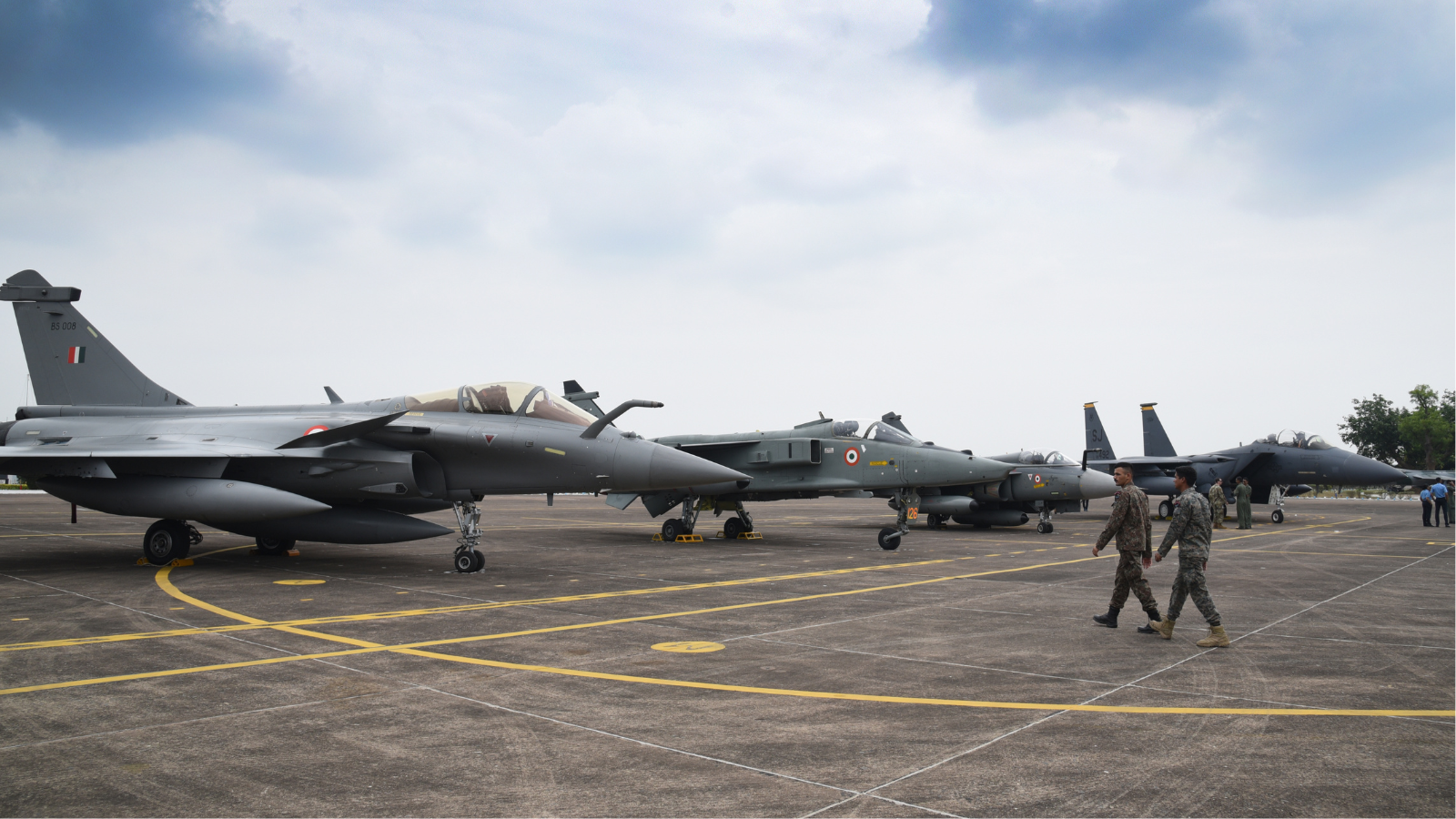
India and the United States are close to concluding a Reciprocal Defense Procurement Agreement (RDPA) that will allow firms from the two countries to sell to each other’s defense establishments more easily. While this may not remedy the specific grievances both sides may have regarding larger bilateral issues, an RDPA could restore some momentum, following the trade deal announcement.

Konark Bhandari

On the last day of the India AI Impact Summit, India signed Pax Silica, a U.S.-led declaration seemingly focused on semiconductors. While India’s accession to the same was not entirely unforeseen, becoming a signatory nation this quickly was not on the cards either.
Konark Bhandari

This piece examines India’s response to U.S. sanctions and tariffs, specifically assessing the immediate market consequences, such as alterations in import costs, and the broader strategic implications for India’s energy security and foreign policy orientation.

Vrinda Sahai