

Article
C. Raja Mohan, Darshana M. Baruah
{
  "authors": [
    "C. Raja Mohan"
  ],
  "type": "legacyinthemedia",
  "centerAffiliationAll": "dc",
  "centers": [
    "Carnegie Endowment for International Peace",
    "Carnegie India"
  ],
  "collections": [],
  "englishNewsletterAll": "ctw",
  "nonEnglishNewsletterAll": "",
  "primaryCenter": "Carnegie India",
  "programAffiliation": "SAP",
  "programs": [
    "South Asia"
  ],
  "projects": [
    "Security Studies"
  ],
  "regions": [
    "South Asia",
    "India",
    "Indo-Pacific",
    "France",
    "Western Europe"
  ],
  "topics": [
    "Foreign Policy"
  ]
}
Source: Getty
Looking beyond the traditional areas of high-technology and defence cooperation, and the more recent focus on global mitigation of climate change, New Delhi and Paris appear ready to lend a strong regional dimension to their strategic partnership.
Source: Indian Express
Amidst all the excitement and anxiety about the Indo-Pacific quad — which brings together India, United States, Japan and Australia — it is easy to miss the significant prospects for Delhi’s bilateral maritime security cooperation with Paris in the Indian Ocean. Looking beyond the traditional areas of high-technology and defence cooperation, and the more recent focus on global mitigation of climate change, Delhi and Paris appear ready to lend a strong regional dimension to their strategic partnership.
A series of recent high-level consultations — between foreign and defence ministers as well as the national security advisers — have focused on finding ways for India and France to work together, especially in the Western Indian Ocean. These discussions are likely to be turned into concrete decisions by the time French President Emmanuel Macron visits Delhi early next year.
Meanwhile, the debate on “getting France to join the quad” entirely misses the point about the nature of the new grouping. The quad is a flexible mechanism to coordinate the approaches of like-minded states to promote their shared political objectives in the Indo-Pacific. It is a work in progress and will take time to achieve institutional heft and make a real impact. When this quad is eventually up and running, there will certainly be room for its expansion.
Until we get there, there is much that India needs to do in elevating its bilateral security cooperation with the members of the quad as well as other partners in the Indo-Pacific. France is at the top of that list. France has territories in the Western Indian Ocean and South Pacific and has been a maritime power in the region for nearly four centuries. Paris has military bases in the Indian Ocean. It has the lead role in the Indian Ocean Commission that brings together the island states of Mauritius, Seychelles, Madagascar, Comoros and the French territory of Reunion.
As a member of the NATO, France does not need the latest quad to do things with America. As it seeks to reclaim some of its historic role in the east, France is already stepping up its security cooperation in the Pacific. It has two quads of its own in the region.
Earlier this year, the naval forces of France, Japan, Britain and the United States conducted naval exercises in the Western Pacific. In a second quad, France coordinates South Pacific defence operations with Australia, New Zealand, and the United States. Paris also has a trilateral arrangement with Australia and New Zealand (FRANZ) to provide disaster relief to the island states of the Pacific. The missing link has been the inadequate political and security cooperation between Delhi and Paris.
This limitation stands in contrast to the general affinity between the French and Indian quest for different degrees of strategic autonomy during the Cold war. France was among the first to propose raising a coalition of middle powers to promote a multipolar world in the mid-1990s to limit the dominance of what the French called the American “hyper power” after the Cold War.
Paris also was the first to argue that ending the atomic blockade against India and integrating Delhi into the global nuclear order were important objectives. If this demanded a revision of the non-proliferation system centred on the NPT, then so be it, France said. This idea was taken forward by the US President George W. Bush in the historic civil nuclear initiative with India.
One can recall two earlier efforts — in the early 1980s by President Francois Mitterrand and in the late 1990s under Jacques Chirac — to transform the partnership with India. But the lack of consistent purpose in Delhi led to limited results from the two earlier efforts. Prime Minister Narendra Modi, however, appears determined to realise the full potential of the partnership with France.
The case for a bold re-imagination of the India-France partnership has never been more urgent than it is today. The rise of China, the renewed tensions between Russia and Europe, the uncertainty in the US political trajectory, and the loosening of the old alliances demand more leadership from middle powers like India and France. Nowhere are the possibilities greater than in the maritime domain.
An intensive dialogue with the French on maritime issues under the Narendra Modi government over the last three years has created the basis for sharing intelligence and military facilities, promoting inter-operability between their navies, and the future conduct of joint operations. Once progress is made in the Western Indian Ocean, France could also help boost India’s strategic footprint in the South Pacific.
Although India and France have long shared the Indian Ocean maritime neighbourhood, they have not put it at the heart of their partnership until now. The new regional framing will help develop the much needed depth to the India-France strategic partnership through maritime burden-sharing and reinforcement of each other’s positions in the Indo-Pacific.
If India discards its military isolationism, develops productive defence diplomacy, and embarks upon deeper security cooperation with its partners through bilateral, minilateral and multilateral mechanisms, the “quad talk” might generate a lot less heat than it does today.
This article was originally published in the Indian Express.
Former Nonresident Senior Fellow, Carnegie India
A leading analyst of India’s foreign policy, Mohan is also an expert on South Asian security, great-power relations in Asia, and arms control.
Recent Work

C. Raja Mohan, Darshana M. Baruah


Alexander Gabuev, Paul Haenle, C. Raja Mohan, …
Carnegie India does not take institutional positions on public policy issues; the views represented herein are those of the author(s) and do not necessarily reflect the views of Carnegie, its staff, or its trustees.

The Indian Ocean Region hosts one of the densest concentrations of subsea cables in the world. Yet, despite accounting for a significant share of global internet traffic, India’s participation remains limited.

Charukeshi Bhatt

How is AI reshaping space security, creating governance challenges, and where does international diplomacy stand today?


Tejas Bharadwaj, Almudena Azcárate Ortega

After the chill in ties between 2020 and 2024 that brought India–China relations to their lowest point in several decades, the two countries have engaged each other afresh. This paper argues that there are predominantly four imperatives guiding India’s approach to China, and they exist in an order of priority.

Saheb Singh Chadha

This piece argues that India’s central challenge is not managing a single flashpoint but resolving the underlying tension between expansion and institutional coherency of the BRICS grouping.

Vrinda Sahai
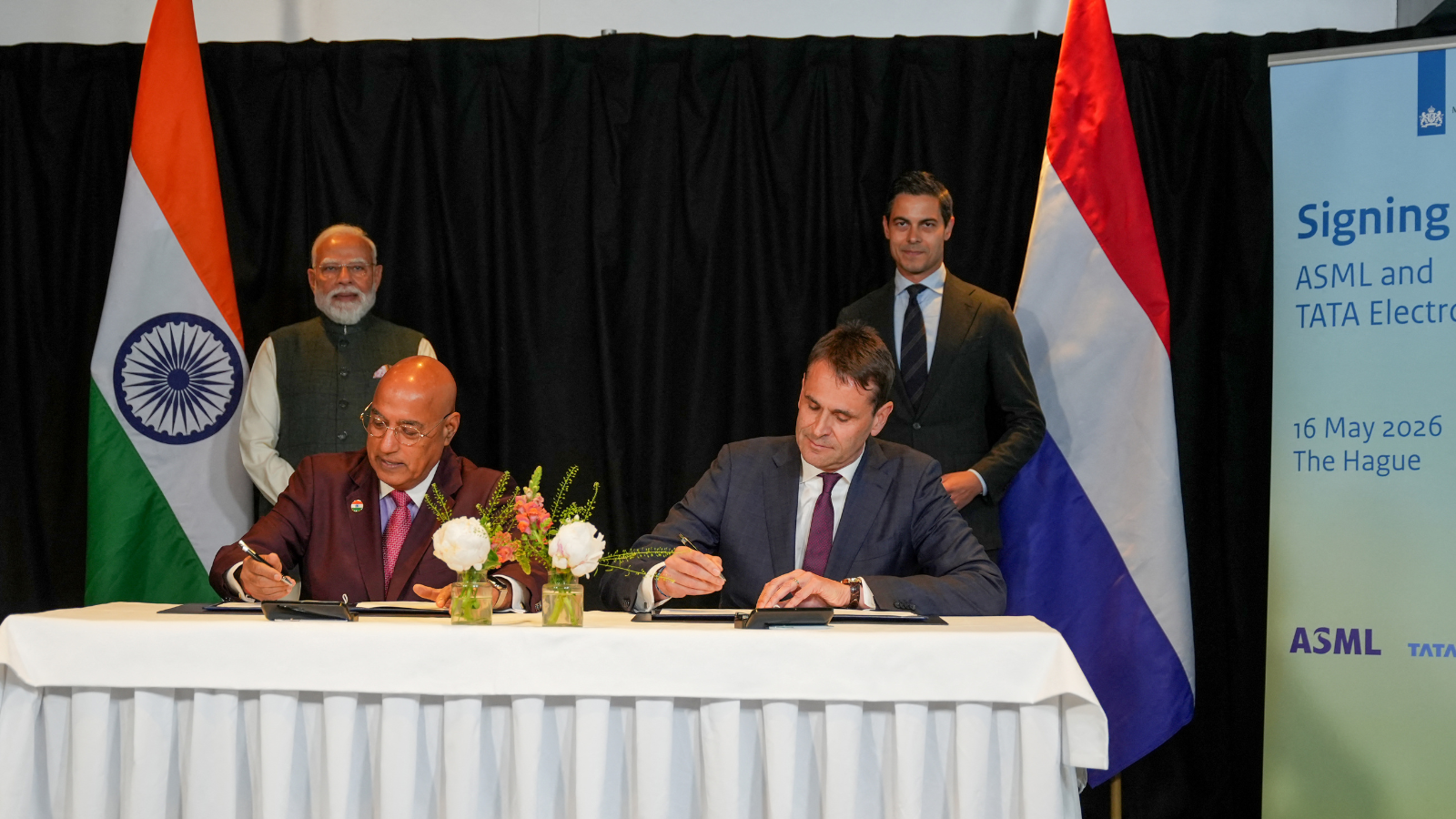
The ASML MoU with Tata Electronics is an indicator of how far the Indian semiconductor ecosystem has come. This ecosystem has been years in the making and represents real commercial logic.

Konark Bhandari