

Commentary
Cornelius Adebahr
{
  "authors": [
    "Cornelius Adebahr"
  ],
  "type": "legacyinthemedia",
  "centerAffiliationAll": "dc",
  "centers": [
    "Carnegie Endowment for International Peace",
    "Carnegie Europe",
    "Malcolm H. Kerr Carnegie Middle East Center"
  ],
  "collections": [
    "Transatlantic Cooperation",
    "Europe’s Southern Neighborhood",
    "Iranian Proliferation"
  ],
  "englishNewsletterAll": "ctw",
  "nonEnglishNewsletterAll": "",
  "primaryCenter": "Carnegie Europe",
  "programAffiliation": "EP",
  "programs": [
    "Europe"
  ],
  "projects": [],
  "regions": [
    "Middle East",
    "Europe",
    "North America",
    "United States",
    "Iran",
    "Western Europe"
  ],
  "topics": [
    "Foreign Policy",
    "Security",
    "Political Reform",
    "Nuclear Policy"
  ]
}
Source: Getty
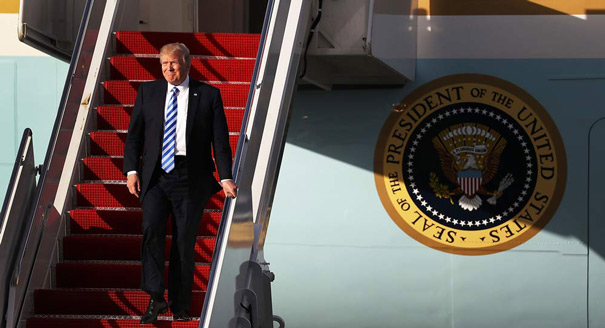
U.S. President Trump’s decision to withdraw from the Iran nuclear deal should propel Europeans to stand their ground and mark the beginning of a more independent role for Europe in the world.
Source: Euractiv
On Europe Day 2018, the continent woke up in a particularly tight spot. While President Trump’s announcement of the US withdrawal from the Iran nuclear deal did not come as a surprise as such, it deals a particular blow to Europeans who have tried to find a compromise over the last months.
What is worse, the unilateral US pullout from the agreement will not only cause more instability in the Middle East but also a long-lasting upheaval to the transatlantic relationship. European leaders will have to simultaneously work on many foreign policy fronts in order to break out of this situation.The Joint Comprehensive Plan of Action (JCPOA), as the Iran nuclear deal is officially known, is the shared success of American, Chinese, European and Russian negotiation efforts with the Islamic Republic. Since January 2016, the deal’s implementation has contributed to regional as well as European security by effectively blocking Iran’s possible pursuit of a nuclear bomb. Dismantling the deal without necessity, as Trump is now doing, is folly and worse.
Although transatlantic differences over Iranian policy have been the rule rather than the exception in the past, the US pullout is an extraordinary escalation–even provocation.
The move is even more provocative given that the imminent reinstatement of US secondary sanctions undermines the sovereignty of all EU member states. Without proper instruments in place, it will be Washington that decides on the legitimacy of European business interests in Iran. And mind you, the latter is not primarily about commercial interests, but about the West living up to its side of the nuclear bargain with Iran.
Moreover, Europe is directly affected by increased insecurity in the Middle East: be it Iran’s intentions to resume uranium enrichment; the intensification of violent clashes between Israel and Iran in Syria, or between Saudi Arabia and Iran in Yemen; or, the US President’s thinly veiled threat of fostering regime change in Tehran.
Finally, it is worth noting that President Trump chose 8 May to announce this profound policy change – the day marking the end of WWII in Europe, also known as “Victory in Europe” Day in the US. In view of the withdrawal’s profound consequences for European security and the transatlantic alliance, it looks as if he was aiming for a Victory over Europe.
What should Europe do now? Saving the deal—or what is left of it—now squarely falls on the Europeans, in particular on the EU and the three member states involved in the negotiations (E3), namely France, Germany, and the United Kingdom.
As the main facilitator of the talks leading up to the JCPOA, the EU is its guardian of sorts. Moreover, Europe has the most to lose from a direct confrontation with Washington over Iran. The bottom line: its very self-respect as an international player is at stake.
If Europeans want to keep the deal and continue to trade with Iran, they will have to think long and hard about which instruments they are willing to apply.
One option is to revive the so-called blocking regulation dating back to the late 1990s, which shielded European companies from the extraterritorial effects of US sanctions. It will be hard to implement —given the diverging interests of the 28 member states —and it may be insufficient, at least initially, to make European companies believe that their Iran business interests are safe.
Yet, it would be an important political signal—both to Washington and Tehran—that the EU is serious about maintaining the deal.
Another possibility for Europe is to improve the financing conditions of trade with Iran, e.g. by offering euro-denominated credit lines or project financing from the European Investment Bank. This would at least allow medium-sized companies without a stake in the US market to pursue legitimate business with Iran, for which currently no major international banking finance is available.
Without a doubt, any of the aforementioned steps Europeans would take would likely intensify the trade standoff that Trump has set off by imposing tariffs on steel and aluminium. Nevertheless, it will be crucial to maintain European unity, among the E3 as much as among all 28 member states.
The drastic and reckless decision taken by the US president should propel Europeans to stand their ground. On November 9, 2016, they woke up to the news of Donald Trump’s electoral victory; exactly 18 months later, Europe Day 2018 should mark the beginning of a more independent role for Europe in the world.

Former Nonresident Fellow, Carnegie Europe
Cornelius Adebahr was a nonresident fellow at Carnegie Europe. His research focuses on foreign and security policy, in particular regarding Iran and the Persian Gulf, on European and transatlantic affairs, and on citizens’ engagement.
Recent Work
Cornelius Adebahr

Cornelius Adebahr, Barbara Mittelhammer
Carnegie India does not take institutional positions on public policy issues; the views represented herein are those of the author(s) and do not necessarily reflect the views of Carnegie, its staff, or its trustees.

In any defense establishment, change is an ongoing process. However, despite the best of intentions, existing bureaucracies, bound by habit and years of socialization, have their limits in implementing transformative change.

Anit Mukherjee

How is AI reshaping space security, creating governance challenges, and where does international diplomacy stand today?


Tejas Bharadwaj, Almudena Azcárate Ortega

After the chill in ties between 2020 and 2024 that brought India–China relations to their lowest point in several decades, the two countries have engaged each other afresh. This paper argues that there are predominantly four imperatives guiding India’s approach to China, and they exist in an order of priority.

Saheb Singh Chadha

This piece argues that India’s central challenge is not managing a single flashpoint but resolving the underlying tension between expansion and institutional coherency of the BRICS grouping.

Vrinda Sahai
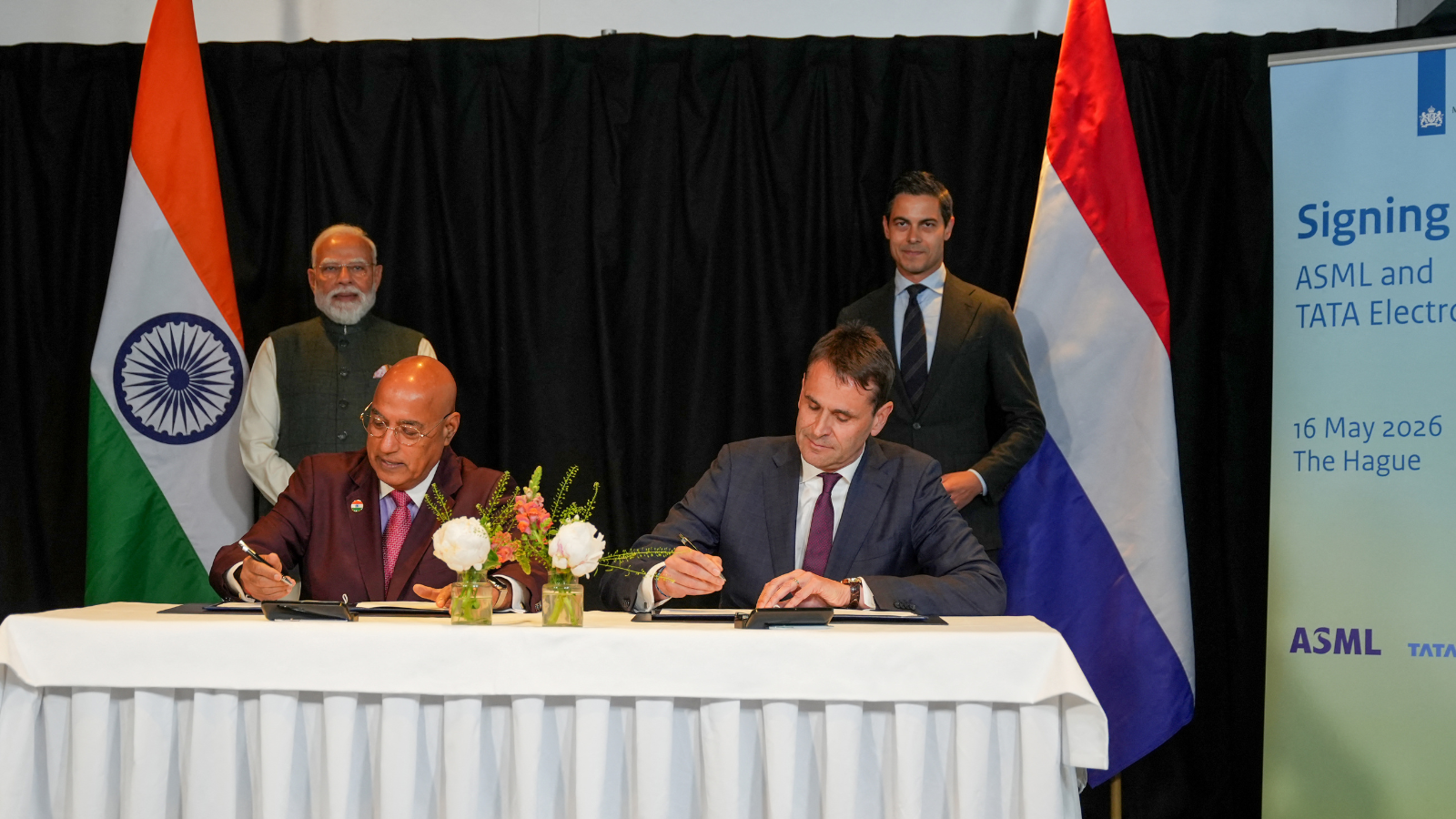
The ASML MoU with Tata Electronics is an indicator of how far the Indian semiconductor ecosystem has come. This ecosystem has been years in the making and represents real commercial logic.

Konark Bhandari