

Q&A
- +1
Sheena Chestnut Greitens, Oriana Skylar Mastro, Yukon Huang, …
{
  "authors": [
    "Yukon Huang"
  ],
  "type": "legacyinthemedia",
  "centerAffiliationAll": "dc",
  "centers": [
    "Carnegie Endowment for International Peace",
    "Carnegie China"
  ],
  "collections": [],
  "englishNewsletterAll": "asia",
  "nonEnglishNewsletterAll": "",
  "primaryCenter": "Carnegie China",
  "programAffiliation": "AP",
  "programs": [
    "Asia",
    "American Statecraft"
  ],
  "projects": [],
  "regions": [
    "North America",
    "United States",
    "East Asia",
    "China"
  ],
  "topics": [
    "Economy",
    "Trade",
    "Security",
    "Foreign Policy"
  ]
}
Source: Getty
As Washington waits to see what Beijing has to offer and Beijing waits to see what Washington wants, a prolonged stalemate is a more likely outcome.
Source: South China Morning Post
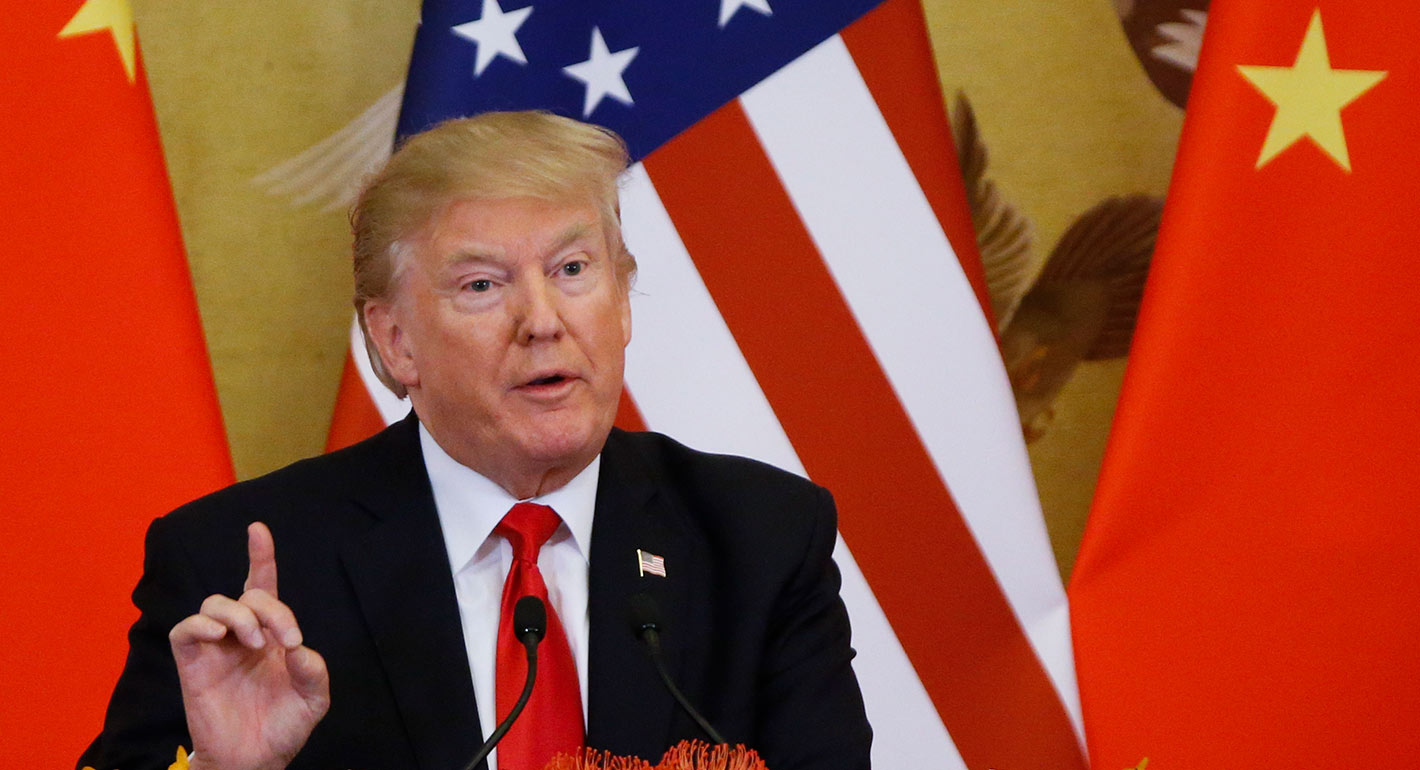
Markets soared in early November when US President Donald Trump took the initiative to call Chinese President Xi Jinping and discuss ongoing trade tensions, but the optimism waned amid signals that attitudes have not shifted. As Washington waits to see what Beijing has to offer and Beijing waits to see what Washington wants, a prolonged stalemate is a more likely outcome.
The stalemate comes from a wide chasm in perceptions, as well as the absence of any institutional framework for resolving differences. Washington’s demands fall into three categories. Trump is fixated on the US’ huge trade deficit with China. The US business community is fixated with Chinese regulations that force foreign firms to transfer technology in exchange for access to the vast Chinese market. Washington’s geo-strategists are fixated on how China plans to become a technological power, thereby threatening the US’ global dominance. Put all three concerns together, and an impasse emerges.
The first demand would seem easy to meet: China should just buy more from the US. However, this idea is flawed and unworkable. Trade is a multilateral, not bilateral, issue. China cannot buy enough from the US to make a substantial dent in the bilateral trade deficit, because the US does not produce enough of the high-end consumer goods which the rising Chinese middle class splurges on and Europe gladly provides, nor the raw materials which China imports from Latin America and Africa.
Even if China offers to buy more liquefied natural gas from the US, it will not prevent the deficit from rising in the near term. Then there is the hi-tech equipment Beijing wants, but which Washington will not sell on security grounds. This leaves China with only a beggar-thy-neighbour list of products to choose from: buy more soybeans but less from Brazil, more Boeing aircraft but fewer from Airbus. This does nothing to moderate China’s overall trade surplus but shifts the onus for adjustment onto other countries.
With regard to forced technology transfer, there is more room to manoeuvre. This should not be confused with intellectual property theft, for which there are available legal remedies. The issue is more technical. Foreign firms are required to form joint ventures with Chinese firms to invest in certain sectors – a common global practice – and asked to transfer technologies as part of the agreement.
From Beijing’s perspective, this is a normal commercial practice, no coercion is involved and foreign firms can simply say no and walk away. However, the size of China’s economy and the powerful role the state plays in driving the economy give Chinese firms exceptional bargaining power. The problem is not that Beijing’s actions are illegal but that they appear unfair.
There is a simple but politically sensitive solution, namely that Beijing should drop the joint venture requirement except for limited security-related activities. As it is, joint ventures account for only a quarter of foreign investment in China today, down from two-thirds decades ago, according to a recent National Bureau of Economic Research study. Absent the requirement, some foreign companies would still form joint ventures, given the benefits of becoming partners with well-established Chinese firms in the local market.
This leaves the difficult issue of Beijing’s technological ambitions, as set forth in the “Made in China 2025” plan. Asking Beijing to cast aside the plan is a non-starter. Every country has the right to define its aspirations, well considered or otherwise. America initiated its ambitious space programme to compete with the Soviet Union more than 60 years ago and South Korea sought to produce globally competitive cars 30 years ago. For Beijing, innovation is the key to escaping the middle-income trap; while the goal is understandable, there is concern about the use of state subsidies to realise the ambitions.
Sure, all countries provide subsidies to promote economic initiatives. Nearly US$100 billion is spent annually by American localities on attracting new investments, such as Amazon’s two new headquarters and Foxconn’s LCD plant in Wisconsin. Airbus would never have emerged without European government support. Governments in the Organisation for Economic Cooperation and Development provide grants and tax incentives to promote new technologies.
However, China’s support for industrial development differs from that of the OECD in scale and form. In China, the state plays a more pervasive role. Also, tax incentives are more useful for promoting industries in developed economies than in developing countries with less-sophisticated fiscal systems. Thus, much of China’s support is channelled through the financial system and often into state-owned enterprises. The biggest conundrum to be solved in the trade war is figuring out the proper form of state support for economic activities, since there are legitimate reasons for different approaches.
This is a complex issue, and no solution can be found at a one-off meeting between heads of state. A rules-based, institutional approach is needed to resolve the US-China differences. However, Washington has already turned away from the obvious routes, by dropping out of the Trans-Pacific Partnership and denigrating the World Trade Organisation. The remaining option is to revive negotiations for a bilateral investment treaty, though it would mean restarting an Obama-era initiative. If the leaders do not work things out soon, it might take a sharp deterioration in the global economy to provoke much-needed rethinking.
This article was originally published in the South China Morning Post.

Senior Fellow, Asia Program
Huang is a senior fellow in the Carnegie Asia Program where his research focuses on China’s economy and its regional and global impact.
Recent Work


Sheena Chestnut Greitens, Oriana Skylar Mastro, Yukon Huang, …


Yukon Huang, Isaac B. Kardon, Matt Sheehan
Carnegie India does not take institutional positions on public policy issues; the views represented herein are those of the author(s) and do not necessarily reflect the views of Carnegie, its staff, or its trustees.

In any defense establishment, change is an ongoing process. However, despite the best of intentions, existing bureaucracies, bound by habit and years of socialization, have their limits in implementing transformative change.

Anit Mukherjee

How is AI reshaping space security, creating governance challenges, and where does international diplomacy stand today?


Tejas Bharadwaj, Almudena Azcárate Ortega

After the chill in ties between 2020 and 2024 that brought India–China relations to their lowest point in several decades, the two countries have engaged each other afresh. This paper argues that there are predominantly four imperatives guiding India’s approach to China, and they exist in an order of priority.

Saheb Singh Chadha

This piece argues that India’s central challenge is not managing a single flashpoint but resolving the underlying tension between expansion and institutional coherency of the BRICS grouping.

Vrinda Sahai

A partnership between India, a country of subcontinental size, and Africa, a continent of fifty-four countries, may seem asymmetric until one notes that both are home to nearly the same number of people—1.4 billion. This essay spells out the existing challenges to the partnership, its optimal potential, and the possible pathways to realize it over the next quarter-century.

Rajiv Bhatia