Source: BBC
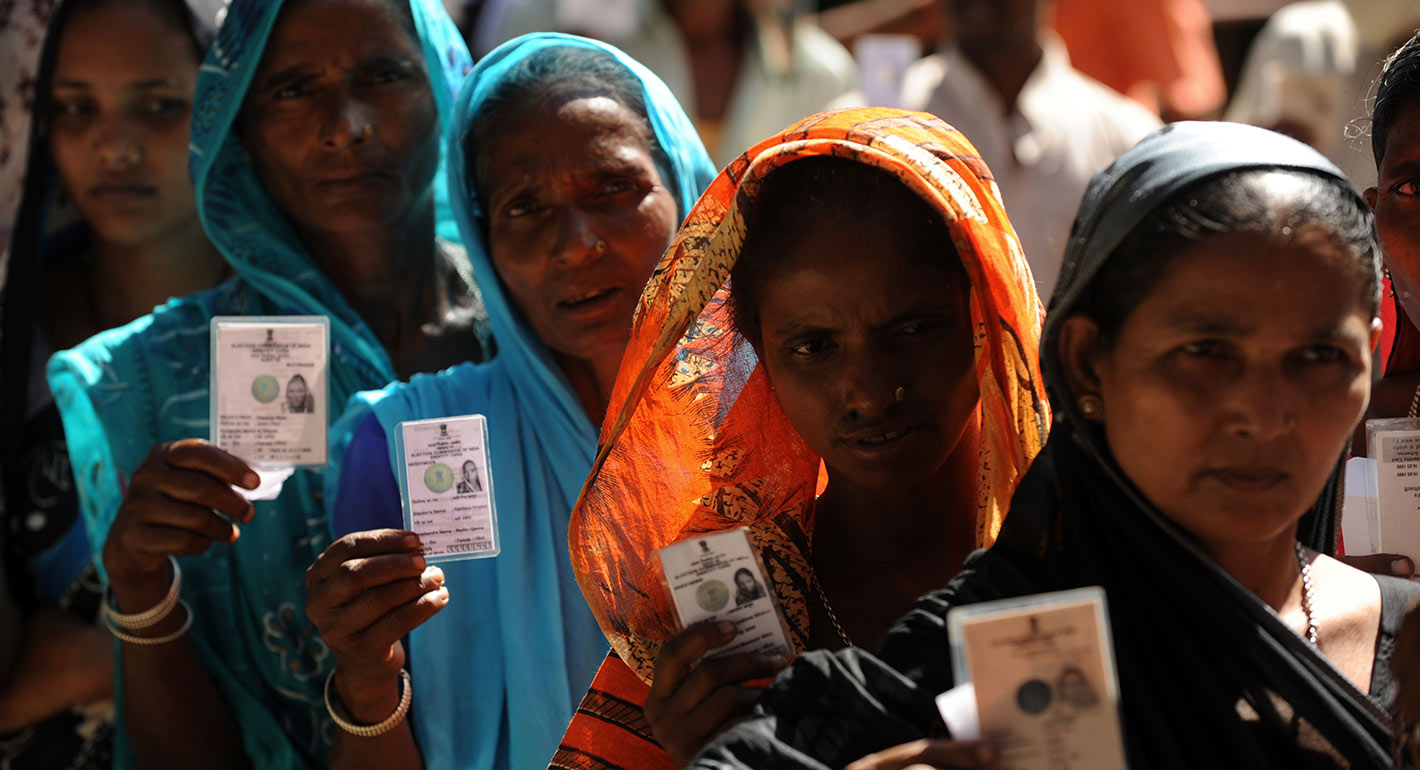
In the world's largest democracy, politicians are finding that they need to listen to women if they want power.
In northern India, some women had long complained that they were fed up with their husbands being drunk.
An alcohol ban brought in at their request has affected 100 million people in the state of Bihar.
The domestic violence, petty crime and wasted income that had long plagued their region fell soon afterwards, the state government claims.
Women-centric campaigns are playing an even bigger role in India's upcoming national election, in a country of 1.3bn people.
Politicians offering free girls' education, money to newlywed brides, and special women's police stations scored highly in the recent regional polls.
The reason? In India's male-dominated, conservative society, women voters are rapidly gaining ground.
Women voters
Ranked in the bottom third of countries for gender equality, India has long struggled to get women to the ballot box.
There are a number of reasons for this.
The gender gap in voting is partly because women traditionally have been less likely to register in the first place.
Even if they are registered, the idea of women leaving the household to vote is sometimes frowned upon, and they can face harassment and intimidation at the polls.
For decades, registered women voters' turnout in elections lagged behind men's by an average of 6-10%, reflecting their marginalisation in society and giving them less opportunity to shape policy.
There are also fewer women to start with. Sex-selective abortions, female infanticide and preferential treatment for boys in India, mean that there are only 943 women for every 1,000 men in the population.
Despite these issues, the voting gender gap has recently shrunk to its smallest level on record.
In India's 2014 general election it was 1.8%, down from 8.4% in 2004.
In the 30 regional elections held from 2012 until mid-2018, female turnout was higher than men in two-thirds of states.
Banning alcohol
Bihar in northern India is one of the states with a higher proportion of women voters.
It has long suffered from problems of anti-social behaviour and crime, with alcoholism draining income away from some households.
In the 2015 state elections, women's turnout exceeded men's by 7% - and they had a clear message: get rid of alcohol.
Concerned about re-election, Bihar's chief minister Nitish Kumar pledged to do just that when he won local re-election.
He introduced a ban on drinking and selling alcohol in the state.
Within a year or two, the government reported that violent crime had fallen drastically, while money available for cars and tractors increased.
Social activists such as Medha Patkar have called on other states to ban alcohol too, arguing that "liquor is the biggest reason for violence against women".
However, one study found the police resources needed to enforce the alcohol ban meant there was less capacity to deal with violent crime.
Why are more women voting?
What has caused the sudden political mobilisation of women across India?
Increased female literacy and education have certainly brought more women to the polls.
But while progress on those measures has been slow, female voter turnout has shot up in just a decade.
A combination of personal factors and government intervention is likely to have contributed.
High-profile cases of violence against women have undoubtedly galvanised female voters to fight for rights and safety in their communities.
Protests erupted across the country earlier this year after rape cases in Uttar Pradesh, Jammu and Kashmir, and other states made headlines, while the #MeToo movement took hold from the autumn.
The Election Commission of India (ECI) is trying to tackle the violence and intimidation faced by women going to the polls.
It has tried to improve security at India's more than 900,000 polling booths, meaning women can now vote in relative safety.
The ECI has also experimented with setting up separate women-only queues on election day, and establishing polling stations run entirely by women.
A groundbreaking general election
In 2019, voter turnout may be higher for women than men for the first time in an Indian national election.
This trend has many implications, not only for how politicians campaign, but also how they govern.
Since coming to power in 2014, Prime Minister Narendra Modi has made no secret of his desire to appeal to women voters.
For instance, he has introduced a scheme to provide cooking gas cylinders to millions of Indian households. His party claims this will stop women from breathing in harmful smoke or spending hours collecting fuel.
Another scheme aims to provide every household with a bank account. At least half of newly-opened accounts are registered to women, who have historically lacked access to modern banking.
Looking to the future
The path to female empowerment in India has been slow and prone to setbacks.
India ranks 121st out of 131 countries when it comes to women being represented in the workplace.
In politics, women make up just eight per cent of parliamentary candidates and only 11.5 per cent of eventual winners.
This may change. Women's activism is putting pressure on political parties to pass the Women's Reservation Bill, guaranteeing one-third of Parliamentary seats for women.
Similar quotas already exist in local-level politics, creating a "pipeline" of women running for high-level office.
With more women in charge, India's political establishment would look much more like the population it represents.
Electing more women may benefit the country in unexpected ways as well: recent research links female politicians to higher growth and less corruption.
While gender equality in the world's largest democracy is a long way off, the influence of women at the ballot box and in the corridors of power is already having a clear impact.
This article was originally published in BBC News.